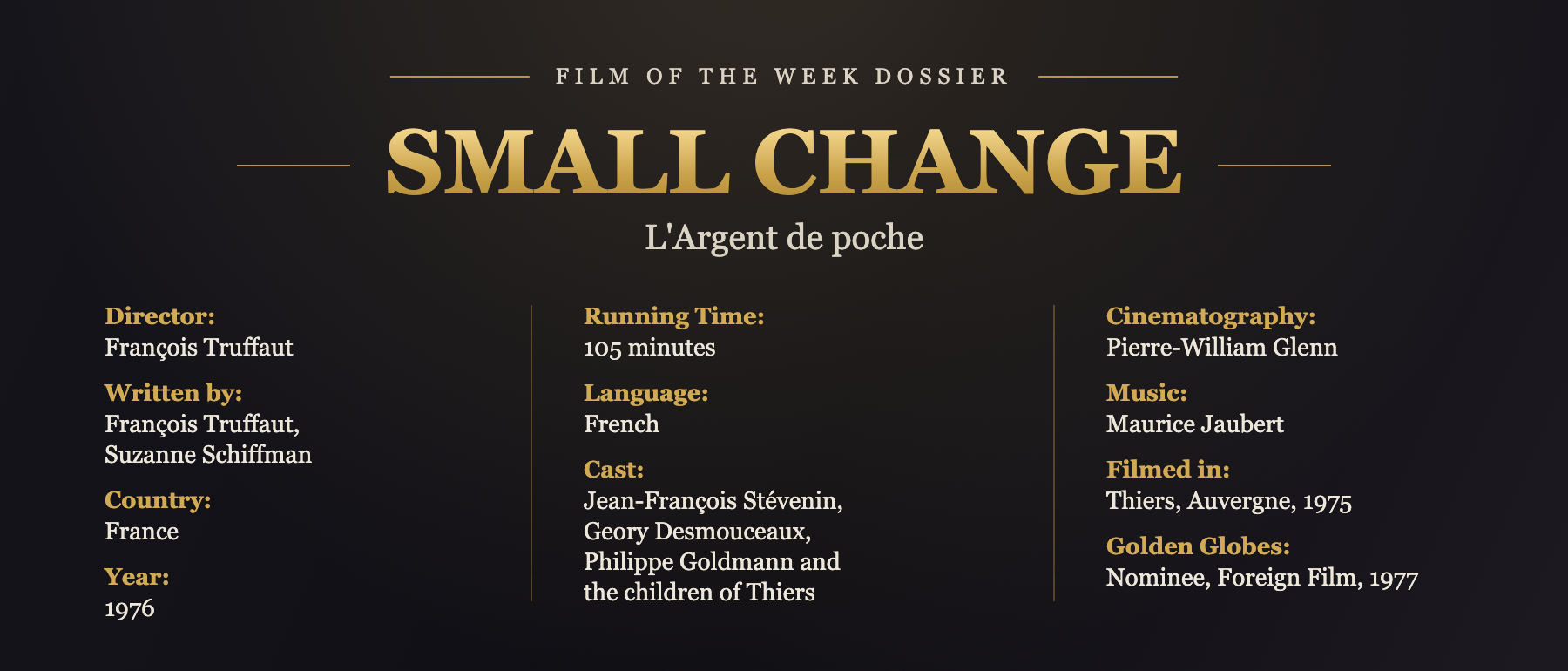
Small Change
Thick-Skinned, and Tender
By Owrang Editorial تحریریهٔ اورنگ
A two-year-old named Gregory is alone in an apartment many floors above the street. The window is open and a kitten has wandered out onto the sill. The boy goes after it. François Truffaut holds the moment far longer than is comfortable, until the audience no longer knows whether it is watching a comedy or a catastrophe. Then the child falls, lands, gets up without a scratch and announces, quite pleased with himself, that he went boom.
Roger Ebert called this the most audacious scene in the film, timed to sit exactly on the border between laughter and dread. Truffaut said he had found the story in a newspaper.
"L'Argent de poche" opened in France on March 17, 1976. That autumn, under the title "Small Change", it was the opening-night film of the 14th New York Film Festival, which ran from October 1 to 17. The literal title, "Pocket Money", was not available in the United States because a Paul Newman film had used it in 1972. It is fifty years old this year.
There is no single plot. The setting is Thiers, a town in the Auvergne, in the last weeks of school before the summer vacation. Truffaut and his co-writer Suzanne Schiffman gathered anecdotes, some told to them and some clipped from the press, and held them together with a rule borrowed from the classical stage: one small town, two months. A boy who does not know the answer stalls and watches the clock outside the classroom window click toward the bell. A girl left at home as a punishment picks up her father's megaphone and informs the whole courtyard that she is hungry, and the neighbors lower a basket of food to her. Patrick, who has no mother, falls a little in love with a grown woman and brings her flowers.
About two hundred children appear, most of them from the town and none of them stars. Jean-François Stévenin plays Richet, the young teacher whose wife is expecting their first child. Pierre-William Glenn photographed the film in Thiers in the summer of 1975, and the music is by Maurice Jaubert. Truffaut told Film Comment that the children wandered into the editing room, watched the rushes and talked about them, and that their company made the film less cruel than he had planned.
One face belongs to Julien, a new boy who lives in a shack at the edge of town. He wears the same sweater every day, falls asleep at his desk and steals because he is hungry. He will not change his clothes in front of anyone. When the adults at school finally learn what he has been hiding, he is taken away from his family, and the town that seemed so safe has to look at itself.
Afterward Richet talks to his class. He tells them that injustice to children is the worst kind, that politicians ignore children because children do not vote, that his own hard childhood is why he became a teacher, and that life is difficult and also wonderful. Many French critics disliked the speech, and Ebert thought it unnecessary. Truffaut did not back down. The ideas, he said, were his own.
He had been here before. "The 400 Blows" (1959), his first feature, drew on his own unhappy boyhood and followed one child whom the adults failed. In "The Wild Child" (1970) he stepped in front of the camera as Dr. Itard, the patient tutor of the boy found in the woods of Aveyron. "Small Change" is the third panel: not one child and not one teacher but a whole town of them. Asked to sum it up in a sentence, Truffaut answered, "It's the idea that kids are thick-skinned."
The film was one of his great successes in France and earned a Golden Globe nomination in the foreign-language category. Vincent Canby of The New York Times called it "a major work in minor keys". Half a century later the bell-bottoms and shaggy haircuts belong to another age, but the attention does not. Truffaut looks at children without talking down to them and without pretending they are angels. He ends at a summer camp, with a first kiss.
Further reading
Film Comment, interview with François Truffaut, 1976
https://www.filmcomment.com/article/kid-stuff-francois-truffaut-small-change-interview/
Where to watch
https://www.justwatch.com/us/movie/small-change
پول توجیبی
پوستکلفت و نازکدل
نوشتهٔ Owrang Editorial تحریریهٔ اورنگ
گرگوری دوساله در آپارتمانی در طبقههای بالای یک ساختمان تنها مانده است. پنجره باز است و بچهگربهای روی لبهٔ آن رفته. پسرک هم دنبالش میرود. فرانسوا تروفو این لحظه را آنقدر کش میدهد که تماشاگر دیگر نمیداند دارد کمدی میبیند یا فاجعه. بعد بچه میافتد، بی هیچ خراشی بلند میشود و با خوشحالی خبر میدهد که «بومب» کرده است.
راجر ایبرت، منتقد آمریکایی، این صحنه را جسورانهترین صحنهٔ فیلم دانست، صحنهای که درست روی مرز خنده و هراس ایستاده است. تروفو گفته بود ماجرا را در روزنامه خوانده است.
«پول توجیبی» (L'Argent de poche) روز ۱۷ مارچ ۱۹۷۶ در فرانسه روی پرده رفت. پاییز همان سال با نام Small Change فیلم شب افتتاح چهاردهمین دورهٔ جشنوارهٔ فیلم نیویورک شد که از ۱ تا ۱۷ اکتبر برگزار میشد. پخشکنندهٔ آمریکایی نمیتوانست ترجمهٔ لفظی عنوان، یعنی Pocket Money، را به کار ببرد، چون در سال ۱۹۷۲ فیلمی با بازی پل نیومن همین نام را داشت. امسال پنجاه سال از ساخت آن میگذرد.
فیلم یک قصهٔ واحد ندارد. ماجرا در تییر میگذرد، شهری در منطقهٔ اوورنی فرانسه، در هفتههای آخر مدرسه پیش از تعطیلات تابستان. تروفو و همکار فیلمنامهنویسش سوزان شیفمن حکایتهایی را کنار هم گذاشتند که بعضی را از دیگران شنیده و بعضی را در روزنامهها خوانده بودند، و برای اینکه رشتهٔ کار از دست نرود قاعدهای از تئاتر کلاسیک وام گرفتند: یک شهر کوچک، دو ماه. پسری که جواب درس را بلد نیست این پا و آن پا میکند و چشمش به ساعت بیرون پنجرهٔ کلاس است تا زنگ بخورد. دختری که برای تنبیه در خانه مانده بلندگوی دستی پدرش را برمیدارد و به همهٔ اهل حیاط اعلام میکند که گرسنه است، و همسایهها سبدی غذا برایش پایین میفرستند. پاتریک که مادر ندارد کمی دلباختهٔ زنی بزرگتر از خودش میشود و برایش گل میبرد.
نزدیک به دویست کودک در فیلم بازی میکنند که بیشترشان اهل همان شهرند و هیچکدام ستاره نیستند. ژانفرانسوا استونن نقش ریشه را بازی میکند، معلم جوانی که همسرش نخستین فرزندشان را باردار است. پیر ویلیام گلن فیلم را در تابستان ۱۹۷۵ در تییر فیلمبرداری کرد و موسیقی آن از موریس ژوبر است. تروفو به مجلهٔ Film Comment گفت بچهها به اتاق تدوین میآمدند، صحنههای گرفتهشده را میدیدند و دربارهشان حرف میزدند، و همین همنشینی فیلم را از آنچه در نظر داشت مهربانتر کرد.
یکی از این چهرهها ژولین است، شاگرد تازهای که در آلونکی بیرون شهر زندگی میکند. هر روز همان پلیور را میپوشد، سر کلاس خوابش میبرد و چون گرسنه است دزدی میکند. حاضر نیست جلو کسی لباسش را عوض کند. وقتی بزرگترهای مدرسه بالاخره میفهمند او چه چیزی را پنهان میکرده، ژولین را از خانوادهاش جدا میکنند و شهری که آنهمه امن به نظر میرسید ناچار میشود به خودش نگاه کند.
پس از آن ریشه با شاگردانش حرف میزند. میگوید ستم به کودکان بدترین ستمهاست، سیاستمداران به بچهها اعتنا نمیکنند چون بچهها رأی نمیدهند، خودش به سبب کودکی سختش معلم شده است، و زندگی دشوار است و در همان حال شگفتانگیز. بسیاری از منتقدان فرانسوی این خطابه را نپسندیدند و ایبرت هم آن را زائد دانست. تروفو کوتاه نیامد و گفت این حرفها حرفهای خود اوست.
او پیشتر هم به این سرزمین آمده بود. «چهارصد ضربه» (Les Quatre Cents Coups)، نخستین فیلم بلندش در سال ۱۹۵۹، از کودکی ناشاد خود او مایه میگرفت و سرگذشت پسری بود که بزرگترها تنهایش گذاشته بودند. در «کودک وحشی» (L'Enfant sauvage) در سال ۱۹۷۰ خودش جلو دوربین رفت و نقش دکتر ایتار را بازی کرد، آموزگار شکیبای پسری که در جنگلهای آوِرون پیدا شده بود. «پول توجیبی» لت سوم این سهگانه است: نه یک کودک و نه یک معلم، بلکه شهری پر از هر دو. وقتی از تروفو خواستند فیلم را در یک جمله خلاصه کند، گفت: «حرفش این است که بچهها پوستکلفتاند.»
فیلم از پرفروشترین کارهای تروفو در فرانسه شد و در بخش فیلم غیرانگلیسیزبان نامزد جایزهٔ Golden Globe بود. وینسنت کنبی در The New York Times آن را «اثری بزرگ در گامهای کوچک» خواند. نیم قرن بعد، شلوارهای پاچهگشاد و موهای بلند و ژولیده به روزگار دیگری تعلق دارند، اما آن دقت و توجه کهنه نشده است. تروفو به بچهها نگاه میکند بیآنکه از بالا با آنها حرف بزند و بیآنکه وانمود کند فرشتهاند. فیلم در اردوی تابستانی تمام میشود، با نخستین بوسه.
برای مطالعهٔ بیشتر
گفتوگوی Film Comment با فرانسوا تروفو، ۱۹۷۶
https://www.filmcomment.com/article/kid-stuff-francois-truffaut-small-change-interview/