
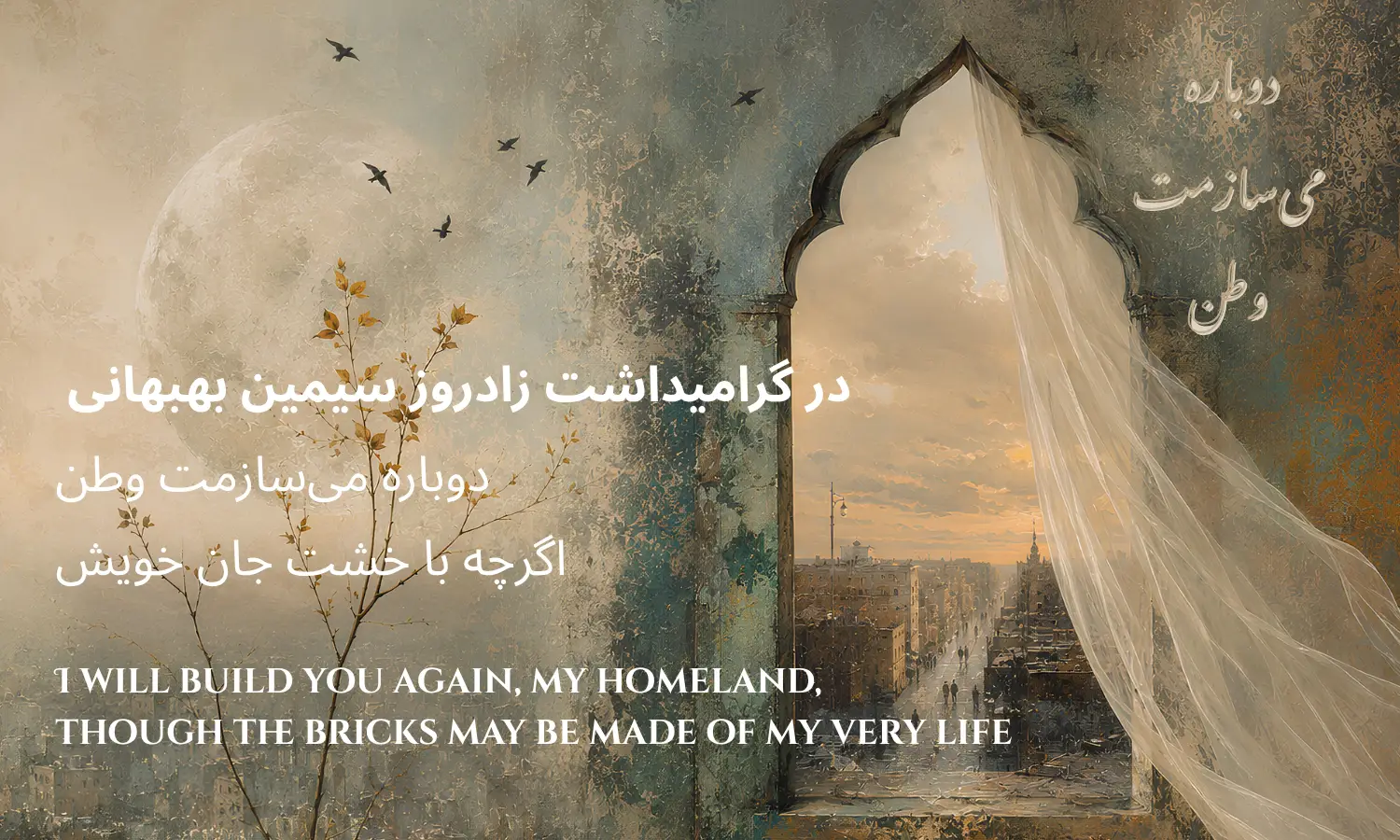
In Honor of Simin Behbahani, a Modern Persian Poet
On the birth anniversary of a poet who brought a thousand-year-old form back to life
By Owrang Editorial
Simin Behbahani was born in Tehran on July 20, 1927, and this year marks the ninety-ninth anniversary of her birth. On this occasion, Owrang turns to the role of this revered woman and her place in modern Iranian poetry, a poet who breathed new life into an ancient heritage by bringing fresh themes into an old form.
Simin, whose name at birth was Siminbar Khalili, was born into a literary family. Her father, Abbas Khalili, was a poet, journalist, and newspaper editor who had rendered some eleven hundred verses of Ferdowsi's Shahnameh into Arabic. Her mother, Fakhr-Ozma Arghun, was a poet, a teacher of French, and one of the progressive women of her time, who was active for years in women's associations and in 1932 served as editor of the newspaper Ayandeh-ye Iran. Simin began writing poetry at the age of twelve, and her first poem was published in the newspaper Nowbahar, then edited by Malek al-Shoara Bahar. This was a seal of approval from the greatest poet of the age upon the work of the young Simin, who would go on, across six decades, to publish nineteen collections of poetry.
Her first collection, The Broken Setar, appeared in Tehran in the early 1950s and consisted mostly of chahar-pareh. She began her work within the currents of modern poetry and the chahar-pareh style of Nima Yooshij, but gradually turned to the ghazal. The historical significance of that return lay in its timing: Simin turned to the ghazal precisely when free verse and Nima-style poetry had come to dominate the literary scene and classical forms were dismissed as worn and exhausted. Yet she did not return to the ghazal as a museum piece. Drawing on her experience with modern poetry and creating meters that were unprecedented or rarely used, she opened fresh possibilities within the ghazal without dissolving the familiar shape of the form. For this reason, critics such as Ali-Mohammad Haqshenas have called her the Nima of the ghazal.
But Behbahani's innovation did not stop at form. The classical ghazal was, at its foundation, a masculine poem: the lover was a man, and the beloved the silent object of his gaze. Simin overturned this long-standing relationship and transformed the woman from the object of the gaze into the one who holds it. She often inverted the traditional structure of the ghazal by using a female narrator. She also brought theatrical subjects, everyday events, and conversational speech into the ghazal, expanding its thematic range from love to war, poverty, violence, oppression, and freedom of expression.

The subtlest virtue of Simin's poetry lies in the way she looks at suffering. She draws close to pain, yet she does not adorn it; she places it within the frame of the poem and does not allow the poet's gaze to become indifferent spectatorship. After the events of 1979, this dimension took on a new depth that continued to the end of her life. She was a prominent member of the Iranian Writers' Association. In 1988, during the mass execution of prisoners, she wrote a poem titled \"O Mothers.\" Her courage was not confined to words. On March 8, 2010, when at the age of eighty-two and on the edge of blindness she intended to travel to Paris to speak on International Women's Day, she was detained at Tehran airport. She was interrogated throughout the night and her passport was taken. Her English translator, Farzaneh Milani, expressed astonishment, saying that no one had imagined she could be treated this way, for her name had reached beyond borders. Her work had been translated into English, including two collections: A Cup of Sin, translated by Farzaneh Milani and Kaveh Safa and published by Syracuse University Press in 1999, and My Country, I Shall Build You Again, translated by Sara Khalili in a bilingual edition in 2009. Farzaneh Milani, professor at the University of Virginia and a translator of her work, has compared Simin's ghazal to the sonnet, the short form that holds a place in European poetry much like the ghazal in Persian. In her words, Simin expanded the ghazal from the theme of love into the realm of human rights and human dignity. This comparison helps the non-Iranian reader grasp what Simin did with the ancient form and how she put it to use. In Iran, poetry holds a place akin to scripture, a country where each year thousands submit work to the national poetry festival, and in such a context a poet like Behbahani could become a national figure.
Even so, she should not be reduced to a political symbol. Simplistic labels such as \"the national poet of such-and-such country\" carry a colonial legacy and overlook the complex place of her poetry within the Persian literary tradition. The power of her protest arose precisely from her rootedness in the Persian rhetorical tradition.
Some sources state that Behbahani's name was put forward as a nominee for the Nobel Prize in Literature in 1999 and 2002. In 2009, the Simone de Beauvoir Prize for Women's Freedom was awarded to the One Million Signatures campaign, and Simin Behbahani received it on behalf of Iran's women activists. In 2013, she also received the Janus Pannonius Prize. She died at last on August 19, 2014, at the age of eighty-seven, after two weeks in a coma, of cardiac and pulmonary illness in Tehran. Her funeral, attended by thousands, was held at Vahdat Hall, and she was buried in Behesht-e Zahra. But her voice still reaches us:
"I will build you again, my homeland, though the bricks may be made of my very life."
I will raise columns to your roof, though they may be made of my very bones."
در گرامیداشت زادروز سیمین بهبهانی، شاعر معاصر
به مناسبت سالگرد تولد شاعری که قالبی هزارساله را از نو زنده کرد
نوشتهٔ Owrang Editorial
سیمین بهبهانی در بیستم ژوئیهی ۱۹۲۷ در تهران زاده شد و امسال نود و نهمین سالگرد زادروز اوست و به همین مناسبت اورنگ به نقش این بانوی گرامی و جایگاه او در شعر معاصر ایران میپردازد، او با به کار بردن مضامین نو در قالب کهن به این میراث جانی تازه میدهد.
سیمین که نامش هنگام تولد سیمینبر خلیلی بود، در خانوادهای اهل قلم به دنیا آمد. پدرش عباس خلیلی شاعر، روزنامهنگار و سردبیر روزنامه بود و حدود هزار و صد بیت از شاهنامهی فردوسی را به عربی برگردانده بود. مادرش فخر عظما ارغون شاعر، آموزگار زبان فرانسه و از زنان پیشرو روزگار خود بود که سالها در انجمنهای زنان فعالیت کرد و در سال ۱۹۳۲ سردبیری روزنامهی آیندهی ایران را بر عهده داشت. سیمین سرودن را در دوازدهسالگی آغاز کرد و برای نخستین بار شعر او در روزنامهٔ نوبهار که سردبیری آن را ملکالشعرای بهار به عهده داشت چاپ شد و این مهر تاییدی بود از جانب بزرگترین شاعر آن زمان بر کار سیمین جوان که بعدها و در طول شش دهه نوزده مجموعهٔ شعر منتشر کرد.
نخستین مجموعهی او، سهتار شکسته، در آغاز دههی ۱۳۳۰ خورشیدی در تهران منتشر شد و بیشتر در قالب چهارپاره بود. او کار خود را در فضای شعر نو و سبک چهارپارهی نیما یوشیج آغاز کرد، اما بهتدریج به غزل روی آورد. اهمیت تاریخی این بازگشت در آن بود که سیمین درست هنگامی به غزل رو کرد که شعر سپید و نیمایی بر فضای ادبی چیره شده بود و قالبهای کلاسیک را کهنه و از نفسافتاده میشمردند. اما او به غزل موزهای بازنگشت. او با تکیه بر تجربهی شعر نو و با ساختن وزنهای بیسابقه یا کمسابقه، امکانات تازهای در غزل گشود، بیآنکه هیئت آشنای این قالب را از میان ببرد. به همین سبب منتقدانی چون علیمحمد حقشناس او را نیمای غزل خواندهاند.
اما نوآوری بهبهانی تنها در فرم نماند. غزل کلاسیک در بنیاد خود شعری مردانه بود: عاشق مرد بود و معشوق موضوع خاموش نگاه او. سیمین این رابطهی دیرپا را واژگون کرد و زن را از موضوع نگاه به صاحب نگاه بدل ساخت. او اغلب ساختار سنتی غزل را با بهکارگیری راوی زن وارونه میکرد. او همچنین موضوعهای نمایشی، رویدادهای روزمره و گفتوگوی محاورهای را وارد غزل کرد و دامنهی مضمونی آن را از عشق به جنگ، فقر، خشونت، ستم و آزادی بیان گسترش داد.
ظریفترین فضیلت شعر سیمین در نگاهکردن به رنج است. او به رنج نزدیک میشود، اما آن را نمیآراید، در قاب شعر میگذارد و اجازه نمیدهد نگاه شاعر به تماشاگری بیتفاوت بدل شود. اما پس از واقعهٔ ۱۹۷۹ این وجه ابعادی تازه مییابد که تا پایان عمرش ادامه دارد. او از چهرههای برجستهٔ کانون نویسندگان ایران بود. در سال ۱۹۸۸، در جریان اعدامهای گستردهٔ زندانیان، شعری با عنوان «ای مادران» سرود. دلیری او تنها در کلام نماند. در هشتم مارس ۲۰۱۰، هنگامی که در هشتادودو سالگی و در آستانهی نابینایی قصد داشت برای سخنرانی در روز جهانی زن به پاریس برود، در فرودگاه تهران بازداشت شد. او را تمام شب بازجویی کردند و گذرنامهاش را گرفتند. مترجم انگلیسیاش فرزانه میلانی با حیرت گفت که هیچکس فکر نمیکرد با او چنین کنند زیرا نام او از مرزها فراتر رفته بود. آثارش به انگلیسی ترجمه شده بود، از جمله دو مجموعه به نامهای جامی از گناه با ترجمهی فرزانه میلانی و کاوه صفا که دانشگاه سیراکیوز در سال ۱۹۹۹ منتشر کرد، و دوباره میسازمت وطن با ترجمهی سارا خلیلی در یک نسخهی دوزبانه در سال ۲۰۰۹. فرزانه میلانی، استاد دانشگاه ویرجینیا و مترجم آثار او، غزل سیمین را با سونات سنجیده است، همان قالب کوتاهی که در شعر اروپایی جایگاهی همچون غزل در شعر فارسی دارد. به گفتهی او، سیمین غزل را از مضمون عشق به قلمرو حقوق بشر و کرامت انسانی گسترش داد. این قیاس به خوانندهی غیرایرانی کمک میکند تا دریابد سیمین با قالب کهن چه کرد و چگونه آن را به خدمت گرفت. در ایران شعر جایگاهی چون کتاب مقدس دارد، در این کشور هر سال هزاران تن برای جشنوارهی ملی شعر اثر میفرستند، و در چنین زمینهای شاعری چون بهبهانی توانست به چهرهای ملی بدل شود.
با این همه، نباید او را به یک نماد سیاسی فروکاست. قالبهای سادهانگارانهای مانند «شاعر ملی فلان کشور» میراثی استعماری دارند و زمینهی پیچیدهی شعر او را در سنت ادبی فارسی نادیده میگیرند. قدرت اعتراض او دقیقاً از ریشهداریاش در سنت بلاغی فارسی برمیخاست.
در برخی منابع آمده است که نام بهبهانی در سالهای ۱۹۹۹ و ۲۰۰۲ به عنوان نامزد نوبل ادبیات مطرح شد. در سال ۲۰۰۹ جایزهی سیمون دوبووار برای آزادی زنان به کارزار یک میلیون امضا تعلق گرفت و سیمین بهبهانی آن را به نمایندگی از فعالان زن ایران دریافت کرد. او در سال ۲۰۱۳ نیز جایزهی یانوش پانونیوس را دریافت کرد. سرانجام در نوزدهم اوت ۲۰۱۴، در هشتادوهفتسالگی و پس از دو هفته کما، در پی بیماری قلبی و ریوی در تهران درگذشت. مراسم تشییع او که هزاران تن در آن شرکت کردند در تالار وحدت برگزار شد و پیکرش در بهشت زهرا به خاک سپرده شد. اما صدایش همچنان به گوش میرسد:
دوباره میسازمت وطن، اگرچه با خشت جان خویش
ستون به سقف تو میزنم، اگرچه با استخوان خویش