
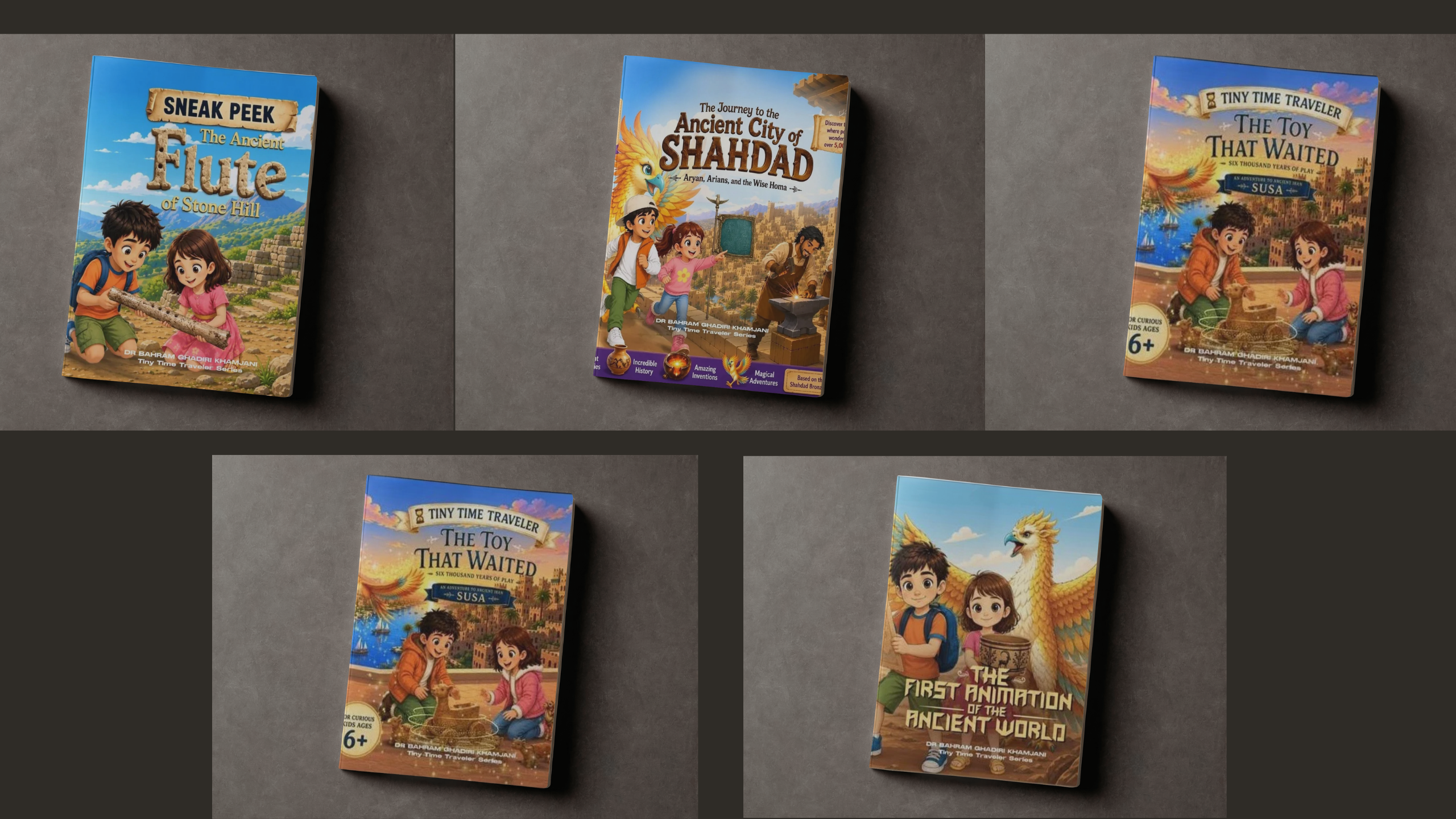
Children Set Out to Meet the Oldest Layers of History by Bahram Ghadiri Khamjani
By Owrang Editorial. تحریریه اورنگ
There is a question every Iranian living abroad runs into sooner or later. The history-loving world knows Egypt, regards Greece and Rome as the wellspring of Western civilisation, and has at least seen the name Mesopotamia in a schoolbook; yet of the civilisations that took shape over thousands of years on the Iranian Plateau it knows almost nothing. For a large part of the world's population, Iran is not a land of several thousand years but a name in political news. What came before those headlines, from the first villages to the people who built houses and farmed and wrote, has no place in the world's common memory.
This unfamiliarity is not only a matter of the past. When the history of a land goes unseen, its people too are known only through present-day images. A generation growing up outside Iran hears the name of its ancestors' country again and again, but rarely gets the chance to learn what lives were lived on that soil before the name found its way into the headlines.
The series Time Travelers to Ancient Persia is an attempt to loosen that knot, and it begins where least attention has been paid: with children.
The series does not teach history as a mass of names and dynasties. Here, before history is a lesson, it is a journey. The child sets off with the characters and arrives at a real place in the past, somewhere people once built homes, made tools, traded with one another and founded a world whose traces still lie beneath the soil.
The author, Bahram Ghadiri Khamjani, an archaeologist and professor of historic preservation, has spent more than thirty years in fieldwork and research at Iran's archaeological sites and historic urban fabrics. He taught for years at the School of Architecture and Urban Planning at Shahid Beheshti University and led sixteen years of extensive research into the bazaars of Iran, spaces that were never merely places of buying and selling but carried much of the social and cultural life of Iranian cities. Today he is the founder and president of the Foundation for Persian Archaeological Studies in Walnut Creek, California, which publishes the series.
The full plan runs to eighteen volumes, of which the first two have appeared. Each volume takes the child to a real site, from the Burnt City of Shahr-e Sukhteh to the ziggurat of Chogha Zanbil. What matters is that the contents of the stories are not invention: the objects, the houses, the tools and the ways of living rest on real evidence, as far as archaeological data allow. Imagination here is the child's way into history, not a substitute for it.
On this journey the child travels with a curious boy, an imaginative sister, a wise archaeologist and a golden bird that guides them through time. The bird carries the child out of the everyday world, but the destination is not an invented land. At the end of each volume the child knows something about a real place on earth, a place whose name can be found on a map and which one day might be visited. The story ends; the site remains.
The series is written for ages three to twelve, and that choice is what makes the work serious, because what settles in a child's mind in those years is not easily erased. A child who learns how human beings came to settle, to build, and to invent marks for recording their experience does not see history as a list of governments and wars. For that child, history becomes the story of human life.
If the child is of Iranian descent, these books can be a bridge to a land he may live far from. The bond does not rest on vague pride: the child meets places, objects and real evidence. A child who knows Iran only through headlines may end up with a fragile relationship to his own roots, but a child who knows that thousands of years ago people built cities and made art on that same ground will not see Iran as a contemporary political problem alone.
For the non-Iranian child, the series opens a door onto a chapter of human history that occupies little space in the schoolbooks. He learns that the history of civilisation did not pass through Egypt, Greece and Rome alone. And this view keeps history clear of rivalry between nations: the question is not which civilisation is older, but that no significant part of human memory should be left unseen.
Through such stories the child learns more than history; he meets the idea of evidence. He comes to understand that an archaeologist must build a careful picture of past lives out of potsherds and the remains of buildings. This is a first acquaintance with scientific questioning: how do we know? What was found? And how far can we speak on the strength of it? In an age when children face a great volume of information both true and false, a book that draws a line between story and historical fact is worth twice as much.
The author has a sentence that sums up the whole endeavour: history is not merely a record of the past, it is the memory of humanity. And memory is not only for remembering; it helps a person understand how he arrived where he is. Knowing the past is not meant to hold a child in the past. Roots are not an obstacle to moving through the world; they are the point from which one can look at it with more confidence.
Perhaps it all begins right here: with a child who opens a book, travels into the past with a golden bird, and comes back knowing that Iran is not only a name in the news. It is a land with deep layers of life, memory and human experience, layers that can still be learned, still be asked about, and still be told to the generations that follow.
The series, the list of titles, and dedicated sections for educators and librarians are available at:
tinytimetraveler.com
کودکان به دیدار کهنترین لایههای تاریخ میروند نوشته دکتر بهرام قدیری خمجانی
نوشتهٔ Owrang Editorial. تحریریه اورنگ
پرسشی هست که هر ایرانی مقیم خارج دیر یا زود با آن روبهرو میشود. جهانِ تاریخدوست، مصر را میشناسد، یونان و روم را سرچشمهٔ تمدن غرب میداند و نام بینالنهرین را دستکم در کتاب درسی دیده است؛ اما از تمدنهایی که هزاران سال بر فلات ایران شکل گرفتهاند تقریباً هیچ نمیداند. برای بخش بزرگی از مردم جهان، ایران نه سرزمینی چندهزارساله، که نامی است در اخبار سیاسی. آنچه پیش از این خبرها بوده، از نخستین روستاها تا مردمانی که خانه ساختند و کشت کردند و نوشتند، در حافظهٔ عمومی جهان جایی ندارد.
این ناآگاهی فقط به گذشته مربوط نیست. وقتی تاریخ سرزمینی دیده نمیشود، مردمانش هم تنها از خلال تصویرهای امروز شناخته میشوند. نسلی که بیرون از ایران بزرگ میشود، نام کشور نیاکانش را بارها میشنود، اما کمتر فرصت مییابد بداند پیش از آنکه این نام به تیتر خبرها راه یابد، چه زندگیهایی بر این خاک گذشته است.
مجموعهٔ «مسافران زمان در ایران باستان» کوششی است برای گشودن همین گره، و کار را از جایی آغاز میکند که کمتر به آن توجه شده: از کودکان.
این مجموعه تاریخ را به شکل انبوهی از نامها و سلسلهها نمیآموزد. اینجا تاریخ پیش از آنکه درس باشد، سفر است. کودک همراه شخصیتهای داستان راه میافتد و به مکانی واقعی در گذشته میرسد؛ جایی که انسانها روزگاری خانه ساختند، ابزار ساختند، دادوستد کردند و جهانی بنا نهادند که آثارش هنوز زیر خاک باقی است.
نویسندهٔ مجموعه، بهرام قدیری خَمجانی، باستانشناس و استاد مرمت، بیش از سی سال در محوطهها و بافتهای تاریخی ایران کار میدانی و پژوهشی کرده است. او سالها در دانشکدهٔ معماری و شهرسازی دانشگاه شهید بهشتی تدریس کرد و شانزده سال پژوهشی گسترده دربارهٔ بازارهای ایران را هدایت کرد؛ فضاهایی که تنها محل خریدوفروش نبودند و بخش مهمی از حیات اجتماعی و فرهنگی شهرهای ایران در آنها جریان داشت. او امروز بنیانگذار و رئیس «بنیاد مطالعات باستانشناسی ایران» در والنات کریک کالیفرنیاست و همین بنیاد ناشر این مجموعه است.
مجموعه در طرح کامل خود هجده جلد دارد و تاکنون دو جلد نخست منتشر شده. هر جلد کودک را به یکی از محوطههای واقعی میبرد؛ از شهر سوخته تا زیگورات چغازنبیل. اهمیت کار در این است که آنچه در داستان میآید ساختهٔ تخیل نیست؛ اشیا، خانهها، ابزارها و شیوهٔ زندگی تا آنجا که دادههای باستانشناختی اجازه میدهد بر شواهد واقعی استوارند. تخیل در این مجموعه راه ورود کودک به تاریخ است، نه جایگزین تاریخ.
کودک در این سفر با پسری کنجکاو، خواهری خیالپرداز، باستانشناسی دانا و پرندهای طلایی همراه میشود که راهنمای سفر در زمان است. پرنده او را از جهان روزمره بیرون میبرد، اما مقصد سرزمینی خیالی نیست. در پایان هر جلد، کودک چیزی دربارهٔ جایی واقعی روی زمین میداند؛ جایی که میتوان نامش را روی نقشه یافت و شاید روزی به دیدنش رفت. داستان تمام میشود، محل باستانی باقی میماند.
گروه سنی مجموعه سه تا دوازده سال است. همین انتخاب کار را جدی میکند، چون آنچه در این سالها در ذهن کودک مینشیند بهآسانی پاک نمیشود. کودکی که بداند انسان چگونه آموخت یکجانشین شود، خانه بسازد و نشانههایی برای ثبت تجربهاش بیافریند، تاریخ را فقط مجموعهای از حکومتها و جنگها نمیبیند؛ برای او تاریخ داستان زندگی انسان میشود.
اگر این کودک ایرانیتبار باشد، کتابها میتوانند پلی باشند میان او و سرزمینی که شاید از آن دور زندگی میکند. این پیوند بر افتخارهای کلی استوار نیست؛ کودک با مکان و شیء و شواهد واقعی روبهرو میشود. کودکی که ایران را فقط از دریچهٔ تیتر خبرها بشناسد ممکن است رابطهای شکننده با ریشههای خود پیدا کند، اما کودکی که بداند هزاران سال پیش انسانهایی در این سرزمین شهر ساختهاند و هنر آفریدهاند، ایران را تنها یک مسئلهٔ سیاسی معاصر نخواهد دید.
برای کودک غیرایرانی هم این مجموعه دری به فصلی از تاریخ بشر باز میکند که در کتابهای درسی جای اندکی دارد. او میآموزد تاریخ تمدن فقط از مصر و یونان و روم عبور نکرده است. و این نگاه، تاریخ را از رقابت میان ملتها دور میکند: مسئله این نیست که کدام تمدن قدیمیتر بوده، بلکه این است که هیچ بخش مهمی از حافظهٔ بشر نباید نادیده بماند.
کودک از خلال این داستانها فقط تاریخ نمیآموزد؛ با مفهوم مدرک هم آشنا میشود. میفهمد باستانشناس باید از میان تکههای سفال و بقایای بناها تصویری محتاطانه از زندگی گذشتگان بسازد. این نخستین آشنایی با پرسشگری علمی است: از کجا میدانیم؟ چه چیزی پیدا شده؟ و تا کجا میتوان بر پایهٔ آن سخن گفت؟ در زمانهای که کودکان با حجم بزرگی از اطلاعات درست و نادرست روبهرو هستند، کتابی که میان تخیل داستانی و حقیقت تاریخی مرز میگذارد، ارزشی دوچندان دارد.
نویسنده جملهای دارد که چکیدهٔ تمام این کوشش است: «تاریخ فقط سیاههٔ گذشته نیست، حافظهٔ انسان است.» و حافظه فقط برای به یاد آوردن نیست؛ به انسان کمک میکند بداند چگونه به این نقطه رسیده است. شناخت گذشته قرار نیست کودک را در گذشته نگه دارد؛ ریشه مانع حرکت در جهان نیست، نقطهای است که از آن میتوان با اطمینان بیشتری به جهان نگاه کرد.
شاید همهچیز از همینجا آغاز شود: از کودکی که کتابی را باز میکند، همراه پرندهای طلایی به گذشته میرود و وقتی بازمیگردد، میداند ایران فقط نامی در اخبار نیست. سرزمینی است با لایههایی عمیق از زندگی و حافظه و تجربهٔ انسانی؛ لایههایی که هنوز میتوان آنها را شناخت و داستانشان را برای نسلهای بعد گفت.
معرفی مجموعه، فهرست کتابها و بخشهای ویژهٔ آموزگاران و کتابداران در وبسایت زیر در دسترس است:
tinytimetraveler.com