
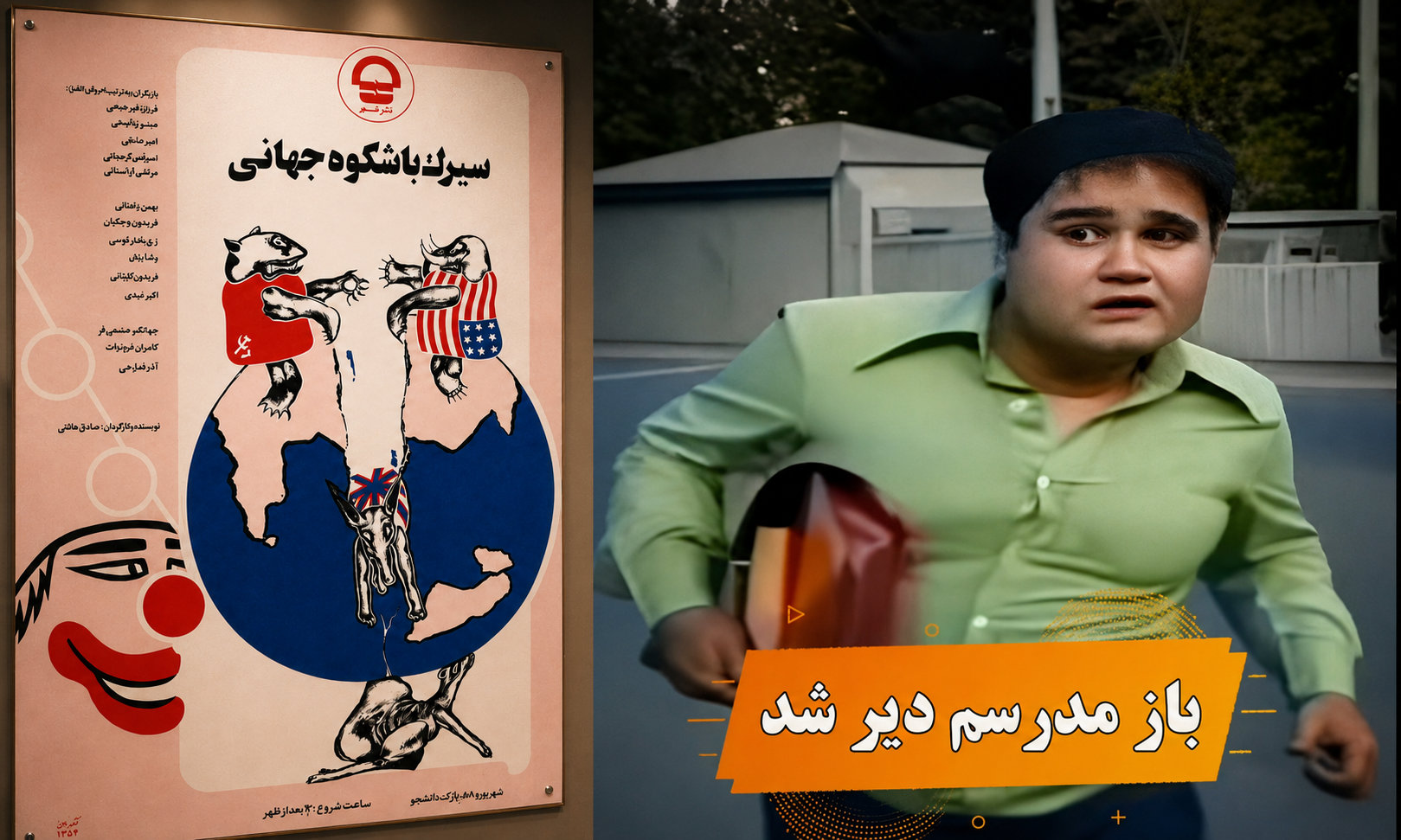
Akbar Abdi and his first professional work, The Magnificent World Circus
Today, Saturday, July 25, I saw an image of Akbar Abdi on television that was hard for me to believe: an ailing old man who could barely speak, with a lump in his throat that turned into tears in his eyes as he uttered fragmented words and cursed one person or several people. Yet even in that tearful curse, a trace of his familiar humor was still visible.
But I remember other faces of this sick old man: a young man of eighteen or nineteen, full of energy and enthusiasm, with a rare and hidden talent. It was the spring of 1979 when I first saw him. That year, under a contract with Tehran City Theatre, I was working on the play The Magnificent World Circus.
One day, one of the members of the group, I believe Amir Heshmati, who lived in Naziabad, brought Akbar Abdi with him and introduced him, saying, "He is from our neighborhood and really wants to become an actor. Would you please give him an audition as well?"
I looked at Akbar. His eyes were full of hope and excitement. I asked, "Have you read The Elephant in the File, written by Branislav Nušić, which was published in the first issue of Ketab-e Hafteh?"
In a drawn-out voice, he said, "Y...es."
I said, "Good. The play we are working on is based on that story, and you know it takes place in the city of 'K,' with a large crowd. Would you be willing to play one of the townspeople?"
He said, "You mean an extra?"
I said, "No. I mean an actor who can be effective. For now, all you would have to do is cheer, boo, clap, and laugh, but you would also have the opportunity to improvise, be creative, and show your ability and talent."
He smiled and said, "Yes, I am willing."
I turned to Amir Heshmati and said, "Your friend has passed his first audition."
And that was how Akbar Abdi joined our group as one of the residents of the city. He could have remained only an extra in that role, but he was not an extra. During rehearsals and performances, through his jokes and his perfectly timed actions and reactions, he became a distinctive character among the people of the city of "K."
As you can see on the play's poster, the performance took place in September 1979, about seven months after the events of 1979 and the gradual emergence of pressure groups with the support of Akbar Hashemi Rafsanjani and Khomeini himself, along with street clashes and written disputes among opposing ideas and beliefs. I do not intend to describe the circumstances of those days, except for what was directly related to this play and its actors.
The audience response was extraordinary. Every night, the main hall of Tehran City Theatre was filled with spectators who laughed at the many comic moments of the play and moved and danced in their seats to the rock and twist dance of the American elephant, who had made a long journey from India to America. The role was played by the late Sirous Gorjestani.
The first written attack against The Magnificent World Circus came from the newspaper...
...The performances were suspended for several days. Apparently, the dances in the play, which made the large audience move in their seats and join the action onstage, were considered contrary to sacred religious law, though perhaps that was only an excuse. Interestingly, two of the leaders of this attack later became actors and directors themselves: Abolghasem Kahi and Mohammad Kasebi.
In any case, the incident caused changes in the cast because some actors were threatened and others were criticized. But after a short interruption, the production continued. Among those who remained steadfast was the late Akbar Abdi, whose role had also been expanded.
This is how it happened. Among the actors I had chosen was Kamran Feyuzat. When I selected him, several people advised me not to use him because he had disappeared suddenly during other productions several times, stayed away for days, and then returned claiming that a close relative, most often an elderly maternal aunt, had died.
But his face and manner of speaking were very close to what I wanted for the role. I said to him, "Mr. Feyuzat, do you know why I am not acting in this play myself?"
He said, "No, I don't."
I said, "Because if anyone is absent for any reason, I will take the role away from him and perform it myself. I hope you will never be absent and that none of your relatives will leave this world."
He said, "Even if they do, I will not leave this play."
But he did. One night, he failed to appear. I turned to Hossein Afsahi, who was both an actor and my artistic assistant and production coordinator, and asked, "What should we do?"
Hossein pointed to Akbar. I realized that the others had already told him about Mr. Feyuzat's habits and that he had prepared himself for just such an event.
From that night on, Akbar Abdi became the actor playing one of the major roles in the production.
A few days later, Kamran Feyuzat reappeared. Apparently, his cousin had died for the third time. I told him, "As we agreed, your role has been taken away."
His eyes filled with tears and he said, "But I want to stay."
I said, "You may stay, but as one of the townspeople in the crowd."
He paused and said, "I accept."
Then he made a remark that made everyone laugh, and I still remember its meaning: "This is the first time an actor has been demoted. It is as though I have gone from being a colonel to being a private."
Akbar truly shone in the performances that followed. For him, it became an intense and effective training period. Here I must also acknowledge the important role of Hossein Afsahi in recognizing and developing Akbar Abdi's talent, because it was he who opened the doors of success for Akbar.
A short time after The Magnificent World Circus, Hossein gave him a role in a television production he was making: the role of a child in the series I Am Late for School Again.
And so Akbar Abdi's flight in the world of art began, and his extraordinary talent for portraying many different characters remained forever preserved in dozens of films.
He was deeply appreciative and affectionate. Whenever he saw me, he would kiss my shoulders.
I remember that during a trip to Qazvin for a performance of The Magnificent World Circus, he said to me one night, "I want to make a confession."
I said, "A confession?"
He said, "Yes. Do you remember that on the first day I came, you asked me whether I had read The Elephant in the File?"
I said, "Yes, I remember. What about it?"
He changed his accent and said, "I lied. I had not read it."
I said, "That did not matter. You could simply have said that you had not read it."
He said, "Honestly, I thought that if I had not read it, you would not accept me. I had been carrying this in my heart and wanted to tell you."
Now, whatever truths or lies he may have told, he is no longer among us. But his memory will remain with us, and after us: an artist whom they made old and broken while he was still young.
Sadegh Hatefi
July 25, 2026
Sacramento
اکبر عبدی و نخستین کار او «سیرک با شکوه جهانی»
نوشتهٔ Sadegh Hatefi
امروز، شنبه ۲۵ جولای، تصویری از اکبر عبدی در تلویزیون دیدم که برایم باورکردنی نبود: پیرمردی بیمار که بهسختی حرف میزد، بغضی در سینه داشت که به قطرات اشک در چشمانش تبدیل شد و همراه با کلماتی بریدهبریده، کس یا کسانی را نفرین میکرد. اما در این نفرین اشکآلود هم، نمایی از طنز همیشگی او آشکار بود.
از این پیرمرد بیمار، اما من چهرههای دیگری به خاطر دارم: جوانی ۱۸-۱۹ ساله، سرشار از شور و نشاط و استعدادی نهفته و کمنظیر. بهار سال ۱۳۵۸ خورشیدی بود که برای اولین بار او را دیدم. آن سال من طی قراردادی با تئاتر شهر تهران، نمایش «سیرک باشکوه جهانی» را کار میکردم. روزی یکی از بچههای گروه، به گمانم امیر حشمتی، که در نازیآباد ساکن بود، اکبر عبدی را با خود آورد و ضمن معرفی او گفت: «این بچهمحل ماست و خیلی دوست دارد که هنرپیشه شود. اگر ممکن است، از او هم امتحانی بگیرید.»
به اکبر نگاه کردم. چشمانش پر از شوق و امید بود. گفتم: «داستان «فیل در پرونده»، نوشتهٔ برانیسلاو نوشیج، را که در نخستین شمارهٔ کتاب هفته چاپ شد، خواندهای؟»
با لحن کشداری گفت: «ب...له.»
گفتم: «خوبه. نمایشی که ما کار میکنیم بر اساس همان داستان است و میدانی که در شهر «ک» اتفاق میافتد، با جمعیتی زیاد. حاضری یکی از افراد جمعیت باشی؟»
گفت: «یعنی سیاهیلشکر؟»
گفتم: «نه، یعنی یک هنرپیشه که میتواند مؤثر باشد. فعلاً جز هورا کشیدن و هو کردن و دست زدن و خندیدن کاری ندارد، اما امکان کار فیالبداهه و خلاقه و نشان دادن توان و استعداد خود را نیز خواهد داشت.»
لبخندی زد و گفت: «بله، حاضرم.»
رو به امیر حشمتی کردم و گفتم: «دوستت در اولین آزمون موفق شد.»
و به این ترتیب، اکبر عبدی در نقش یکی از اهالی شهر به گروه ما پیوست. او میتوانست در این نقش تنها یک سیاهیلشکر باشد، اما او سیاهیلشکر نبود. در تمرینها و اجراها، با مزهپرانیها و کنش و واکنش بهموقع، به شخصیتی نمونه میان اهالی شهر «ک» تبدیل شد.
همانگونه که در پوستر نمایش میبینید، تاریخ اجرای نمایش شهریورماه ۱۳۵۸ است، یعنی حدود هفت ماه پس از واقعهٔ ۵۷ و روییدن تدریجی گروههای فشار با حمایت اکبر هاشمی رفسنجانی و شخص خمینی، درگیریهای خیابانی و نیز قلمی میان افکار و اندیشههای متفاوت. نمیخواهم اوضاع آن روزها را شرح دهم، جز آنچه را که به این نمایش و بازیگران آن مرتبط است.
استقبال تماشاگران از این اجرا کمنظیر بود. سالن اصلی تئاتر شهر هر شب مملو از تماشاگرانی میشد که با لحظات کمدی نمایش، که بسیار هم زیاد بود، میخندیدند و با رقص راک و توئیست فیل آمریکایی که سفری بلند از هند به آمریکا داشته است، میرقصیدند. بازیگر این نقش، زندهیاد سیروس گرجستانی بود. نخستین حملهٔ قلمی به «سیرک باشکوه جهانی» از سوی روزنامهٔ...
... ادامهٔ اجرا برای چند روز متوقف شد. گویا رقصهای نمایش که انبوه تماشاگران را در صندلیهای خود به حرکت و همراهی با صحنه وامیداشت، خلاف شرع مقدس بود و شاید هم یک بهانه. جالب است که دو تن از سردمداران این تهاجم، بعدها بازیگر و کارگردان شدند: ابوالقاسم کاخی و محمد کاسبی.
بگذریم. بههرحال، این واقعه سبب شد تغییراتی در کادر بازیگران به وجود بیاید، چون برخی مورد تهدید و برخی مورد شماتت قرار گرفتند. اما کار، بعد از وقفهای کوتاه، ادامه یافت. میان بازیگرانی که ثابتقدم ماندند، یکی هم زندهیاد اکبر عبدی بود که ارتقای نقش هم یافته بود.
ماجرا چنین رقم خورد که میان بازیگرانی که انتخاب کرده بودم، یکی هم کامران فیوضات بود. هنگام این انتخاب، توصیههایی به من شد که از ایشان استفاده نکنم، چون چندین بار میان اجراهای دیگران ناگهان غیبش زده است و چند روزی نیامده و بعد از بازگشت گفته است فلان فامیل نزدیکم، و اکثراً پیرخاله، فوت کرده است. اما چهره و لحن او بسیار به نقشی که میخواستم نزدیک بود.
به او گفتم: «آقای فیوضات، میدانی چرا من خود در این نمایش بازی نمیکنم؟»
گفت: «نه، نمیدانم.»
گفتم: «برای اینکه اگر کسی به هر بهانهای غیبت کرد، نقش را از او بگیرم و خودم بازی کنم. امیدوارم شما هرگز غیبت نکنید و هیچیک از خویشانتان این جهان را ترک نکنند.»
گفت: «ترک هم بکنند، من این نمایش را ترک نمیکنم.»
اما ترک کرد و در یکی از شبهای اجرا نیامد. به حسین افصحی، که هم بازی میکرد و هم دستیار هنری من و برنامهریز کار بود، گفتم: «چه کنیم؟»
حسین به اکبر اشاره کرد. متوجه شدم که دوستان از قبل، از اخلاق جناب فیوضات به او چیزهایی گفته بودند و او خود را برای چنین اتفاقی آماده کرده است. اکبر عبدی از آن شب، بازیگر یکی از نقشهای مهم نمایش شد.
چند روز بعد، کامران فیوضات پیدایش شد و گویا برای سومین بار پسرخالهاش فوت کرده بود. به او گفتم: «طبق قرار قبلی، نقش شما گرفته شد.»
بغض کرد و گفت: «ولی من میخواهم باشم.»
گفتم: «باش، اما میان جمع اهالی شهر.»
مکثی کرد و گفت: «قبول.»
و آنگاه جملهای گفت که باعث خندهٔ بچهها شد و مضمون آن هنوز یادم است: «این اولین بار است که یک بازیگر تنزل مقام پیدا میکند. انگار من از سرهنگی به سربازی رسیدم.»
اکبر در ادامهٔ اجراهای نمایش حسابی درخشید. این برای او یک دورهٔ آموزشی فشرده و مؤثر بود و همینجا باید به نقش سازندهٔ حسین افصحی در شناخت و پرورش اکبر عبدی اشاره کنم، زیرا او بود که درهای موفقیت را برای اکبر عبدی گشود و زمانی کوتاه پس از اجرای «سیرک باشکوه جهانی»، به او نقشی در کاری سپرد که برای تلویزیون میساخت: نقش یک کودک در سریال «بازم مدرسهام دیر شد».
و بدین ترتیب، پرواز اکبر عبدی در آسمان هنر آغاز شد و استعداد شگفت او در ارائهٔ شخصیتهای گوناگون در دهها فیلم سینمایی، برای همیشه به یادگار ماند.
او بسیار قدرشناس و بامحبت بود و هر از گاه که مرا میدید، شانههایم را میبوسید. یادم است که در سفری که برای اجرای «سیرک باشکوه جهانی» به قزوین داشتیم، شبی به من گفت: «میخوام اعترافی بکنم.»
گفتم: «اعتراف؟»
گفت: «بله. یادتونه روز اولی که آمدم، از من پرسیدین آیا داستان «فیل در پرونده» رو خوندم؟»
گفتم: «آره، یادمه. چطور مگه؟»
لهجهاش را تغییر داد و گفت: «جواب دروغ دادم. نخونده بودم.»
گفتم: «خوب، این که مهم نبود. میتونستی بگی نخوندم.»
گفت: «راستش خیال کردم اگه نخونده باشم، قبولم نمیکنین. رو دلم مونده بود که اینو به شما بگم.»
حالا دیگر، با هر دروغ یا هر راست، او دیگر میان ما نیست، اما یادش و خاطرهاش با ما و بعد از ما خواهد ماند؛ هنرمندی که در جوانی، پیر و شکستهاش کردند.
صادق هاتفی
۲۵ جولای ۲۰۲۶، ساکرامنتو