
Ahmad Shamlou: Hunter of Words
On the 26th anniversary of Ahmad Shamlou’s passing July 23, 2000
By Owrang Editorial
Ahmad Shamlou may well be the most controversial poet of contemporary Iran. His views on Ferdowsi, on Saadi, on contemporaries such as Hamidi Shirazi, and likewise on the Tudeh Party, the Fadai guerrillas, the monarchy, and the Islamic regime won him many admirers and many opponents, and always stirred storms. Yet beyond all these opinions and all these controversies, in the arena of Persian letters and poetry today he stands as a champion alone and without rival.
His greatest achievement is the creation of Persian free verse, sheer-e sepid, and of a new substance within that new form:
"No, there is no holding back this snow now,
this snow that settles on our brows and on our hair
so that we may look upon ourselves in the mirror
and, in terror, from a heights like a scream,
fix our gaze upon the depths of the abyss"
And it is in the continuation of this same poem that he sets before the reader a startling new way of joining words:
"For you are that sip of water the servants
give the doves to drink
before the dagger
is laid against their throats"
His record includes the editorship of some of the most influential journals of his time (Ketab-e Hafteh, Khusheh, Bamshad, Ketab-e Jomeh, and more), yet he never stayed at any of them longer than a few months. Esmail Pourvali, the publisher of Bamshad, who had entrusted its editorship to Shamlou, recalls: nine months after Bamshad first appeared, Shamlou came to me one day and said, "Esmail jan, I have never worked for anyone longer than six months. I loved you dearly, and so I worked for you nine. Now I must go."
And yet Ahmad Shamlou was one of the most prolific writers and researchers of his age; the proof is his monumental labor of research on Ketab-e Kucheh, The Book of the Alley, his encyclopedia of Persian folklore and street language.
In the summer of 2000, Shamlou fell silent in mid-speech, just as he himself had written:
"and every supper
may well be the last"
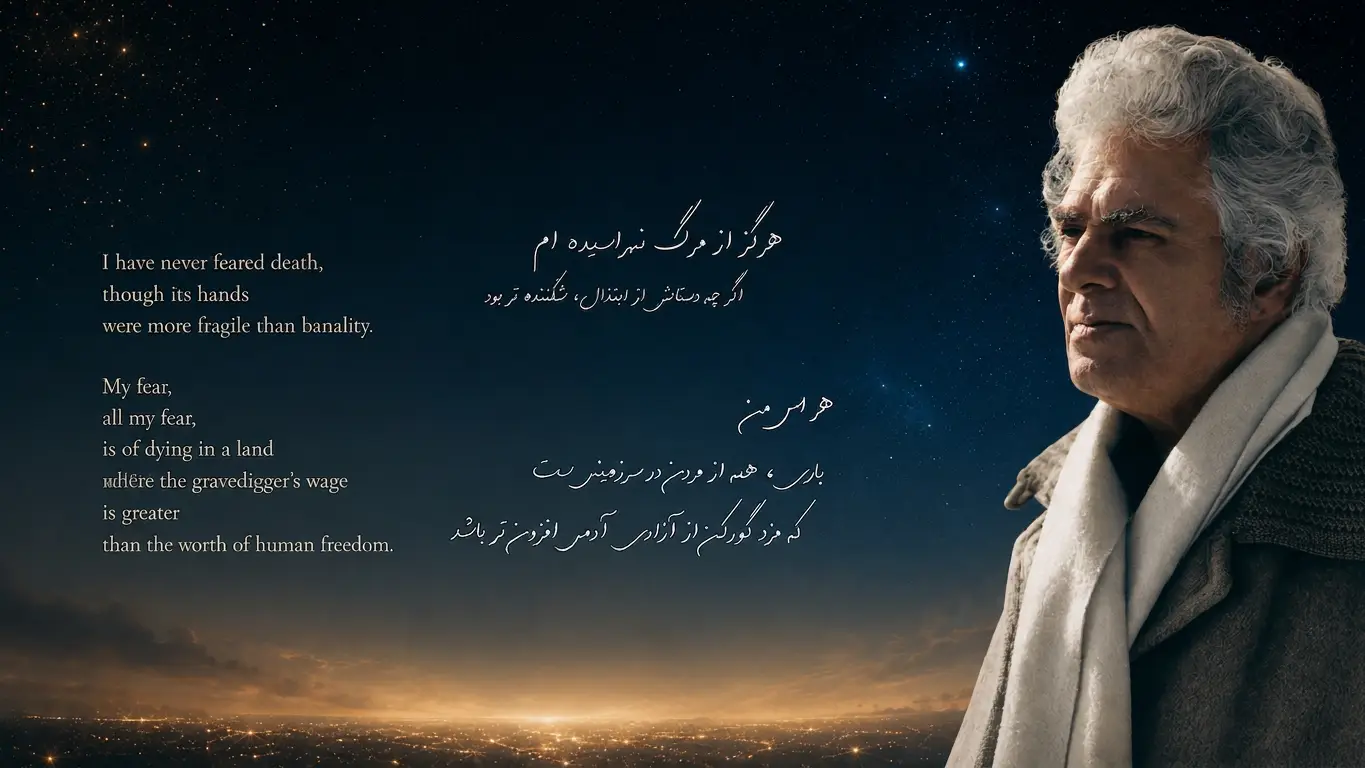
Among the crowd gathered before Iranmehr Hospital to see him off, a great banner carried his own words:
"Never, never have I feared death"
صیاد واژهها
به مناسبت بیستوششمین سالگرد خاموشی احمد شاملو ۲ مرداد ۱۳۷۹
نوشتهٔ Owrang Editorial
احمد شاملو را شاید بتوان جنجالیترین شاعر معاصر ایران دانست. نظریات او در مورد فردوسی، سعدی و معاصرینی چون حمیدی شیرازی و نیز حزب توده، چریکهای فدایی، رژیم شاهنشاهی، رژیم اسلامی، موافقین و مخالفین بسیاری داشته و همیشه جنجالبرانگیز بوده است. اما سوای همهٔ این نظریات و این جنجالها، در میدان ادب و شعر امروز پارسی او پهلوانی یکه و بیرقیب است.
بزرگترین دستاورد او آفرینش شعر سپید و خلق محتوا در این شکل تازه است:
«نه، این برف را دیگر سر باز ایستادن نیست
برفی که بر ابرو و به موی ما مینشیند
تا در آئینه چنان در خویشتن نظر کنیم
که به وحشت از بلند فریادوار گداری
به اعماق مغاک نظر بردوزیم»
و در ادامهٔ همین شعر است که شکلی بدیع از ترکیب واژهها را پیش روی خواننده میگذارد:
«که تو آن جرعهٔ آبی که غلامان
به کبوتران مینوشانند
از آن پیشتر که خنجر
به گلوگاهش نهند»
او سردبیری نشریاتی بسیار تأثیرگذار را در کارنامهٔ خود دارد (کتاب هفته، خوشه، بامشاد، کتاب جمعه و...) اما در هیچ یک از آنها بیش از چند ماه نمیماند. اسماعیل پوروالی، صاحبامتیاز مجلهٔ بامشاد که سردبیری آن را به شاملو سپرده بود، میگوید: نه ماه پس از انتشار بامشاد روزی شاملو نزد من آمد و گفت: «اسماعیل جان، من برای هیچ کس بیش از شش ماه کار نکردهام. تو را خیلی دوست داشتم که برایت نه ماه کار کردهام. دیگر میخواهم بروم.»
و با این همه احمد شاملو یکی از پرکارترین نویسندگان و پژوهشگران معاصر بود و گواه این مدعا کار سترگ او در پژوهش و انتشار کتاب کوچه است.
مردادماه سال ۱۳۷۹ شاملو از ادامهٔ سخن بازمیماند و همانگونه که خود گفته بود:
«و هر شام
چه بسا که شام آخر باشد»
در انبوه جمعیتی که برای بدرقه مقابل بیمارستان ایرانمهر گرد آمده بودند، بر پارچهنوشتهای بزرگ کلامی از او به چشم میخورد:
«حاشا حاشا که هرگز از مرگ هراسیده باشم»