
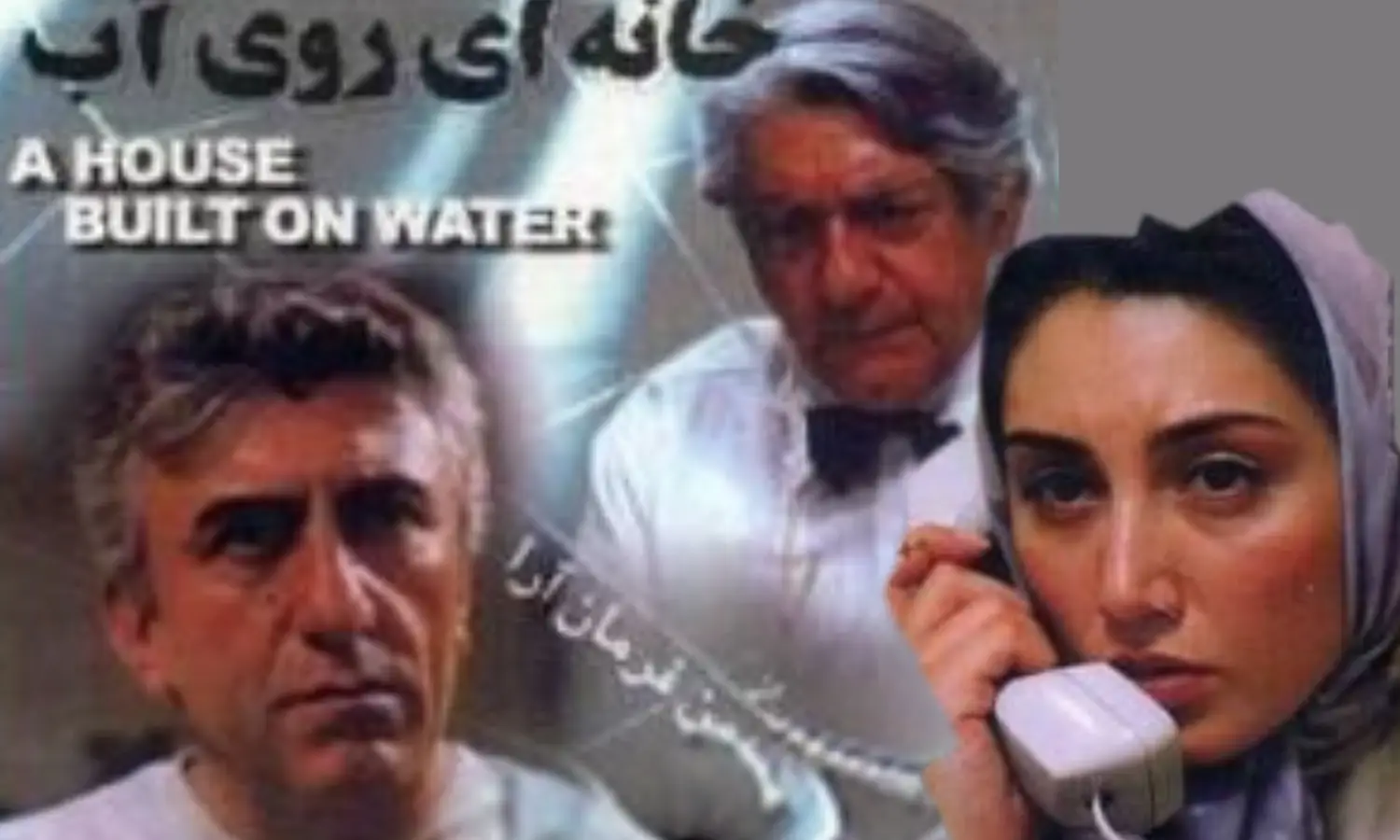
A House Built on Water
On a Film by Bahman Farmanara

A House Built on Water won the Crystal Simorgh for Best Film at the Fajr Film Festival; a film that remained banned for a year before it finally reached the screen. In this essay, Reza Khanlari examines Bahman Farmanara’s masterwork sequence by sequence: from the skeins of yarn that weave destiny to the light that falls upon the bed of the child who knows the Quran by heart.
Note: This essay recounts the film’s story in full.
Bahman Farmanara is a celebrated Iranian writer, producer, and director whose works shine like a treasury in the history of Iranian cinema. In his first steps as a filmmaker, Farmanara made the short films Nowruz and Caviar and Tehran, Old and New in 1972. His first feature, Qamar Khanum’s House (1), seems distant from the artistic personality and cinematic thinking that would define his later work. With his next film, Prince Ehtejab (2), an adaptation of a story by Houshang Golshiri, he won the acclaim of critics and the prize for Best Film at the Tehran International Film Festival. His third feature, Tall Shadows of the Wind, adapted from Golshiri’s The First Innocent (3), was banned both before and after 1979. In the years that followed, Farmanara (4) came to be recognized as one of the pioneers of the Iranian New Wave. He brought his works before the public and, as a prominent filmmaker, created a two-way bond between the artistic community and the audience’s gaze.
A House Built on Water (5) is another film by Bahman Farmanara, featuring well-known and distinguished Iranian actors. The film looks at a perilous life filled with human suffering; a life struggling at the edge of annihilation. It is a social critique, with a political edge, of the filmmaker’s own time and of humanity’s struggle within a world increasingly buried under technology. It is a meditation on a human being who appears successful yet is defeated, trampled under the thick and crushing rubble of life. It is the tale of a fragile house drifting upon raging water, moving every which way until it finally breaks apart and slowly disappears from sight in the mire of its own making. The narrative’s probing gaze, with a story set in the society around us and in dialogue with the viewer’s mind, compels the audience to think.
An Angel in the Fog
The opening shot of the film begins with a man and a woman, seen from behind inside a car moving through the fog-bound space of night toward an unknown destination. It is an allusion to the fate of the modern human being; a person moving through the labyrinth of a hollow, identityless life toward nowhere, toward a destination hidden in the darkness that has settled over his nature. The sound of impact, a stop, fear, and then, suddenly, an event occurs that becomes the foundation of the dramatic premise for everything that follows; a bridge to all the sequences, and above all to the film’s final sequence.
Dr. Reza Sepidbakht collides with an angel who has appeared in his path on this dark road. An earthly man comes face to face with a divine sign. The sense of emptiness in his life is completed by the film’s sound design and mixing. It is a metaphor in which the earthly human being, by stepping onto the path of virtue, can reach a higher spiritual station and stand in the place of that very angel; but by overstepping the bounds of moderation, he moves toward destruction and arrives at vice. The moral corruption of Dr. Reza Sepidbakht, a wealthy obstetrician and gynecologist, is brought into sharp confrontation through his encounter with the innocent angel he has struck.
After touching the angel’s hand, he feels a severe burning in his own hand; a burning that becomes infected. This wound, left by the angel’s fingers, stays with him throughout the story beneath its bandage. It reads as a mark of disgrace that is always visible and repeatedly pointed to. It is a red light in his identityless life, or, in other words, a wound that testifies to the doctor’s festering and filthy existence. The surreal, fog-laden space of a dark night points to human error and misguidance, and to the obscure story of humankind on the stony mountain road of life. The doctor of the story, drunk on himself, kills an angel with his car; like those human beings who, with their own hands, drive the light out of their earthen bodies.
[ Image 2: Reza Kianian as Dr. Sepidbakht ]
Sepidbakht is a dramatically constructed character in whom every element, from script, set, costume, music, precise staging and makeup to the figure of Sepidbakht himself, becomes a symbol of a bewildered society. It is worth noting that, first of all, the intelligent handling of Sepidbakht’s character along the arc of the drama, as he faces the questions and afflictions of the story within a focused and complete screenplay, carries him through his conflicts. His full meaning then emerges through Reza Kianian’s understanding, analysis, and performance of the role; an actor who, for the sake of the part, did not even shrink from gaining a drastic 40 kilograms.
A Physician Who Is Himself Sick
Farmanara defines Dr. Sepidbakht as a skilled physician, a renowned obstetrician and gynecologist, yet one who has a different, negative, and predatory attitude toward women. His story is designed and takes shape within a wealthy family that appears to be without any problem; but this family is, in truth, like a rotten piece of wood hollowed out from within by termites. In one sequence, Dr. Sepidbakht goes to a friend and colleague to have the wound on his head dressed. Recounting a dream, Sepidbakht tells him: “To catch fish, they drove an electric device into the ground to draw out earthworms. Thousands of worms came up out of the earth and the ground was covered with them. I dreamed I was lying somewhere, motionless. Thousands of worms came for me, and when one worm tried to enter my eye, I woke with a start.”
A study of the historical evolution of cinema makes one point clear: films have often carried predictions of a society’s future and its transformations. The structure of Sepidbakht’s life is ready to collapse at any moment, for suffering has hollowed out the doctor’s rotten, straw-stuffed soul from within. This speaks of a society disintegrated from the inside, breathing only through the display of its symbolic frame, while its principles, beliefs, morals, and culture have been crushed and destroyed. Sepidbakht gives shape to an extreme loneliness and despair, to the point that he does not even have a place to speak his mind. To escape it, he takes refuge in a dark corner of his house and weeps beside his family photographs.
Farmanara works from a realist logic in the expressive grammar of his filmmaking. In this film, by avoiding rapid successive cuts that build rhythm out of short-duration shots, and by insisting on wide, long-shot (6) framings, he strives to preserve the continuity of a scene’s emotional atmosphere and to keep intact the bond between the characters and their surrounding environments.
Skeins That Weave Destiny
Among the points that receive special attention in the staging is the careful use of colored skeins of yarn within the mise-en-scène, at the heart of the screenplay and, accordingly, in the production design. The weary, lonely, and sorrowful Dr. Sepidbakht follows a colored skein of yarn that appears now and again throughout the story and reaches the hospital room of the child who has memorized the Quran. It seems that this child alone captures Reza Sepidbakht’s attention and becomes his savior.
As this atmosphere takes shape, Sepidbakht is confronted with an unearthly light that has filled the room. A surreal space which, like the story’s beginning, speaks of another angel; an angel who this time is the savior within the filmmaker’s story and the guide of Sepidbakht. It is a light that speaks of God’s renewed attention to His bewildered, sinful creature, shining upon his body and all around him. It is a manifestation of forgiveness for the errant earthly human being; a forgiveness promised by all religions and faiths in their various forms, interwoven with religious belief. This light is applied intelligently, through the art and technique of proper lighting, to the structure of the film and the flow of its narrative. Beyond its technical function, this device strengthens the dramatic qualities of the work and leaves a profound effect on the viewer. Through memorizing and reciting the Quran and seeking God, this child has reached a station opposite Sepidbakht’s: the higher human station.
The birth of this child who has memorized the Quran is itself full of mystery. To underline this identity within the film’s drama, his father remarks in dialogue: “The sky on the night of his birth was full of shooting stars.” An angel of salvation lies in a hospital bed before Sepidbakht’s eyes; a bearer of the revealed word, on a mission to rescue a drowning man like Dr. Sepidbakht.
Sepidbakht arrives there by following a skein of yarn. Throughout the narrative, we keep seeing skeins: colored skeins of wool and a knitter dressed in white, a space suffused with white light, and the knitting and colored yarns of an old woman who weaves them together. It is a metaphor for the doctor’s destiny and life, woven in just this way; skeins each of which is entwined, in its own manner, with the story’s characters. These skeins appear again and again across the film: in the nursing home, beside the door of the father’s room, in the doctor’s office, and elsewhere. Skeins of different colors, each expressing a corner of the dark, and not so dark, destinies of human beings. The last skein, in the hospital corridor, carries Reza Sepidbakht to the story’s climax; that is, the confrontation between the two stations. The visual composition of the image and the color contrast of the skeins within a white space allude to the differences among human destinies along the long road of life, which we meet again in yet another form: in the old woman’s distant gaze and in her thought.
In the film’s narrative, Farmanara uses a range of elements with calculated angles and precise framing of the camera’s eye. Through the careful and deliberate design of stillness and movement within the frame, the movement of actors and objects in the scene, the composition of lines and suitable shot sizes, together with well-placed sequence shots (7) and measured camera movements, he creates a coherent and fitting rhythm. This rhythm, with a tempo in the story and its throughline that runs faster than the rhythm itself, helps the audience visualize the image and grasp the depth of its purpose, which is the loneliness and abandonment of humankind. It creates a fresh and believable space for the curious mind.
The Victims of a Fragile House
The proper crafting of the text in presenting dramatic events, the branching of the drama into side threads around the main line, the logical presence of the characters, and the way their fates align with and mirror Reza Sepidbakht’s all allow the audience to grasp the film’s meanings. The viewer is drawn into the story’s central theme, into reflection on what should and should not be, and into the chain-like entanglement of human beings set against one another. Unknown pursuers whose shadow is felt throughout, and who are seen now and then trailing the doctor through the story, finally put him to death. The doctor’s secretary, Jaleh, is herself one of the story’s principal victims. The doctor’s cast-off wife, robbed by this very doctor of even the chance at her greatest wish, motherhood, cooperates with the pursuers. A pregnant woman and her husband, from the simple, laboring, lower stratum of society, go to excess in the repeated bearing of children. All of these figures render the ruin of today’s generation within society. And at last, the death of the pregnant woman in childbirth for want of Dr. Sepidbakht’s help; that is, of the very man whose duty is to save human lives. Throughout the story, and in the film’s early encounters, these confrontations appear again and again. Sepidbakht and the people around him are, in one way or another, victims of his corruption: women such as the nurse or the office secretary, or even the woman accompanying the doctor at the film’s opening, his newest instrument of use. Victims to whom Sepidbakht himself flees in order to escape the loneliness that rules his life. We see the shadow of this loneliness fall indirectly on those closest to him, such as his son and his father.
The son is the principal victim of this story and of the family’s contradictions, above all the doctor’s family. He is a son shaped by Westernized modern culture within a traditional society. At one point, this difference of outlooks is shown with great softness and immediacy: at a breakfast table where the father listens to gentle music while Mani, the doctor’s son, plays loud, pounding music. This is itself a glimpse of the cultural gap between the new generation and the old, embodied in these two representatives. The doctor’s inner core is an extreme weariness of spirit, reinforced in the staging; as in the shots by the window, his back to the camera, staring at an indistinct horizon far away. The son, meanwhile, in his struggle to break free of addiction, has preserved his Eastern tenderness by inviting his grandfather to live with them instead of in the nursing home.
A House Built on Water concerns the victims of a shallow society. It is the tale of people afloat on the surface of the water, clutching at anything to save themselves in the hope of rescue. Of those sunk so low that all they know of life is one breath in, one breath out, and its continuation; that, and nothing more.
A young woman comes to the doctor for surgery, and after the operation they discover HIV in her body. This, too, is presented as one of the bitter signs of a new moral age. To save herself, the girl is prepared to deceive another innocent person, even under the name of a life partner, and drag him under the water. Another symbol of the fall to the bottom of the valley of nothingness, spoken in the line: “We have built a house on water, and all we ever learned was how to swim.”
“We have built a house on water, and all we ever learned was how to swim.”
Can one truly lean on the walls of a drifting house afloat on water? Or shelter for the night beneath its shadow? And is the answer to flail about in the water? Is the answer, for our society today, to flee from realities and bury them in a labyrinth of lies and deceit whose end leads to a single point: blackness? Is there no lifeboat for those drowned by the storm of incompetence in the swamp of nothingness? Must they, instead of one deep and safe breath, merely thrash for a little more air? And so, upon entering the hospital, and after meeting yet another of his victims, Reza Sepidbakht is drawn, unbidden, to the encounter with his savior; a savior who alone, and only he, can shake Sepidbakht to the core.
In the meeting of father and son at the nursing home, the film underlines the frailty of social foundations and the weakness that rules the bonds and affections of the family. A son who, in the new culture of daily life, refuses even to care for his father; who instead rehearses the bitternesses and troubles of the past and declares his own loneliness. Like a court session in which, this time, the judge is the accused and the accused is the judge.
Father and son each play judge and interrogator to the other. At one point, the doctor’s father even remarks, in conversation with Mani, the doctor’s son, that “the doctor is taking his revenge on him.” This revenge is the mark of the merciless whip of the new age upon the body of today’s bewildered human being, from a father who is himself wounded by the same fate. It is a confession to the severing of family ties and the destruction of high cultural values trampled by cultural modernity; a modernity whose gift is a walk along the edge of a dark and towering precipice that ends, once again, in humanity’s annihilation.
The arrival of Mani, Sepidbakht’s son, brings fresh trouble; a son who has carried addiction home with him and is arrested for carrying narcotics as soon as he enters the homeland. The destruction of a human being, and in the newest generation; a soft reminder that in this land, perished dreams and dark fates are plainly visible. A child who, to escape the killing trap of addiction, reaches out for help to a father he has not seen in 15 years. The doctor’s telling reply, “What a terrible world, in which I am someone’s last hope,” underlines how deep the doctor is sunk in ruin. In this game, the child who has memorized the Quran asks the ill-starred Sepidbakht for rescue and release; in truth, he asks, for the doctor’s own salvation, to be taken with him. He lies on a bed wrapped in an unearthly light, set against the blackness of Dr. Sepidbakht’s fortune and heart. A hospital bed by which the physician, abandoned in darkness, joins his world to the shortcut back to the main road of light. Will saving the lives of the sick pull the doctor out of the blackness and bring him to the light?
There is a beautiful pairing of the doctor and the child who has memorized the Quran as they travel together toward the doctor’s house. Why does he take Dr. Sepidbakht along with him? Destiny? Perhaps. Surreal signs, and at last a small child before whom the physician is like a docile, gentle lamb. The child says that whoever runs down an angel lacks the capacity to understand him, or the Quran. He points out that the doctor’s hand, that is, the wounds left by the angel’s fingers, has healed. The festering wound of his life began with an angel and is erased by an exalted human being; the mark of his disgrace fades from his body. Inside the house, the child explains: “At first he recited the Quran to draw attention, and then, the moment he understood its meaning, out of fear that for even one instant God might not exist, he fainted and fell into a coma.”
The lost one had been beside him all along, though the doctor’s inner eye lacked the power to see him. A man drowned in a loneliness of his own making, with no way out of it. A man who, at one point in the story, takes the last remaining person in his life to a clinic to be treated for addiction and, with tearful eyes, as if he knows he will never see him again, bids him farewell. And at last, his flight, and his going.
Death in the Spider’s Web
The striking feature of this sequence and the one that follows is the interplay of colors and space, above all the contrast of the actors’ clothing. The hospital gown on the child, the doctor’s blue and white clothes, and the dark clothes of the assailants, whose faces once again are never seen. The space of the house and the lifeless statues arranged within it stage the bitter event as a confrontation between black and white. In the scene of the doctor’s death, across a white cloth spread over the room like a shroud, the story’s tangled skeins of yarn move and appear not one by one but all together. Skeins that gradually twist into one another and become a spider’s web; a snare that speaks of entrapment and captivity. The doctor’s captivity in the deeds and the trap that he himself, with his own hands, has spun and spread for himself. And at last, the assailants advance on the doctor. Sepidbakht, who now for the first time acts to help another, goes to the child, asks him to stay where he is, and then goes out to fight his fate.
In this part, from the doctor’s standing still to the blows and his death, Farmanara uses an overhead angle almost throughout. The doctor stands motionless at the center of the spider’s web, on the wide expanse of his own shroud; like prey caught in the web, with no way out, waiting for death. The weakness and smallness of the human being, who even in the face of dying has no power to defend himself or change his fate. When he has no hope left, empty and aimless, blow upon blow, Reza Sepidbakht, and death.
[ Image 3: A shot from the film’s final scene ]
The doctor, drenched in blood, looks to the sky and calls upon God. The red of blood, and the washing of the instruments of the killing; and once more the child comes to the doctor’s deathbed. A doctor who used to see, in the tangled back alleys of the city, the walking dead; the hopeless and the lonely, drowned in nothingness, living out their days across a soulless city in the lap of addiction, corruption, vice, and ruin. Now he himself, with all his afflictions, is drawn into the jaws of death. The child appears above him and comforts him; as if, at the hour of death, the world turns upside down: the patient becomes the physician and comes to his physician’s bedside.
The child warns the doctor’s killers and recites verses of the Quran. Then Sepidbakht, dressed in white, lies beside the child on the carpet of his deeds, in a green, paradisal space beneath a weeping willow, while the old woman weaves the last of her weaving. This time he has come out of that closed space into the open space of paradise. He has carried all his deeds with him into this world in the form of a spread; a colored spread woven of his various deeds in different, striking colors, and in the company of a child who knows the Quran by heart.
Neither you nor I know the secrets of eternity;
neither you nor I can read the answer to this riddle.
Khayyam
The camera slowly cranes upward. In the blue expanse, reaching toward the boundless sky, Reza Sepidbakht, despite all his loneliness, attains hope and his Beloved.
I am the slave of the Moon; speak of nothing but the Moon.
Before me speak only of candles and sweetness; of nothing else, say nothing.
Speak not of sorrow; speak of nothing but treasure,
and if you know nothing of this, take no trouble; say nothing.
Last night I went mad; Love saw me and said:
I have come; do not cry out, do not tear your robe; say nothing.
I said: O Love, it is something else I fear.
It said: there is no something else; say nothing more.
I will whisper hidden words into your ear;
nod your head in yes, and but for that nod, say nothing.
I said: Is this the face of an angel, or a human face?
It said: It is beyond angel and human; say nothing.
Rumi
Translated by Owrang Editorial
Reza Khanlari
July 2026
Notes
Based on the television series Qamar Khanum’s House.
Farmanara was involved in the production of films by major filmmakers, including The Glass Menagerie by Paul Newman, Madame Sousatzka by John Schlesinger, Talk Radio by Oliver Stone, The Decline of the American Empire by Denys Arcand, The Last Temptation of Christ by Martin Scorsese, Mr. and Mrs. Bridge by James Ivory, The Grifters by Stephen Frears, Léolo by Jean-Claude Lauzon, and others.
Produced in 2001 and released publicly with modifications after a one-year delay.
Shots with a wide, open field of view.
Long Take / Sequence Shot.
«خانهای روی آب»
نگاهی به فیلمی از بهمن فرمانآرا
نوشتهٔ Reza Khanlari
خانهای روی آب برنده سیمرغ بلورین بهترین فیلم جشنواره فجر است؛ فیلمی که یک سال در توقیف ماند تا سرانجام به پرده رسید. رضا خانلری در این یادداشت، شاهکار بهمن فرمانآرا را سکانس به سکانس میکاود: از کلافهای کاموایی که سرنوشت میبافند تا نوری که بر تخت کودک حافظ قرآن میتابد.
توجه: این نوشتار داستان فیلم را به طور کامل بازگو میکند.
بهمن فرمانآرا، نویسنده، تهیهکننده و کارگردان صاحبنام ایرانی است که آثار او در تاریخ سینمای ایران همچون گنجینهای میدرخشد. فرمانآرا در نخستین گام فیلمسازی، فیلمهای کوتاه «نوروز و خاویار» و «تهران کهنه و نو» را در سال ۱۳۵۱ خورشیدی ساخت. اولین فیلم بلند او «خانه قمرخانم» (۱) متفاوت با شخصیت و اندیشه فیلمسازی او است، چرا که در اثر بعدی و اقتباسی خود، «شازده احتجاب» (۲) با داستانی از هوشنگ گلشیری، استقبال منتقدین و جایزه بهترین فیلم جشنواره جهانی فیلم تهران را به دست آورد. سومین اثر سینمایی او «سایههای بلند باد»، اقتباس از «معصوم اول» نوشته هوشنگ گلشیری (۳)، در هر دو دوره پیش و پس از ۱۳۵۷ توقیف شد. در سالهای آتی، فرمانآرا (۴) به عنوان یکی از پیشروهای موج نوی سینمای ایران شناخته میشود. او آثار خود را به همگان معرفی کرد و توانست به عنوان فیلمسازی مطرح، در جامعه هنری و دید مخاطب ارتباطی دوطرفه ایجاد کند.
«خانهای روی آب» (۵) اثر سینمایی دیگری از بهمن فرمانآرا است، با حضور بازیگران نامآشنا و مطرح ایرانی. فیلم نگاهی بر زندگی پرمخاطره و سرشار از آلام انسانی دارد؛ زندگیای که در قهقرای نیستی و فنا دست و پا میزند. نقدی اجتماعی و البته با رویکردی سیاسی از حال و هوای زمانه فیلمساز در کارزار بشر با پیرامونِ مدفونشده در تکنولوژی است. اندیشهای بر احوال انسانی بهظاهر موفق اما شکستخورده و لگدمالشده زیر آوار ستبر و وزین زندگی است. حکایتی از خانهای پوشالی که بر روی آبی خروشان به هر سویی می رود و دست آخر از هم متلاشی میشود؛ و بهآرامی در لجنزارِ ساخته خودش از دیدهها محو میشود. نگاه موشکافانه روایت، با داستانی در اجتماع پیرامون جامعه و در ارتباط با اذهان مخاطب، او را وادار به تفکر میکند.
فرشتهای در مه
نمای آغازین و افتتاحیه داستان فیلم در ابتدا با زن و مردی همراه میشود. نمایی از پشت سر آنها درون اتومبیلی که در فضای مهگرفته شب به سمتی نامعلوم در حرکت است. کنایهای بر سرنوشت انسان امروزی است؛ انسانی که در مسیر هزارتوی زندگی بیمحتوا و بیهویت، به ناکجاآباد و مقصدی در تیرگیِ مستولیشده بر سرشت او در حرکت است. صدای برخورد، ایست، ترس و... بهناگاه اتفاقی رخ میدهد که پایه و اساس و طرح شدن فرضیه دراماتیک در ادامه روند داستان است؛ پل ارتباطی با تمامی سکانسها، بالاخص سکانس پایانی اثر.
دکتر رضا سپیدبخت با فرشتهای که در این مسیر تاریک سر راه او ظاهر شده تصادف میکند. مردی از جنس خاک با نمادی اهورایی مواجه میشود. تهی شدن و خلأ زندگی که با طراحی و ترکیب صدا کامل میشود. استعارهای است که در آن، انسان خاکی میتواند با قدم گذاردن در راه فضیلت به حد اولای معنوی برسد و قدم در جایگاه همان فرشته بگذارد؛ اما با پیشی گرفتن از حد اعتدال، به سمت و سوی نابودی حرکت میکند و به رذیلتی میرسد. فساد اخلاقی دکتر رضا سپیدبخت، متخصص زنان و زایمانِ متمول، در مواجهه با فرشته معصومی که با او تصادف کرده به تقابل دوجانبه میرسد.
پس از لمس دست فرشته، سوزش شدیدی در ناحیه دست خود احساس میکند؛ سوزشی که عفونت میکند. این زخمِ حاصل از انگشتان فرشته، در طول داستان به وسیله باند همواره همراه او است. تعبیر از لکه ننگی است که همواره دیده میشود و اشاراتی نیز به آن میشود. چراغ قرمزی در زندگی بیهویتش، و یا به عبارتی زخمی که نشان از زندگی متعفن و چرکین دکتر دارد. فضای فراواقعی و مهآلود در شبی تاریک، اشاره به ضلالت و گمراهی بشر و داستان مجهول انسان در سنگلاخ جاده کوهستانی زندگی است. دکترِ داستان با اتومبیل خود، سرمست، فرشتهای را میکشد؛ به مثابه انسانهایی که با دست خود نور را از کالبد خاکی خویش فراری میدهند.
[ محل عکس ۲: رضا کیانیان در نقش دکتر سپیدبخت ]
شخصیتی نمایشی که تمامی عوامل، از متن، صحنه و لباس، موسیقی و... تا میزانسن و گریم بجا، و دست آخر شخصیت سپیدبخت، به نمادی از جامعه سردرگم بدل شده است. شایان توجه است که در وهله نخست، پرداخت هوشمندانه محور شخصیت سپیدبخت در مسیر درام، در مواجهه با مسائل و مصائب داستان و در پیکره فیلمنامهای متمرکز و کامل، کشمکشها را پشت سر میگذارد. متعاقباً با درک، تحلیل شخصیت و نقشآفرینی «رضا کیانیان» معنی پیدا میکند؛ بازیگری که حتی در جهت ایفای نقش، از اضافه کردن شدید وزن، ۴۰ کیلوگرم، هم ابا نکرده است.
پزشکی که خود بیمار است
فرمانآرا شخصیت دکتر سپیدبخت را پزشکی حاذق، با شهرت در زمینه پزشکی زنان، اما با دیدگاهی متفاوت، منفی و حریص نسبت به ارتباط با زنان تعریف میکند. داستان او در خانوادهای ثروتمند و بهظاهر بدون هیچ مشکلی طراحی و شکل میگیرد؛ اما این خانواده در اصل همانند چوب پوسیدهای است که موریانه آن را از داخل تهی کرده است. در سکانسی از فیلم، دکتر سپیدبخت جهت پانسمان زخم سرش نزد دوست همکارش میرود. سپیدبخت در تعریف خوابی که دیده به او عنوان میکند: « برای گرفتن ماهی به دنبال کرمهای خاکی، یک وسیله برقی داخل زمین کردند. هزاران کرم از داخل زمین بیرون آمد و سطح زمین از کرم پوشیده شد. خواب دیدم که در جایی بیتحرک خوابیده بودم. هزاران کرم به سراغم آمدند و وقتی که یک کرم خواست وارد چشم من شود از خواب پریدم.»
با مطالعه در سیر تحولی تاریخ سینما، این نکته مشهود است که آثار سینمایی همواره پیشبینی از آینده اجتماعی و تحولات جوامع دارند. پیکره زندگی سپیدبخت هر لحظه آماده فروپاشی است، چرا که آلام از درون، روح پوسیده و پوشالی دکتر سپیدبخت را تهی کرده است. این مبین جامعهای از میان متلاشیشده است که فقط با نمایش چهارچوب نمادین خود نفس میکشد؛ اما اصول، اعتقادات، اخلاق و فرهنگ آن خرد و نابود شده است. سپیدبخت تنهایی و ناامیدی مفرطی را به تصویر میکشد؛ تا آنجا که حتی پایگاهی جهت بیان صحبتهایش ندارد و برای فرار از آن به گوشه تاریک منزل پناه میبرد و در کنار عکسهای خانوادگیاش میگرید.
فرمانآرا بر اساس منطق رئالیستی در گرامر بیانی فیلمسازی خود عمل میکند. در این فیلم، با پرهیز از برشهای پیدرپی برای ایجاد ریتم با نماهای با طول زمانی کوتاه، و همچنین تأکید در استفاده از نماهای «Long Shot» (۶) و عریض، تلاش دارد تا تداوم فضای حسی یک صحنه را محفوظ نگه دارد و وابستگی میان شخصیتها و زمینههای محیطیشان حفظ شود.
کلافهایی که سرنوشت میبافند
از نکتههای توجه ویژه به میزانسن، دقت در استفاده از کلافهای رنگی در میزانسنِ بطن فیلمنامه و به تبع آن طراحی صحنه است. دکتر سپیدبختِ وازده، تنها و مغموم، به دنبال کلاف رنگی کاموایی که گاه و بیگاه در طول ماجرای داستان فیلم شاهد آن هستیم، در بیمارستان به اتاق حافظ قرآن میرسد. ظاهراً تنها اوست که توجه رضا سپیدبخت را جلب میکند و منجی وی میشود.
در راستای شکلگیری این اتمسفر داستان، سپیدبخت با نوری غیرمتعارف روبهرو میشود که اتاق را فرا گرفته است. فضایی فراواقعی که همچون ابتدای داستان، حکایت از فرشتهای دیگر میکند؛ فرشتهای که این بار منجی در داستانِ فیلمساز و البته راهنمای سپیدبخت است. نوری که حکایت از توجه مجدد خداوند به انسان سردرگم و گناهکارش دارد و در کالبد و اطراف بر او تابیده میشود. نمودی از بخشش بر انسان خاکیِ بهخطارفته است؛ بخششی که از طرف همگی ادیان و مذاهب در قالب و قسمهای مختلف وعده داده شده و با باورهای مذهبی عجین است. نوری که هوشمندانه با هنر و تکنیک نورپردازی صحیح در ساختار فیلم و روند روایت اعمال میشود. این تمهید علاوه بر نوردهی فنی، ویژگیهای دراماتیک اثر را تقویت میکند و تأثیری ژرف بر مخاطب میگذارد. فرشتهای که با حفظ و قرائت قرآن و جستوجوی خداوند، به جایگاهی در تقابل با سپیدبخت رسیده است: «حد اولای انسانی».
انسانی «حافظ قرآن» که تولدش در داستان فیلم نیز پر از رمز و راز است؛ و جهت تأکید بر این هویت در درام فیلم، به این نکته در دیالوگ پدرش اشاره میشود: «آسمان شب تولدش پر از شهابسنگ بود». فرشته نجاتی که در برابر چشمان سپیدبخت روی تخت بیمارستان بستری است؛ حاوی کلام وحی است، با مأموریتی جهت نجات غرقشدهای چون دکتر سپیدبخت...
سپیدبخت با کلافی کاموا به آنجا میرسد. در جایجای روایت نیز شاهد کلافهایی هستیم؛ کلافهای کاموایی رنگی و بافندهای با لباس سفید، فضایی توأم با نور سفید، و بافتنی و کامواهای رنگی پیرزنی که آنها را به هم میبافد. استعاره از سرنوشت و زندگی دکتر است که اینگونه رقم میخورد؛ کلافهایی که هر کدام به نوعی با شخصیتهای داستان عجین شده است. این کلافها در طول روایت فیلم بارها دیده میشوند؛ در خانه سالمندان، در کنار درب اتاق پدر، در مطب دکتر و... کلافهایی با رنگهای مختلف که هر کدام مبین گوشهای از سرنوشت شوم و غیرشوم انسانها است. آخرین کلاف، در راهروی بیمارستان، رضا سپیدبخت را به نقطه اوج ماجرا میرساند؛ یعنی تقابل دو جایگاه. ترکیببندی بصری در تصویر و تفاوت رنگی کلافها در فضایی سپیدرنگ، کنایهای از متفاوت بودن سرنوشت انسانها در طول جاده طویل زندگی است، که باز هم به صورتی دیگر با آن مواجه میشویم؛ با نگاه پیرزن به دوردست و تفکر او.
فرمانآرا در روایت فیلم، با زاویهبندی حسابشده و کادربندی چشم دوربین از عناصر مختلف استفاده کرده است. او با طراحی صحیح و حسابشده در ایست و حرکتهای درون تصویرِ بازیگر و اشیاء در صحنه، ترکیببندی خطوط و اندازه نماهای مناسب، همچنین استفاده از پلانسکانسهای (۷) بجا و متناسب و حرکتهای حسابشده دوربین، ریتم هماهنگ و مناسبی را ایجاد کرده است. این ریتم، در داستان و خط سیر آن با تمپویی سریعتر از ریتم، مخاطبِ حکایت را در تجسم تصویر و پی بردن به عمق هدف آن، که تنهایی و واماندگی بشر است، و خلق فضایی بدیع و باورپذیر جهت ذهن کنجکاوش یاری میکند.
قربانیان خانهای پوشالی
پرداخت صحیح متن در ارائه رویدادهای دراماتیک، ایجاد شاخههای فرعی درام داستان در حواشی خط اصلی، حضور منطقی شخصیتها و منطبق بودن و همسرنوشت بودن آنها به نوعی با رضا سپیدبخت، همگی به مخاطب امکان درک مفاهیم داستان فیلم را میدهد. کنار آمدن با تم اصلی داستان، تفکر به بایدها و نبایدها، و دخیل بودن زنجیرهای انسانها در تقابل با یکدیگر. تعقیبکنندههایی ناشناس که همواره سایه آنها حس میشود، گاه و بیگاه به دنبال دکتر در ماجرا دیده میشوند و دست آخر دست به قتل او میزنند. منشی دکتر، ژاله، که او خود نیز یکی از قربانیان اصلی داستان است؛ همسر طردشده دکتر که حتی شانس بزرگترین آرزوی خود، مادر شدن، را توسط همین دکتر از دست داده و با تعقیبکنندگان همکاری میکند. زنی باردار و شوهرش از طبقه ساده، کارگر و پایین جامعه که در تولدهای مکرر فرزند افراط میکنند. همه اینها به تباهی رفتن انسانهای نسل امروزی در جامعه را به تصویر میکشند. دست آخر، فوت زن باردار بر سر زایمان به علت عدم کمک دکتر سپیدبخت؛ یعنی کسی که وظیفهاش نجات جان انسانها است. در طول داستان و در برخوردهای اولیه فیلم، بارها این تقابلها دیده میشوند. سپیدبخت با انسانهای اطرافش که به نوعی قربانی فساد او هستند؛ خانمهایی مانند پرستار یا منشی مطب، و یا حتی خانم همراه دکتر در ابتدای فیلم که وسیله استفاده جدید اوست. قربانیهایی که خود سپیدبخت به آنها پناه میبرد؛ آن هم به دلیل فرار از تنهایی حاکم بر زندگیاش. سایه این تنهایی را غیرمستقیم بر اطرافیان نزدیک سپیدبخت میبینیم؛ همانند پسر و پدرش.
پسری که قربانی اصلی این ماجرا و تضادهای خانوادگی، بالاخص خانواده دکتر، است؛ پسری که ثمره فرهنگ جدید غرب برای یک جامعه سنتی است. حتی در جایی این تفاوت بین نگرشها را خیلی ملموس و نرم شاهد هستیم: بر سر میز صبحانهای که پدر موسیقی ملایم گوش میکند، اما مانی، پسر دکتر، از موسیقی تند و کوبندهای استفاده میکند. این خود گوشهای از تفاوتهای فرهنگی نسل جدید و قدیم در قالب این دو نماینده است. دکتری که خستگی مفرط روحی درونمایه شخصیت او است و در میزانسن تقویت میشود؛ مانند پلانهای کنار پنجره و پشت به دوربین، که بر افقی نامعلوم در دوردست خیره شده است، و پسر، با تلاشش برای رهایی از بند اعتیاد، که با دعوت از پدربزرگ برای زندگی با یکدیگر به جای خانه سالمندان، عاطفه شرقی خود را حفظ کرده است.
خانهای روی آب به قربانیان جامعهای سطحی میپردازد. حکایت انسانهایی است که بر سطح آبی شناورند و برای نجات خود به هر چیز چنگ میزنند تا شاید نجات پیدا کنند. به قهقرا رفتههایی که فقط و فقط از زندگی، دمی و بازدمی را میشناسند و ادامه آن؛ همین و بس...
دختری که جهت عمل به دکتر مراجعه میکند و بعد از عمل جراحی متوجه بیماری «HIV» در وجود او میشوند؛ این نیز ارمغان دوران جدید اخلاقی است. دختر برای نجات خود حاضر است انسان بیگناه دیگری را، حتی تحت عنوان شریک زندگیاش، فریب دهد و به زیر آب بکشد. نمادی دیگر از سقوط به انتهای دره نیستی، با بیان دیالوگ: «خانهای ساختهایم روی آب و فقط یاد گرفتیم که شنا کنیم».
«خانهای ساختهایم روی آب و فقط یاد گرفتیم که شنا کنیم»
بهراستی میشود بر دیوارهای خانهای متحرک و شناور روی آب اتکا کرد؟ یا زیر سایه آن بیتوته کرد؟ و آیا راه حل آن، داخل آب تقلا کردن است؟ آیا راه حل جامعه امروزی ما فرار از واقعیتها و مدفون کردن آنها در هزارتوی دروغ و نیرنگ است که انتهای آن به یک نقطه ختم میشود: سیاهی؟ آیا قایق نجاتی برای غرقشدگان طوفان بیکفایتیها در منجلاب نیستی وجود ندارد؟ آیا آنها به جای نفسی عمیق و ایمن، برای تنفس بیشتر باید فقط دست و پا بزنند؟ از این روی، به هنگام ورود رضا سپیدبخت به بیمارستان و بعد از مواجهه با یکی دیگر از قربانیانش، ناخواسته به دیدار منجیاش کشیده میشود؛ منجیای که فقط و فقط اوست که سپیدبخت را منقلب میکند.
با تقابل پدر و پسری که در خانه سالمندان به هم میرسند، بر بنیانهای سست اجتماعی و ضعف حاکم بر عواطف و روابط خانواده تأکید میشود. پسری که با زندگی و فرهنگ جدید روزمره، حتی از نگهداری از پدر سر باز میزند؛ در عوض به یادآوری تلخیها و مشکلات گذشته میپردازد و اظهار به تنهایی میکند. همانند جلسه دادگاهی که این بار هم قاضی متهم است، هم متهم قاضی.
پدر و خودش، هر دو، نقش قاضی و بازپرس یکدیگر را بازی میکنند. حتی پدر سپیدبخت در جایی در گفتوگو با مانی، پسر دکتر، عنوان میکند که: «دکتر دارد از او انتقام میگیرد». این انتقام، نقوش شلاق بیرحم زمانه جدید بر پیکره انسان سردرگم امروزی از پدری است که او خود نیز زخمخورده همان جبر است. اعتراف به گسسته شدن پیوندهای خانوادگی و از بین رفتن ارزشهای والای فرهنگیِ لگدمالشده توسط مدرنیته فرهنگی است؛ مدرنیتهای که ارمغان آن، راه رفتن بر لبه پرتگاه تاریک و بلندی است که باز هم به فنای بشریت ختم میشود.
ورود مانی، فرزند سپیدبخت، نیز با دردسری تازه همراه است؛ پسری که اعتیاد را به ارمغان آورده و به خاطر حمل مواد مخدر در بدو ورود به میهن دستگیر میشود. نابودی انسانی، آن هم در نسل جدید امروزی؛ و اشاره نرم بر اینکه در این کشور، آرزوهای فناشده و سرنوشت شوم کاملاً مشهود است. فرزندی که برای فرار از دام نابودکننده اعتیاد، دست کمک به سوی پدری دراز میکند که ۱۵ سال او را ندیده است. جواب معنیدار دکتر: «چه دنیای بدی که من در آن آخرین امید کسی هستم»، تأکید بر غوطهور بودن دکتر در ورطه نابودی است. در این بازی، کودک حافظ قرآن از سپیدبختِ نگوناقبال درخواست نجات و رهایی میکند؛ در واقع از او میخواهد که جهت سعادت خودش، او را با خود ببرد. بر تختی دراز کشیده که با نوری فرازمینی احاطه شده و در مقابلِ سیاهی بخت و اقبال و قلب دکتر سپیدبخت است. تخت بیمارستانی که پزشکِ رهاشده در سیاهی، جهانش را به میانبر جاده اصلی نور پیوند میزند. آیا نجات جان بیماران، دکتر را از سیاهی بیرون میکشد و به روشنایی میرساند؟
ترکیب زیبایی از دکتر و حافظ قرآن که در مسیر خانه دکتر همراه میشوند. چرا دکتر سپیدبخت را با خود همراه میکند؟ تقدیر؟ شاید! نمادهایی فراواقعی، و دست آخر کودکی خردسال که پزشک فرا روی وی همچون برهای مطیع و رام است. اظهارات کودک در بیان اینکه کسی که فرشته را زیر میگیرد، توانایی درک او و قرآن را ندارد. اشاره به اینکه دست دکتر، یعنی زخمهای جای انگشتان فرشته، خوب شده است. زخم چرکین زندگی او با یک فرشته شروع و با یک انسان والا محو میشود؛ زخم ننگ او از بدنش محو میشود. کودک داخل منزل به این نکته اشاره میکند که: «نخست قرآن را جهت جلب توجه میخواند و بعد، به محض اینکه معنی آن را فهمیده، از ترس اینکه فقط برای یک لحظه خدا نباشد، بیهوش شده و به حالت کما رفته است».
گمشده او که در تمام این مدت در کنارش بوده، اما چشم بصیرت دکتر توانایی دیدنش را نداشته است. کسی که غرق در تنهایی خودساختهاش است و راه گریزی از آن ندارد. کسی که در جایی از داستان، آخرین بازمانده زندگی خود را جهت درمان به درمانگاه ترک اعتیاد میبرد و با چشمانی اشکبار، گویی که میداند دیگر او را نمیبیند، از او خداحافظی میکند. و دست آخر، فرار او و رفتنش...
مرگ در تار عنکبوت
نکته بارز این سکانس و سکانس بعدی آن، نوع ترکیب رنگها و فضا و بالاخص تقابل لباس بازیگران است. لباس بیمارستانی که بر تن کودک است، لباس آبی و سفید دکتر، و لباسهای تیره مهاجمان که باز هم چهره آنها دیده نمیشود. فضای منزل و تندیسهای بیجان صحنه در منزل دکتر، تقابل رویداد تلخ بین سیاهی و سپیدی است. در صحنه مرگ دکتر، بر فضای پارچه سفیدی همانند یک کفن که بر پهنه اتاق گسترده شده، کلافهای کاموای سردرگم داستان نه یکییکی، بلکه با هم بر روی آن حرکت کرده و دیده میشوند. کلافهایی که بهتدریج بر هم تنیده میشوند و به دام تار عنکبوتی تبدیل میشوند؛ دامی که مبین ماندگی و اسارت است. اسارت دکتر به وسیله اعمال و دامی که خود برای خود، با دست خود، تنیده و گسترده است. و در نهایت، مهاجمین به سمت دکتر میآیند. سپیدبختی که حالا اول برای کمک به دیگران اقدام میکند؛ به سراغ کودک میرود و از او میخواهد که در جای خود بماند، و بعد به جنگ سرنوشت میرود.
فرمانآرا در این قسمت، تقریباً از ایستادن تا ضربه خوردن و فوت شدن دکتر، از زاویه «Over Head» استفاده میکند. دکتر در مرکز دام تار عنکبوت، بر پهنه گسترده کفن خویش، ثابت و بدون تحرک ایستاده است؛ همانند طعمهای که در داخل تار عنکبوت اسیر میشود، هیچ راه فراری ندارد و در انتظار مرگ مینشیند. ضعف و کوچکی انسان، که حتی در مقابل مردن، توانایی دفاع از خود برای تغییر سرنوشت ندارد. زمانی که هیچ امیدی ندارد... پوچ و بیهدف... ضربههای متوالی... رضا سپیدبخت و مرگ.
[ محل عکس ۳: نمایی از صحنه پایانی فیلم ]
دکترِ غرق در خون، با نگاه بر آسمان، خدا را میطلبد. رنگ قرمز خون و شسته شدن آلات قتل؛ و باز هم کودک بر بالین مرگ دکتر به همراهش میآید. دکتری که در کوچهپسکوچههای آشفته شهر، مردگان متحرکی را میدید؛ مردگانی که آنها نیز ناامید و تنها غرق در نیستی شده و در جایجای شهری بیروح، در دامن اعتیاد، فساد و فحشا و تباهی به سر میبردند. حال خود، با تمام مصائب، به کام مرگ کشیده میشود. کودک بالای سر او حاضر میشود و دکتر را دلداری میدهد؛ گویی دنیا در زمان مرگ وارونه میشود و بیمار، پزشک شده و بر بالین پزشکش میرود.
کودک خطاب به قاتلین دکتر هشدار میدهد و آیات قرآن را میخواند. سپس سپیدبختِ سفیدپوش، کنار کودک، بر فرش اعمالش در محیطی سبز بهشتی زیر درختی مجنون دراز کشیده و پیرزن آخرین بافتهها را میبافد. این بار از آن فضای بسته به فضای باز بهشتی آمده است. تمامی اعمالش را با خود در قالب زیراندازی به این جهان آورده؛ زیراندازی رنگی از اعمال مختلفش با رنگهای متفاوت و جالب، آن هم همراه با کودکی که حافظ قرآن است.
اسرار ازل را نه تو دانی و نه من وین حل معما نه تو خوانی و نه من
دوربین بهآرامی کرین (Crane) میکند و به سمت بالا میرود. در فضای آبی و رسیدن به بیکران آسمان، رضا سپیدبخت علیرغم همه تنهایی به امید و معبود نائل میشود.
من غلام قمرم، غیر قمر هیچ مگو پیش من جز سخن شمع و شکر هیچ مگو
سخن رنج مگو، جز سخن گنج مگو ور از این بیخبری رنج مبر، هیچ مگو
دوش دیوانه شدم، عشق مرا دید و بگفت: آمدم، نعره مزن، جامه مدر، هیچ مگو
گفتم: ای عشق، من از چیز دگر میترسم گفت: آن چیز دگر نیست، دگر هیچ مگو
من به گوش تو سخنهای نهان خواهم گفت سر بجنبان که بلی، جز که به سر هیچ مگو
گفتم که: این روی فرشته است عجب یا بشر است گفت: این غیر فرشته است و بشر، هیچ مگو
رضا خانلری
تیرماه ۱۴۰۵
پینوشتها
۱. بر اساس مجموعه تلویزیونی «خانه قمرخانم».
۲. سال ۱۳۵۳ خورشیدی.
۳. سال ۱۳۵۶ خورشیدی.
۴. فرمانآرا در تولید فیلمهای فیلمسازان بزرگی همچون «باغ وحش شیشهای» (پل نیومن)، «مادام سوزاتسکا» (جان شلزینجر)، «رادیو حرف» (الیور استون)، «سقوط امپراتوری آمریکا» (دنیس آرکند)، «آخرین وسوسه مسیح» (مارتین اسکورسیزی)، «خانم و آقای بریج» (جیمز آیوری)، «تردستان» (استیون فریرز)، «لیولو» (ژان کلود لوزون) و... همکاری کرد.
۵. محصول ۱۳۸۰، که با اصلاحهایی و پس از یک سال تأخیر اکران عمومی شد.
۶. نماهای با زاویه دید باز و گسترده از صحنه.
۷. نمای بلند، Long Take / Sequence Shot.