
White Nights: Dostoevsky in Visconti's Dreamlike World
Marking the 120th anniversary of Luchino Visconti's birth and the 205th of Fyodor Dostoevsky's: a look at a film adaptation that carries loneliness, love and waiting from the streets of St Petersburg to an imaginary Italian city.
By Owrang Editorial
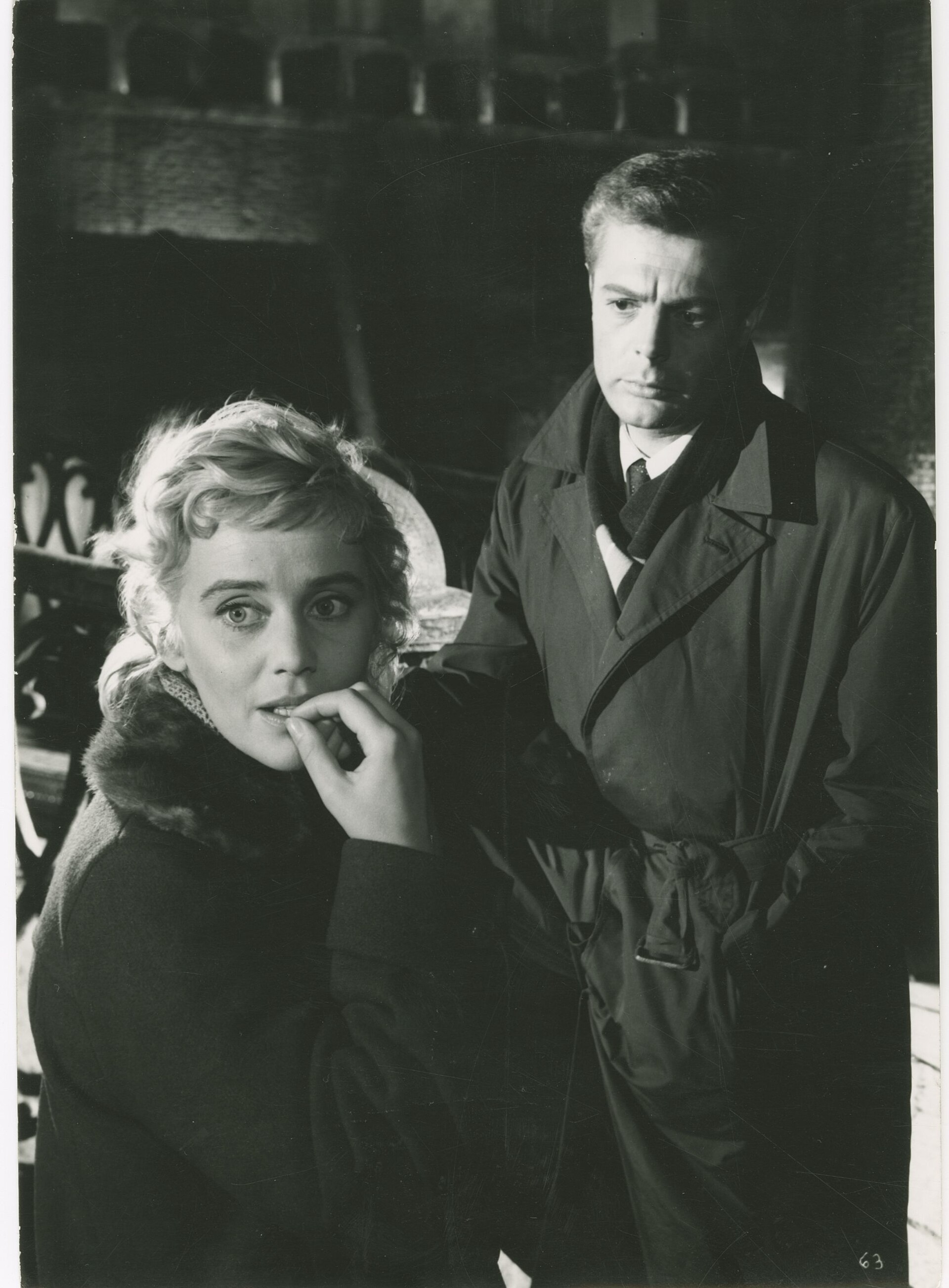
In White Nights (Le notti bianche, 1957), Luchino Visconti brought to the screen a Dostoevsky story that takes place largely in the mind and imagination of its narrator. He moved the story from nineteenth-century St Petersburg to the Italy of his own day and, in place of real streets, built a city in the studio.
November 2 marked the 120th anniversary of Visconti's birth, in Milan in 1906, and November 11 brings the 205th anniversary of Dostoevsky's, in Moscow in 1821. Nearly seventy years after the film was made, according to Film Forum, a restored version has returned to cinemas.
Four Nights of Waiting for Love
Dostoevsky published "White Nights" in 1848 with the subtitle "A Sentimental Story from the Diary of a Dreamer." Its narrator, a lonely young daydreamer, wanders the streets of St Petersburg at night. A chance meeting with a girl named Nastenka turns his quiet, solitary life upside down for a few nights.
Visconti kept the characters and the four-night structure of the story, but he gave the unnamed narrator the name Mario and renamed Nastenka as Natalia.
Mario (Marcello Mastroianni) is a lonely office worker who has just arrived in an Italian city. One night, by a canal, he sees Natalia (Maria Schell) standing on a bridge and crying. Natalia lives with her blind grandmother, who used to pin the girl's dress to her own to keep her close. Natalia is in love with a lodger who left a year ago, promising to return, and now she comes to their meeting place every night to wait for him. Mario, lonely himself, falls for Natalia and tries to draw her out of her waiting.
Jean Marais plays the lodger. The screenplay is by Visconti and Suso Cecchi d'Amico, the cinematography by Giuseppe Rotunno, and the score by Nino Rota. The film won the Silver Lion at the 1957 Venice Film Festival.
A City Built in a Studio
Visconti, known through films such as Ossessione and La terra trema as one of the leading figures of Italian neorealism, gave up real locations this time. According to Geoffrey Nowell-Smith, he shot the entire film in the studio, in a district rebuilt after Livorno at the Cinecittà studios.
As Nowell-Smith describes it, the canal divides this city into two worlds and the bridge joins them. One side is Natalia's world, a world of memory and waiting; the other is Mario's, the modern city. Rotunno's chiaroscuro lighting keeps faces and spaces suspended between light and shadow.
Visconti also changed the season. Dostoevsky's story takes place at the start of the St Petersburg summer, during the white nights when the sky darkens late. In the film it is winter, and snow falls.
From Literary Monologue to Image
The main difference between story and film lies in how they are told. Dostoevsky builds the world of "White Nights" through the voice of a man who constantly talks to himself, spins fantasies and is not even sure of his own feelings. Through these monologues the reader grows close to him, while sensing that the narrator's view of reality may not match reality itself.
Visconti set the first-person narration aside. His Mario is no longer the shy intellectual of the story; he is a more passionate man who shows his feelings in his behavior and movements. In this way some of the character's psychological complexity is lost, and in return his relationship with Natalia takes on a more visible, dramatic form.
The dance scene is a clear example of this change. Mario takes Natalia to a café where young people are dancing to the rock and roll of Bill Haley. Hoping to catch Natalia's attention, he lets himself be carried away by the music. The scene does not exist in Dostoevsky's story. According to Nowell-Smith, Visconti sets it against the memory of Natalia's visit to the opera The Barber of Seville, placing two worlds face to face: one of memory and tradition, and one that moves to the rhythm of modern life.
Three Views of One Adaptation
Geoffrey Nowell-Smith, a film scholar and author of a book on Visconti, writes in an essay for the Criterion Collection that White Nights is an important work from the director's period of transition. In his view, the film appears to move away from neorealism toward the style of Visconti's later work, without losing its bond with realism. Nowell-Smith sees the adaptation as a blend of faithfulness to Dostoevsky and Visconti's cinematic freedom, and writes that the details of the sets bring the story to life without destroying its dreamlike atmosphere.
Eli Friedberg, writing in Slant Magazine in July 2026, takes a different view. For him, the literary value of Dostoevsky's story lies largely in the narrator's language and his ironic distance from the world. Removing the monologues and turning the hero into a passionate man, Friedberg argues, strips away some of the story's psychological ambiguity and makes it a simpler melodrama. Even so, he praises the film's visual beauty, its lighting and its sets, and says that even if Visconti moved away from the complexity of the literary work, he created a cinematic world with its own identity and appeal.
In October 1962, Raymond Sokolov, writing in The Harvard Crimson, Harvard's student newspaper, criticized the film's theatricality and painterly compositions. In his view, Visconti was at times more taken with the beauty of his frames and lighting than with moving the drama forward, leaving the viewer's eye torn between the characters' actions and the detail of the sets. Still, he saw the café dance scene as the place where movement, acting, music and image come together.
One could say that the shared question of these three reviews is whether the visual beauty of White Nights has been able to take the place of the complexity of Dostoevsky's language. Their answers differ, but they all come back to one issue: how an experience that, in the book, takes place inside the narrator's mind can become something seen on screen.
A Story That Reached Tehran
Dostoevsky's "White Nights" has been translated into Persian many times, including by Soroush Habibi (Nashr-e Mahi), Babak Shahab (Vaal), Hamidreza Atash-bar-Ab (Nashr-e Ketab-e Parseh), Reza Sotoudeh (Negah), Parviz Hemmatian Borujeni (Amir Kabir) and Zahra Khanlari (Jami). Farzad Motamen, working from a screenplay by Saeed Aghighi, made the film White Nights (Shab-haye roshan) and moved the story to Tehran. The main character of that film is a professor.
Visconti carried a story that takes place mostly in a dreamer's mind into a visible world of an artificial city, night light, music and the movement of actors. Perhaps some of the psychological subtlety of Dostoevsky's writing was lost along the way, but the result is a film in which image and movement speak of loneliness and waiting as much as the dialogue does.
Read more: Criterion
Sources:
Geoffrey Nowell-Smith, "Le notti bianche", The Criterion Collection, 11 July 2005. https://www.criterion.com/current/posts/374-le-notti-bianche
Eli Friedberg, "'White Nights' Review: Luchino Visconti's Operatic Fyodor Dostoevsky Adaptation", Slant Magazine, 20 July 2026. https://www.slantmagazine.com/film/white-nights-review-luchino-visconti/
Raymond A. Sokolov Jr., "White Nights: At the Fine Arts", The Harvard Crimson, 9 October 1962. https://www.thecrimson.com/article/1962/10/9/white-nights-pin-the-days-when/
La Biennale di Venezia, ASAC archive, 1957 awards. https://asac.labiennale.org/attivita/cinema/annali?anno=1957
Criterion, film page "Le notti bianche". https://www.criterion.com/films/868-le-notti-bianche
Film Forum, "White Nights", 4K restoration. https://filmforum.org/film/white-nights
David Melville, "Meet Me Tonight in Dreamland", Senses of Cinema, issue 82, January 2017. https://www.sensesofcinema.com/2017/cteq/29173/
Fyodor Dostoevsky, "White Nights", trans. Constance Garnett, Project Gutenberg. https://www.gutenberg.org/ebooks/36034
Britannica, "Luchino Visconti" and "Fyodor Dostoyevsky".
Iranketab, Persian translations of "White Nights". https://www.iranketab.ir/book/1045-white-nights
Shirzad Tayefi and Pouria Mirakhorli, "A comparative neoformalist reading of Dostoevsky's White Nights in story and film", Journal of Iranian Studies, University of Tehran. https://jis.ut.ac.ir/article_94072.html
«شبهای روشن»؛ داستایفسکی در جهان رؤیایی ویسکونتی
به مناسبت صدوبیستمین زادروز لوکینو ویسکونتی و دویستوپنجمین زادروز فیودور داستایفسکی؛ نگاهی به اقتباسی سینمایی که تنهایی، عشق و انتظار را از خیابانهای سنپترزبورگ به شهری خیالی در ایتالیا میبرد.
نوشتهٔ Owrang Editorial
لوکینو ویسکونتی در «شبهای روشن» (Le notti bianche)، ساختهٔ ۱۹۵۷، داستانی از فیودور داستایفسکی را به سینما برد که بخش بزرگی از آن در ذهن و خیال راوی میگذرد. او ماجرا را از سنپترزبورگ قرن نوزدهم به ایتالیای روزگار خود آورد و به جای خیابانهای واقعی، شهری در استودیو ساخت.
دوم نوامبر صدوبیستمین زادروز ویسکونتی بود، زادهٔ ۱۹۰۶ در میلان، و یازدهم نوامبر دویستوپنجمین زادروز داستایفسکی است، زادهٔ ۱۸۲۱ در مسکو. نزدیک به هفتاد سال پس از ساخته شدن فیلم، به نوشتهٔ Film Forum، نسخهٔ مرمتشدهٔ آن دوباره به سینماها آمده است.
چهار شب در انتظار عشق
داستایفسکی «شبهای روشن» را در ۱۸۴۸ با عنوان فرعی «داستانی احساساتی از یادداشتهای یک رؤیاپرداز» منتشر کرد. راوی، جوانی تنها و خیالپرداز، شبها در خیابانهای سنپترزبورگ پرسه میزند. آشنایی اتفاقیاش با دختری به نام ناستنکا زندگی آرام و تنهایش را چند شب زیرورو میکند.
ویسکونتی شخصیتها و ساختار چهارشبانهٔ داستان را نگه داشت، اما به راوی بینام داستان نام ماریو داد و ناستنکا را ناتالیا نامید.
ماریو (مارچلو ماسترویانی) کارمندی تنهاست که تازه به شهری در ایتالیا آمده است. شبی کنار کانال، ناتالیا (ماریا شل) را میبیند که روی پل ایستاده و گریه میکند. ناتالیا با مادربزرگ نابینایش زندگی میکند، پیرزنی که لباس دختر را به لباس خود سنجاق میکرد تا از او دور نشود. ناتالیا دل به مستأجری بسته که یک سال پیش رفته و قول داده است برگردد، و حالا هر شب سر قرار میآید و چشمبهراه اوست. ماریو که خود تنهاست به ناتالیا دل میبندد و میکوشد او را از این انتظار بیرون بیاورد.
ژان ماره نقش مستأجر را بازی میکند. فیلمنامه را ویسکونتی و سوزو چکی دامیکو نوشتهاند، فیلمبردار جوزپه روتونو است و موسیقی را نینو روتا ساخته است. فیلم در جشنوارهٔ ونیز ۱۹۵۷ شیر نقره گرفت.
شهری که در استودیو ساخته شد
ویسکونتی، که با فیلمهایی چون «وسواس» و «زمین میلرزد» از چهرههای اصلی نئورئالیسم ایتالیا بود، این بار از مکانهای واقعی دست کشید. به نوشتهٔ جفری نوولاسمیت، همهٔ فیلم را در استودیو ساخت، در محلهای که از روی لیورنو در استودیوهای چینهچیتا بازسازی شده بود.
به گفتهٔ نوولاسمیت، کانال این شهر را به دو جهان تقسیم میکند و پل آن دو را به هم میرساند. یک سو جهان ناتالیا است، جهان خاطره و انتظار، و سوی دیگر جهان ماریو، شهر امروز. نورپردازی سایهروشن روتونو چهرهها و فضاها را میان روشنایی و سایه نگه میدارد.
ویسکونتی فصل را هم عوض کرد. داستان داستایفسکی در آغاز تابستان سنپترزبورگ میگذرد، همان شبهای روشنی که آسمان دیر تاریک میشود. در فیلم زمستان است و برف میبارد.
از تکگویی ادبی تا تصویر
تفاوت اصلی داستان و فیلم در شیوهٔ روایت است. داستایفسکی جهان «شبهای روشن» را از زبان مردی میسازد که مدام با خود حرف میزند، خیال میبافد و حتی به احساس خود اطمینان ندارد. خواننده از راه همین تکگوییها به او نزدیک میشود و در عین حال حس میکند برداشت راوی از واقعیت شاید با خود واقعیت یکی نباشد.
ویسکونتی روایت اولشخص را کنار گذاشت. ماریوی او دیگر روشنفکر کمروی داستان نیست، مردی پرشورتر است که احساسش را در رفتار و حرکت نشان میدهد. به این ترتیب بخشی از پیچیدگی روانی شخصیت از دست میرود و در عوض رابطهاش با ناتالیا شکل نمایشی آشکارتری پیدا میکند.
صحنهٔ رقص نمونهٔ روشن این تغییر است. ماریو ناتالیا را به کافهای میبرد که جوانان در آن با راکاندرول بیل هیلی میرقصند و برای جلب توجه ناتالیا خودش را به موسیقی میسپارد. این صحنه در داستان داستایفسکی نیست. به نوشتهٔ نوولاسمیت، ویسکونتی آن را در برابر خاطرهٔ رفتن ناتالیا به اپرای «آرایشگر سویل» میگذارد و دو جهان را روبهروی هم قرار میدهد، جهان خاطره و سنت و جهانی که با ضرباهنگ زندگی امروز پیش میرود.
سه نگاه به یک اقتباس
جفری نوولاسمیت، پژوهشگر سینما و نویسندهٔ کتابی دربارهٔ ویسکونتی، در مقالهای برای Criterion «شبهای روشن» را از آثار مهم دوران گذار این کارگردان میداند. به نظر او فیلم در ظاهر از نئورئالیسم فاصله میگیرد و به سبک آثار بعدی ویسکونتی نزدیک میشود، اما پیوندش با واقعگرایی را از دست نمیدهد. نوولاسمیت اقتباس را آمیزهای از وفاداری به داستایفسکی و آزادی سینمایی ویسکونتی میبیند و مینویسد جزئیات دکور به داستان جان میدهد، بیآنکه حالوهوای رؤیاییاش از دست برود.
الی فریدبرگ در Slant، در جولای ۲۰۲۶، نظر دیگری دارد. به نظر او ارزش ادبی داستان داستایفسکی بیشتر در زبان راوی و فاصلهٔ طنزآمیز او با جهان است. حذف تکگوییها و تبدیل قهرمان به مردی پرشور، به گفتهٔ فریدبرگ، بخشی از ابهام روانی داستان را از میان برده و آن را به ملودرامی سادهتر بدل کرده است. با این حال او زیبایی دیداری فیلم، نورپردازی و دکورها را میستاید و میگوید ویسکونتی، حتی اگر از پیچیدگی اثر ادبی دور شده باشد، جهانی سینمایی با هویت و جذابیت خاص خود ساخته است.
ریموند سوکولوف در The Harvard Crimson، روزنامهٔ دانشجویی هاروارد، در اکتبر ۱۹۶۲ به جنبهٔ نمایشی فیلم و ترکیببندیهای نقاشانهاش ایراد گرفت. به نظر او ویسکونتی گاه بیش از پیش بردن درام، شیفتهٔ زیبایی قاب و نور خود است و چشم تماشاگر میان کنش شخصیتها و جزئیات دکور سرگردان میماند. با این حال صحنهٔ رقص کافه را جایی میدانست که حرکت، بازی، موسیقی و تصویر به هم میرسند.
میتوان گفت پرسش مشترک این سه نقد این است که زیبایی تصویری «شبهای روشن» توانسته جای پیچیدگی زبان داستایفسکی را بگیرد یا نه. پاسخ آنها یکی نیست، اما همه به یک مسئله برمیگردند: تجربهای که در کتاب درون ذهن راوی میگذرد، در سینما چگونه دیدنی میشود.
داستانی که به تهران هم رسید
«شبهای روشن» داستایفسکی بارها به فارسی ترجمه شده است، از جمله به قلم سروش حبیبی (نشر ماهی)، بابک شهاب (وال)، حمیدرضا آتشبرآب (نشر کتاب پارسه)، رضا ستوده (نگاه)، پرویز همتیان بروجنی (امیرکبیر) و زهرا خانلری (جامی). فرزاد مؤتمن هم با فیلمنامهای از سعید عقیقی، فیلم «شبهای روشن» را ساخت و ماجرا را به تهران برد. شخصیت اصلی این فیلم یک استاد است.
ویسکونتی داستانی را که بیشترش در ذهن یک رؤیاپرداز میگذرد، به جهانی دیدنی برد، با شهر ساختگی، نور شب، موسیقی و حرکت بازیگران. شاید در این راه بخشی از ظرافت روانی نوشتهٔ داستایفسکی از دست رفته باشد، اما فیلمی پدید آمده که در آن تصویر و حرکت به اندازهٔ گفتوگو از تنهایی و انتظار حرف میزنند.
بیشتر بخوانید: Criterion
منابع | Sources:
Geoffrey Nowell-Smith، «Le notti bianche»، The Criterion Collection، ۱۱ جولای ۲۰۰۵. https://www.criterion.com/current/posts/374-le-notti-bianche
Eli Friedberg، «'White Nights' Review: Luchino Visconti's Operatic Fyodor Dostoevsky Adaptation»، Slant Magazine، ۲۰ جولای ۲۰۲۶. https://www.slantmagazine.com/film/white-nights-review-luchino-visconti/
Raymond A. Sokolov Jr.، «White Nights: At the Fine Arts»، The Harvard Crimson، ۹ اکتبر ۱۹۶۲. https://www.thecrimson.com/article/1962/10/9/white-nights-pin-the-days-when/
La Biennale di Venezia، بایگانی ASAC، جوایز ۱۹۵۷. https://asac.labiennale.org/attivita/cinema/annali?anno=1957
Criterion، صفحهٔ فیلم «Le notti bianche». https://www.criterion.com/films/868-le-notti-bianche
Film Forum، «White Nights»، نسخهٔ مرمتشدهٔ 4K. https://filmforum.org/film/white-nights
David Melville، «Meet Me Tonight in Dreamland»، Senses of Cinema، شمارهٔ ۸۲، جنوری ۲۰۱۷. https://www.sensesofcinema.com/2017/cteq/29173/
فیودور داستایفسکی، «White Nights»، ترجمهٔ Constance Garnett، Project Gutenberg. https://www.gutenberg.org/ebooks/36034
Britannica، «Luchino Visconti» و «Fyodor Dostoyevsky».
ایرانکتاب، ترجمههای فارسی «شبهای روشن». https://www.iranketab.ir/book/1045-white-nights
شیرزاد طایفی و پوریا میرآخورلی، «خوانش تطبیقی داستان و فیلم شبهای روشن داستایفسکی با رویکرد نئوفرمالیسم»، پژوهشهای ایرانشناسی، دانشگاه تهران. https://jis.ut.ac.ir/article_94072.html