
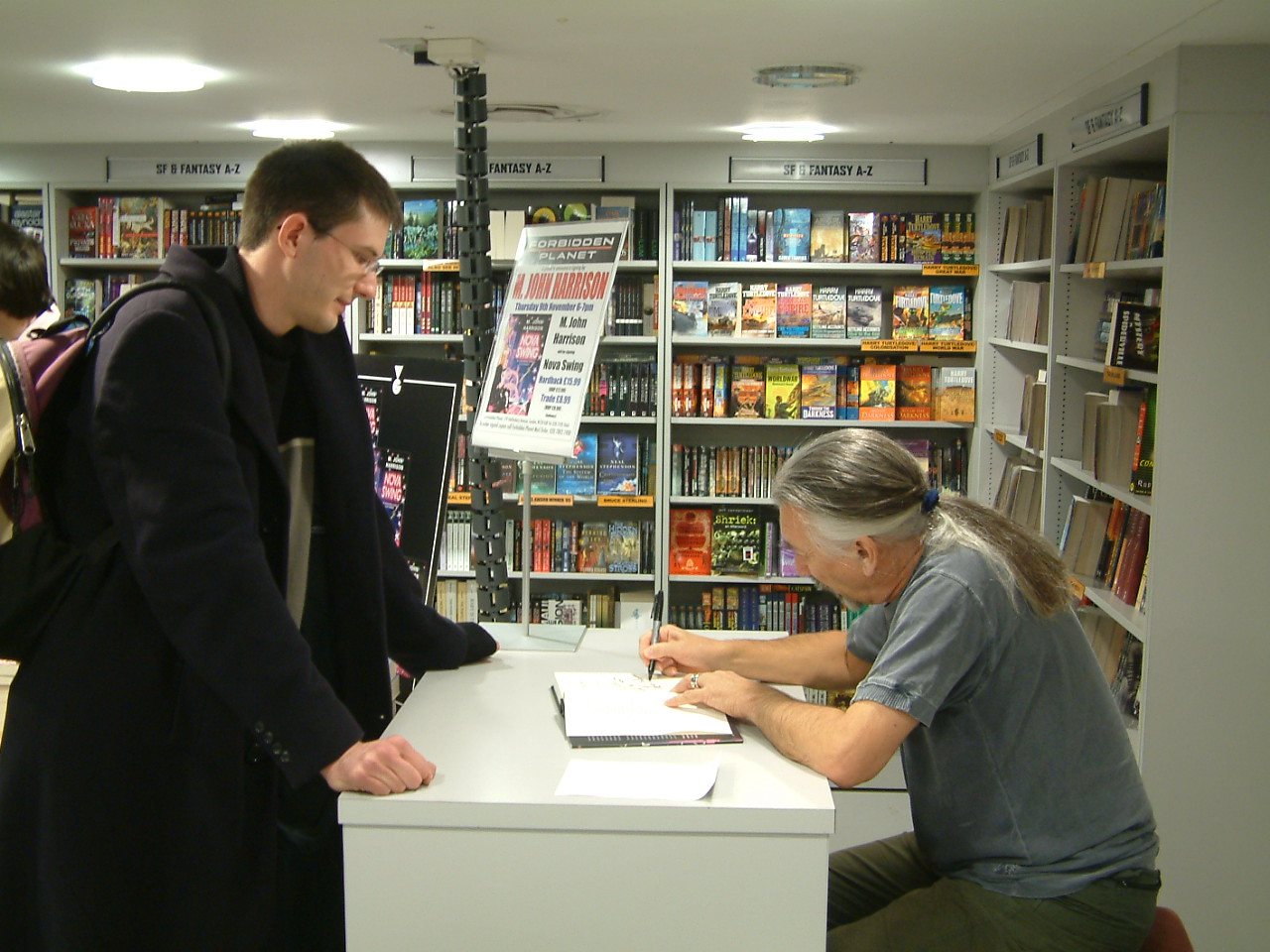
The End of Everything: The World Through the Eyes of an 81-Year-Old Novelist
At 81, British writer M. John Harrison has won the 2026 Booker Prize with The End of Everything, a novel about a world after catastrophe whose inhabitants keep trying to live ordinary lives.
By Owrang Editorial
The End of Everything, by M. John Harrison, won the Booker Prize on November 9, 2026. The judges, chaired by the classicist Mary Beard, chose it from 163 submitted books. According to Beard, they spent "a whole day debating" the six shortlisted titles before "agreeing unanimously" on this novel.
At 81, Harrison is the oldest winner in the prize's history, a title previously held by Margaret Atwood, who was 79 when she won. It was his first Booker nomination. The End of Everything, his 13th novel, was at 198 pages the shortest book on the shortlist, and it brought its publisher, Serpent's Tail, its first Booker win.
Gaby Wood, chief executive of the Booker Prize Foundation, called Harrison "the first Booker winner to have emerged from the bona fide SF world." After his win, Harrison himself said that the era of "genres as fences and boxes, pigeonholes, is over."
The novel was published in the UK in June 2026 and in the US in October. As far as we have been able to check, no published Persian translation of any of Harrison's books exists. A book titled «پایان همه چیز» is on the Persian market, but it is John Scalzi's The End of All Things, unrelated to Harrison's novel.
A Writer Who Crossed the Borders of Genre
M. John Harrison, born in 1945, sold his first story in 1965. From the late 1960s into the 1970s he edited the books pages of the science fiction magazine New Worlds.
He made his name with the Viriconium sequence and with a trilogy that begins with Light (2002). Light won the James Tiptree Jr. Award, and Nova Swing, the second book of the trilogy, won the Arthur C. Clarke Award in 2007. The Sunken Land Begins to Rise Again won the 2020 Goldsmiths Prize for innovation in fiction.
His work is not confined to science fiction. Climbers (1989), a novel about rock climbing, was the first novel to win the Boardman Tasker Prize for Mountain Literature. He calls Wish I Was Here (2023) an "anti-memoir."
Often described as a "writer's writer," Harrison has long been admired by fellow authors. Olivia Laing, Robert Macfarlane and Neil Gaiman have hailed him as one of the most brilliant prose stylists alive today, and China Miéville has called him "visionary and brilliant."
A Coast in the Near Future
The novel is set in the near future on the Kent coast of southern England. In the publisher's words, it has been years since the crisis changed everything, "but its exact nature remains obscure. Government barely functions, the seas are full of new creatures, Europe has been mislaid." Law and order, Mary Beard notes, have fallen into the hands of vigilantes, yet people carry on as usual, from children's parties to a morning coffee at a seaside café.
Phillip Tennent makes his living collecting artifacts that wash up from the Channel. Sharing the story with him is his aunt Marnie, an elderly painter who carries a pistol and whose memory is failing. Gaby Wood sees her dementia as a framework for understanding the novel as a whole.
One day Phillip fishes out of the water what the publisher calls an object he can't keep. In Beard's description, it is a blob of jelly that quickly grows and develops speech. Phillip must take it inland.
The crisis that has transformed this world was an invasion of shape-shifting entities called the iGhetti. The "i," Beard points out, hints at something digital, "but you can't be sure."
In Literary Review, Olivia Ho notes that Harrison calls these washed-up objects "artefacts," a term also used in his own Nova Swing and in Arkady and Boris Strugatsky's Roadside Picnic (1972), in which scavengers steal into zones that have undergone alien impact. The Strugatskys' novel later became the basis for Andrei Tarkovsky's film Stalker; neither connection amounts to a claim of direct influence on Harrison's book.
A World That Can No Longer Be Explained
On BBC Radio 4's Front Row, Harrison said that the initial inspiration was the 2008 financial crisis, and called the book "a novel about the failure of explanation in society." Of the iGhetti, he said he cannot clarify them too much, "otherwise I will write a typical science fiction novel."
The Booker Prize Foundation describes a novel that moves in short, filmic chapters, with a dreamlike ambiguity, leaving the reader to fill in the gaps. The judges wrote that it "can be read as a thriller, a mystery, a satire, a dystopia, a road novel, a work of realism."
Critique One: A Book That Disables Criticism
In The Observer (June 18, 2026), the British writer Helen Macdonald calls the novel "bravura, brain-melting sci-fi." Reading it, she writes, disabled her critical faculties: for weeks she could not write about it, and she suspects this is what the author intended. She sees a portrait of total collapse of knowledge, in which neither the characters nor the reader can tell what is real, and reads Marnie's memory loss as a mirror of a wider decline of civilization. She also sees the book skewering England's nativist, heritage-industry myths, from Second World War imagery to Agincourt. Her verdict: "I don't think I'll read a better book this year, perhaps decade."
Critique Two: A Book That Won't Be for Everyone
In The Guardian (June 9, 2026), the novelist Michel Faber argues that snobbery toward science fiction and fantasy has long denied Harrison the respect he deserves. He reads the washed-up artifacts as possibly "LLMs made flesh," AI hallucinations given bodies, at once disturbing, hilarious and poignant. For him, the tender bond between Phillip and Marnie is the book's emotional through-line. But Faber cautions: "it won't be for everyone." Compared with Harrison's earlier work, he finds the book bleaker and less funny, and says some of the dialogue reads more like Harrison's own metaphysical musings than characters' speech. His verdict: "Dreamlike and baffling, The End of Everything elucidates humanity's disintegrating existence with strange clarity."
Critique Three: Mystery as Both Subject and Method
Edmund Gordon, in the London Review of Books (July 23, 2026), is the most reserved. He notes that the iGhetti first appeared in Harrison's 2017 story "The Crisis," and describes the novel's mood as one of collective denial: a society that adapts to disaster by ignoring it. The novel, he writes, drops the usual "narrative infrastructure: linear plotting, legible motive, dramatic resolution." His main objection is that mystification is both the book's subject and its method, which raises "obvious technical problems": Harrison often names feelings outright and leans heavily on adjectives like "puzzled" and "confused." Still, Gordon grants that at his best Harrison's images create a powerful sense of puzzlement or terror without spelling it out. His closing verdict: "There's little point in trying to make it all add up."
Where They Agree and Differ
All three critics see ambiguity as the heart of the book. Macdonald counts it as the novel's achievement; Faber calls the book baffling yet illuminating, and warns that it is not for everyone; Gordon sees the same ambiguity as the source of its technical problems. Macdonald and Faber both give Marnie a central place: Macdonald through her memory loss, Faber through her bond with Phillip. Faber and Gordon both find fault with the language, Faber with the dialogue, Gordon with the explicit naming of feelings. Together, these reviews raise the question Harrison himself poses: how far can a novel about "the failure of explanation" go in refusing to explain itself?
The End of the World, or the End of Certainty?
Harrison has described his novel as "a disaster story in which the disaster is the failure to comprehend." The world of The End of Everything has been through a catastrophe whose nature no one can name, yet everyday life persists: children's parties, a morning coffee at a seaside café. What has come to an end, in this reading, is not life itself but the certainty that the world can be understood and explained.
The Other Books on the 2026 Booker Shortlist
- The Disappearers, Marlon James
- Black Bag, Luke Kennard
- May We Feed the King, Rebecca Perry
- The Things We Never Say, Elizabeth Strout
- John of John, Douglas Stuart
Read more (free extract from chapter one): The Booker Prizes
Sources:
The Booker Prizes, press release on the 2026 winner. https://thebookerprizes.com/media-centre/press-releases/the-end-of-everything-by-m-john-harrison-wins-the-booker-prize-2026
The Booker Prizes, book page. https://thebookerprizes.com/the-booker-library/books/the-end-of-everything
The Booker Prizes, "Everything you need to know about The End of Everything," November 9, 2026. https://thebookerprizes.com/the-booker-library/features/everything-you-need-to-know-about-the-end-of-everything-booker-prize-2026-winner
The Booker Prizes, 2026 shortlist. https://thebookerprizes.com/the-booker-library/features/everything-you-need-to-know-about-the-booker-prize-2026-shortlist
The Booker Prizes, author page. https://thebookerprizes.com/the-booker-library/authors/m-john-harrison
Serpent's Tail, book page. https://serpentstail.com/work/the-end-of-everything/
Jill Lawless, Associated Press, November 10, 2026. https://www.adn.com/arts/books/2026/11/10/the-end-of-everything-by-m-john-harrison-wins-the-2026-booker-prize-for-fiction/
Richard Lea, "M John Harrison: a life in writing," The Guardian, July 20, 2012. https://www.theguardian.com/culture/2012/jul/20/m-john-harrison-life-in-writing
Olivia Ho, "Close Encounters," Literary Review, issue 552, June 2026. https://literaryreview.co.uk/close-encounters
Helen Macdonald, "The visions of M John Harrison," The Observer, June 18, 2026. https://observer.co.uk/culture/books/article/the-visions-of-m-john-harrison
Michel Faber, "The End of Everything by M John Harrison review," The Guardian, June 9, 2026. https://www.theguardian.com/books/2026/jun/09/the-end-of-everything-by-m-john-harrison-review-near-future-visions-from-an-sf-master
Edmund Gordon, "Uncanny Little Blighter," London Review of Books, vol. 48, no. 13, July 23, 2026. https://www.lrb.co.uk/the-paper/v48/n13/edmund-gordon/uncanny-little-blighter
BBC News Persian, 18 Aban 1405. https://www.bbc.com/persian/articles/cmx2q25v115no
«پایان همهچیز»؛ جهان از نگاه نویسندهای هشتادویکساله
ام. جان هریسون، نویسندهٔ بریتانیایی، در هشتادویکسالگی با رمان «پایان همهچیز» برندهٔ جایزهٔ بوکر ۲۰۲۶ شد؛ داستان جهانی پس از فاجعه که ساکنانش همچنان میکوشند زندگی عادی خود را ادامه دهند.
نوشتهٔ Owrang Editorial
رمان «پایان همهچیز» (The End of Everything)، نوشتهٔ ام. جان هریسون (M. John Harrison)، روز ۹ نوامبر ۲۰۲۶ برندهٔ جایزهٔ بوکر شد. هیئت داوران، به ریاست مری بیرد، تاریخنگار جهان باستان، کتاب را از میان ۱۶۳ کتاب برگزید. به گفتهٔ بیرد، داوران یک روز تمام دربارهٔ شش کتاب فهرست نهایی بحث کردند و سرانجام به اتفاق آرا به این رمان رسیدند.
هریسون در ۸۱ سالگی مسنترین برندهٔ تاریخ این جایزه است. پیش از او این عنوان از آنِ مارگارت اتوود بود که در ۷۹ سالگی جایزه را گرفت. این نخستین نامزدی هریسون برای بوکر بود. «پایان همهچیز»، سیزدهمین رمان او، با ۱۹۸ صفحه کوتاهترین کتاب فهرست نهایی بود و نخستین بوکر را برای ناشرش، Serpent's Tail، به ارمغان آورد.
گبی وود، مدیر بنیاد بوکر، هریسون را «نخستین برندهٔ بوکر که از دل دنیای واقعی علمیتخیلی آمده» میخواند. خود هریسون پس از بردن جایزه گفت دورانی که ژانرها «حصار و جعبه» بودند به سر آمده است.
رمان در ژوئن ۲۰۲۶ در بریتانیا و در اکتبر در آمریکا منتشر شد. تا جایی که بررسی کردهایم، ترجمهٔ فارسی منتشرشدهای از کتابهای هریسون نیافتهایم. کتابی با عنوان «پایان همه چیز» در بازار کتاب فارسی هست، اما آن رمان جان اسکالزی است و ربطی به کتاب هریسون ندارد.
نویسندهای که از مرز ژانرها گذشت
ام. جان هریسون، زادهٔ ۱۹۴۵، نخستین داستانش را در ۱۹۶۵ فروخت. از اواخر دههٔ ۱۹۶۰ تا دههٔ ۱۹۷۰ دبیر بخش کتاب مجلهٔ علمیتخیلی «نیو ورلدز» (New Worlds) بود.
او با مجموعهٔ «ویریکونیوم» (Viriconium) و سهگانهای شناخته شد که با رمان «نور» (Light، ۲۰۰۲) آغاز میشود. «نور» جایزهٔ جیمز تیپتری را برد و «Nova Swing»، دومین کتاب این سهگانه، در ۲۰۰۷ جایزهٔ آرتور سی. کلارک را. «The Sunken Land Begins to Rise Again» در ۲۰۲۰ جایزهٔ گلداسمیتس را برای نوآوری در داستان گرفت.
کارهای هریسون به علمیتخیلی محدود نمیماند. رمان «Climbers» (۱۹۸۹) دربارهٔ کوهنوردی است و نخستین رمانی بود که جایزهٔ ادبیات کوهستان بوردمن تاسکر را گرفت. «Wish I Was Here» (۲۰۲۳) را خودش «ضدخاطرهنگاری» نامیده است.
هریسون را اغلب «نویسندهٔ نویسندگان» مینامند و نویسندگان دیگر سالهاست او را میستایند. اولیویا لینگ، رابرت مکفارلین و نیل گیمن او را یکی از درخشانترین نثرنویسان زندهٔ امروز خواندهاند و چاینا میهویل او را «رؤیابین و درخشان» نامیده است.
ساحلی در آیندهای نزدیک
داستان در آیندهای نزدیک، در ساحل کنت در جنوب انگلستان، میگذرد. به نوشتهٔ ناشر، سالها از «بحرانی» گذشته که همهچیز را دگرگون کرده، اما هیچکس دقیقاً نمیداند آن بحران چه بوده است. دولت بهزحمت کار میکند، دریاها پر از جانوران تازهاند و «اروپا گم شده است». به گفتهٔ مری بیرد، نظم و قانون به دست گروههای خودسر افتاده است، با این حال مردم زندگی عادی را ادامه میدهند، از جشن تولد بچهها تا قهوهٔ صبح در کافهای کنار دریا.
فیلیپ تِنِنت (Phillip Tennent) از راه جمع کردن اشیایی گذران میکند که دریای مانش به ساحل میآورد. همراه او در این داستان عمهاش، مارنی، است، نقاشی سالخورده که تپانچه با خود دارد و حافظهاش رو به زوال است. گبی وود این زوال حافظه را چارچوبی برای فهم کل رمان میداند.
روزی فیلیپ از آب چیزی بیرون میکشد که به تعبیر ناشر «نمیتواند نگهش دارد». به توصیف بیرد، تکهای ژله است که زود بزرگ میشود و زبان باز میکند. فیلیپ باید آن را به درون خشکی ببرد.
بحرانی که جهان رمان را دگرگون کرده، هجوم موجوداتی دگرگونشونده به نام «آیگتی» (iGhetti) است. بیرد یادآوری میکند که «i» در این نام شاید به چیزی دیجیتال اشاره داشته باشد، «اما نمیتوان مطمئن بود».
الیویا هو در Literary Review یادآوری میکند که هریسون این اشیای ساحلی را «artefact» مینامد، واژهای که پیشتر در «Nova Swing» خودش و در «پیکنیک کنار جاده» (۱۹۷۲) نوشتهٔ برادران استروگاتسکی هم آمده است، رمانی دربارهٔ آدمهایی که پنهانی به منطقههایی میروند که از برخورد بیگانگان آسیب دیدهاند. رمان استروگاتسکیها بعدها پایهٔ فیلم «استاکر» آندری تارکوفسکی شد. هیچیک از این دو پیوند به معنای تأثیرپذیری مستقیم کتاب هریسون نیست.
جهانی که دیگر نمیتوان توضیحش داد
هریسون در برنامهٔ رادیویی Front Row بیبیسی گفته است الهام نخست این کتاب بحران مالی ۲۰۰۸ بود و آن را «رمانی دربارهٔ شکست توضیح در جامعه» میداند. دربارهٔ iGhetti هم گفته است نمیتواند آنها را زیاد روشن کند، وگرنه «یک رمان علمیتخیلی معمولی» مینویسد.
بنیاد بوکر از رمانی مینویسد که در فصلهای کوتاه و سینمایی پیش میرود، با ابهامی رؤیاگونه، و بسیاری از جاهای خالی را به خواننده میسپارد. داوران نوشتهاند کتاب را میتوان «تریلر، معما، طنز، ویرانشهر، رمان جادهای و اثری واقعگرا» خواند.
نقد اول، کتابی که قوهٔ نقد را از کار میاندازد
هلن مکدانلد (Helen Macdonald)، نویسندهٔ بریتانیایی، در آبزرور، ۱۸ ژوئن ۲۰۲۶، رمان را اثری علمیتخیلی «درخشان و ذهنگداز» میخواند. او مینویسد خواندن این کتاب قوهٔ نقدش را از کار انداخت و هفتهها نتوانست دربارهاش بنویسد، و گمان میکند همین خواست نویسنده بوده است. به نظر او رمان تصویری از فروپاشی کامل شناخت است، جایی که نه شخصیتها و نه خواننده نمیدانند چه چیزی واقعی است. فراموشی مارنی هم به نظر او بازتاب زوالی بزرگتر در کل تمدن است. او همچنین مینویسد رمان اسطورههای میراثی و ملیگرایانهٔ انگلستان را، از تصویرهای جنگ جهانی دوم تا نبرد آزنکور، به سخره میگیرد. داوری او این است: «فکر نمیکنم امسال، و شاید در این دهه، کتابی بهتر بخوانم».
نقد دوم، کتابی که برای همه نیست
میشل فیبر (Michel Faber)، رماننویس، در گاردین، ۹ ژوئن ۲۰۲۶، مینویسد تحقیر ادبیات علمیتخیلی و فانتزی سالها هریسون را از احترامی که شایستهاش بود محروم کرده است. او اشیایی را که دریا به ساحل میآورد شاید «مدلهای زبانی بزرگِ تنیافته» میداند، یعنی توهمهای هوش مصنوعی که جسم پیدا کردهاند و هم آزارندهاند، هم خندهدار و هم دردناک. پیوند مهرآمیز فیلیپ و مارنی به نظر او رشتهٔ عاطفی کتاب است. اما فیبر هشدار میدهد که «این کتاب برای همه نیست». به نظر او در مقایسه با آثار پیشین هریسون، تلخی بیشتر و طنز کمتر شده است و برخی گفتوگوها بیشتر به اندیشههای متافیزیکی خود نویسنده میمانند تا گفتار شخصیتها. داوری پایانیاش این است که رمان «رؤیاگونه و گیجکننده» است و هستی رو به فروپاشی انسان را «با وضوحی غریب» روشن میکند.
نقد سوم، رازی که هم موضوع است و هم روش
ادموند گوردون (Edmund Gordon) در London Review of Books، ۲۳ ژوئیه ۲۰۲۶، از همه محتاطتر است. او یادآوری میکند که iGhetti نخستین بار در داستان کوتاه «بحران» (The Crisis، ۲۰۱۷) هریسون پیدا شدند. حالوهوای رمان را «انکار جمعی» مینامد، جامعهای که با فاجعه کنار میآید چون آن را نادیده میگیرد. به نوشتهٔ گوردون، رمان «زیرساخت روایی» معمول، یعنی پیرنگ خطی، انگیزهٔ روشن و گرهگشایی نمایشی، را کنار میگذارد. ایراد اصلیاش این است که رازآلودگی در این کتاب هم موضوع است و هم روش، و همین «مشکلات فنی آشکاری» پدید میآورد. هریسون اغلب احساسها را صریح نام میبرد و صفتهایی چون «گیج» و «سردرگم» را زیاد به کار میبرد. با این حال گوردون میپذیرد که هریسون در بهترین لحظههایش با تصویرهایش حس سردرگمی یا وحشت میسازد، بیآنکه آن را توضیح دهد. داوری پایانیاش این است: «تلاش برای جمعوجور کردن همهٔ آن چندان فایدهای ندارد».
همسوییها و اختلافها
هر سه منتقد ابهام کتاب را محور آن میدانند. مکدانلد همین ابهام را دستاورد کتاب میداند، فیبر آن را «گیجکننده» اما روشنگر میخواند و هشدار میدهد که برای همه نیست، و گوردون آن را سرچشمهٔ مشکلات فنی رمان میشمارد. مکدانلد و فیبر هر دو به مارنی جایگاهی محوری میدهند، مکدانلد از راه فراموشی او و فیبر از راه پیوندش با فیلیپ. فیبر و گوردون هر دو از زبان کتاب ایراد میگیرند، فیبر از گفتوگوها و گوردون از نام بردن صریح احساسها. این سه نقد با هم همان پرسشی را پیش میکشند که هریسون خود مطرح کرده است: رمانی دربارهٔ «شکست توضیح» تا کجا میتواند از توضیح دادن خود سر باز زند.
پایان جهان یا پایان یقین؟
هریسون کتابش را «داستان فاجعهای» خوانده است که «فاجعهاش ناتوانی از فهمیدن است». جهان «پایان همهچیز» از فاجعهای گذشته که کسی نمیتواند نامش را بگوید، اما زندگی روزمره ادامه دارد: جشن تولد بچهها، قهوهٔ صبح در کافهای کنار دریا. در این خوانش، آنچه به پایان رسیده نه خود زندگی، بلکه یقین به فهمیدن و توضیح دادن جهان است.
دیگر کتابهای فهرست نهایی بوکر ۲۰۲۶
- The Disappearers، مارلون جیمز
- Black Bag، لوک کنارد
- May We Feed the King، ربکا پری
- The Things We Never Say، الیزابت استراوت
- John of John، داگلاس استوارت
بیشتر بخوانید (بخشی از فصل نخست، رایگان): The Booker Prizes
منابع | Sources:
The Booker Prizes، اطلاعیهٔ برندهٔ بوکر ۲۰۲۶. https://thebookerprizes.com/media-centre/press-releases/the-end-of-everything-by-m-john-harrison-wins-the-booker-prize-2026
The Booker Prizes، صفحهٔ کتاب. https://thebookerprizes.com/the-booker-library/books/the-end-of-everything
The Booker Prizes، «Everything you need to know about The End of Everything»، ۹ نوامبر ۲۰۲۶. https://thebookerprizes.com/the-booker-library/features/everything-you-need-to-know-about-the-end-of-everything-booker-prize-2026-winner
The Booker Prizes، فهرست نهایی ۲۰۲۶. https://thebookerprizes.com/the-booker-library/features/everything-you-need-to-know-about-the-booker-prize-2026-shortlist
The Booker Prizes، صفحهٔ نویسنده. https://thebookerprizes.com/the-booker-library/authors/m-john-harrison
Serpent's Tail، صفحهٔ کتاب. https://serpentstail.com/work/the-end-of-everything/
Jill Lawless، Associated Press، ۱۰ نوامبر ۲۰۲۶. https://www.adn.com/arts/books/2026/11/10/the-end-of-everything-by-m-john-harrison-wins-the-2026-booker-prize-for-fiction/
Richard Lea، «M John Harrison: a life in writing»، The Guardian، ۲۰ ژوئیه ۲۰۱۲. https://www.theguardian.com/culture/2012/jul/20/m-john-harrison-life-in-writing
Olivia Ho، «Close Encounters»، Literary Review، شمارهٔ ۵۵۲، ژوئن ۲۰۲۶. https://literaryreview.co.uk/close-encounters
Helen Macdonald، «The visions of M John Harrison»، The Observer، ۱۸ ژوئن ۲۰۲۶. https://observer.co.uk/culture/books/article/the-visions-of-m-john-harrison
Michel Faber، «The End of Everything by M John Harrison review»، The Guardian، ۹ ژوئن ۲۰۲۶. https://www.theguardian.com/books/2026/jun/09/the-end-of-everything-by-m-john-harrison-review-near-future-visions-from-an-sf-master
Edmund Gordon، «Uncanny Little Blighter»، London Review of Books، جلد ۴۸، شمارهٔ ۱۳، ۲۳ ژوئیه ۲۰۲۶. https://www.lrb.co.uk/the-paper/v48/n13/edmund-gordon/uncanny-little-blighter
BBC News فارسی، ۱۸ آبان ۱۴۰۵. https://www.bbc.com/persian/articles/cmx2q25v115no