
From The Wall to the Wall
On the 65th Anniversary of the Building of the Berlin Wall
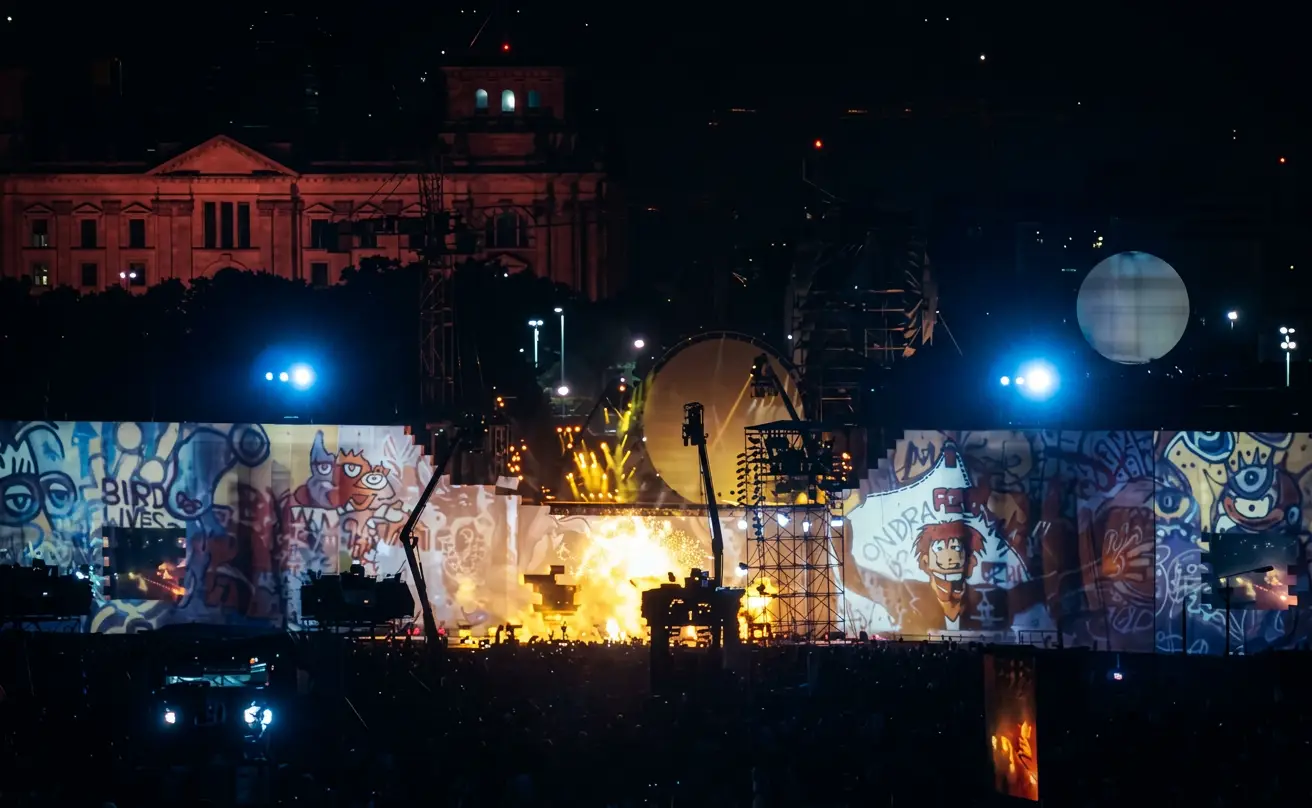
On July 21, 1990, Roger Waters staged The Wall at Potsdamer Platz in Berlin, the work he had created with Pink Floyd eleven years earlier. This time it was performed as a theatrical concert, with sets, actors and a wall that rose during the show between the singer and the audience. Only months earlier the site had been part of the no-man's-land between East and West Berlin. At the end, before a crowd that still carried the memory of the real wall, this wall came down. The concert was held in support of the Memorial Fund for Disaster Relief and featured artists including Van Morrison, Bryan Adams and Marianne Faithfull.
The Berlin Wall, which divided the German capital from 1961 to 1989, is the most recognizable symbol of the Cold War. The East German government began building it on August 13, 1961 and called it the Anti-Fascist Protection Rampart. Officially its purpose was to prevent fascist infiltration from the West. In practice it was meant to stop East Germans from leaving. For nearly three decades this concrete barrier separated families and created a security zone in the heart of Europe, until it was opened in November 1989.
Performing The Wall on that ground gave it a meaning beyond that of a concert. Its bricks were made of grief, fear, humiliation, education bound up with repression, love mixed with possession, emotional failure and a kind of fame that estranges a person from himself and from others. This enormous wall called into question a mechanism embedded in society, one that has repeated itself throughout human history under different names. First fear is created. Then a wall is raised to contain it. In the end that same wall is legitimized in the name of security, education, love or homeland. And so the connection between these two walls became more than a shared name in the minds of the audience, and entered collective memory.
Pink Floyd's album was released in November 1979, and Alan Parker's film gave it another form in 1982. The Wall is not a narrative film in the conventional sense. It is a fragmented musical narrative built from live action, animation and associative scenes. Dialogue is sparse and the songs carry much of the story. Each song becomes a scene in itself, and the film moves between the present, childhood memory and the hallucinations of Pink, the central character. Gerald Scarfe's animations turn what runs beneath the surface of the story into nightmare.
For a generation that had lived through the Berlin Wall and through various forms of domestic, educational and political authoritarianism, the performance carried a more immediate meaning. It stirred a kind of identification, bringing to mind families who were left on opposite sides when that wall went up and died on those separate sides, and who knew another kind of separation under similar mechanisms inside their own societies.
The first song that carries Pink's past forward is not on the original album. "When the Tigers Broke Free" did not make it onto the album and was released separately later. Even in the film it is not heard as one uninterrupted piece. It is split into two parts with a long interval between them.
The first half accompanies the opening scene. Pink's father sits alone in a bunker, smoking, cleaning his revolver as bombers fly overhead. The song speaks of the Battle of Anzio and of a bridgehead held by decision of the commanders, a decision that cost several hundred ordinary lives. Then the image cuts away.
The second half is heard when Pink, a boy of seven or eight, finds his father's uniform in the bottom drawer of his mother's wardrobe, along with the letter the King sent to his mother after his father's death: a gold-leaf scroll bearing the King's rubber-stamped mark as a signature. The child puts on the uniform and the image cuts to his father doing the same. What has come down to this child from his father is a uniform too large for him. A father remembered publicly as a war hero is, in the life of this child, an absence he is expected to bear with pride without knowing why.
In "Goodbye Blue Sky" this private loss enters a larger memory of war. A white dove, the bird of peace, is torn open and a bird of prey emerges from within it, an image of war justified in the name of peace. Bombers cover the sky. Cross and flag dissolve into each other. Blood runs down the cross. Altar, flag and army become so entangled that killing turns from crime into duty, and from duty into honor. What begins in grandeur and sanctity ends as blood running into the sewer.
At school, Pink sits in class absorbed in his notebook as the teacher walks toward him between the rows. He takes the notebook from Pink's hand and reads the poem written inside it aloud, in a mocking voice, so the class will laugh at him. Then he strikes the child's hand with a ruler and walks away. Scarfe's animation gives the child's inner world its shape. Children with identical faces move along a conveyor belt. The educational system is a factory and the children its products, shaped there without faces and, once made alike, ground together in a meat grinder. But the child's mind refuses the image. The children regain their faces and set the school on fire. Just as they are about to throw the teacher into the flames, the camera returns to the classroom. The teacher walks away, and Pink, watching him go, rubs the place that hurts with his other hand.
The relationship between mother and child is one of the most complex. A mother who passes her fears to the child one by one while keeping him under her wing creates a place of safety whose result is separation from society. Under its shelter, that sense of security lets him close his eyes to whatever lies outside it. The film brings this blind spot to light by setting two moments side by side and moving between Pink's childhood and his married life: a child who rests safely in his mother's bed without needing to be seen by anyone else, and a man whose wife, years later, turns her back to him in bed.
By then Pink has become famous. Thousands of people hear his voice, yet his life is emptier of those closest to him. Fame, which should make him visible to the world, has left him more alone, as though abandoned on a road with no end. He is far from home and his wife remains on the other side of that distance. An enormous wall has risen, and he has not seen what lies behind it. He calls home hoping to hear her voice, but the betrayal has already taken shape. The wall has done its work, and a stranger answers the phone. There is no way back. It is as if a border has closed overnight.
And now we see him entering a hotel room with a young woman and, for no apparent reason, smashing everything around him until she flees in terror. Is this rage born of the thought of betrayal? The film draws no clear border between reality and fantasy, but the wall is complete. Pink no longer sees the world, or no longer wants to. It is as though he wants to grow a new skin. He stands before the mirror, shaves his eyebrows and body hair, and neither cuts nor blood stop him. What remains is an empty face, ready for another mask.
Pink sits in front of the television watching a war film. There, in his isolation, another face slowly begins to emerge.
Then the manager, the hotel staff and the doctor come in. They have come to get him back on his feet for the next performance. They lift him, inject him with drugs, dress him and send him back onto the stage. His collapse does not matter. The show must go on. In "Comfortably Numb," a young man who has broken down is put back on his feet with drugs. However much the scene may be rooted in the reality of an individual life, it recalls how many heroes, after breaking down, are made to confess before cameras and are then turned into legends.
In "In the Flesh," this transformation reaches its full form. In his imagination Pink has become a fascist leader with a uniform, flags and a crowd that obeys him. Men in black uniforms stand in rows behind him and pull the "undesirables" from the crowd. The man who spent years wounded by power has taken on the face of that same power. And here a contradiction becomes visible: authority is an image before it is an argument. Uniform, march, flag, light, music and the synchronized movement of a crowd can keep their grandeur and their appeal even inside a spectacle built to condemn fascism.
The Berlin performance brought the same contradiction back into view years later. The Washington Post's report from that night described a crowd that seemed excited by the recreated rally, pressing forward and thrusting fists into the air again and again. An image meant to expose the face of repression drew its force from the grandeur of that very authority. The emblem of two crossed hammers was later taken up, with changes, on the flag of the racist Hammerskins group.
At last the fantasy behind the wall collapses and gives way to another dream. Has this new dream come to put the earlier one, and everything that formed behind the wall, on trial? The witnesses in the courtroom are the same teacher, mother and wife. The sentence is that he must be laid bare before everyone. The wall comes down and he is left without protection, without the mask he had hidden behind for years.
For Pink, freedom means accepting that vulnerability and returning to a world not yet emptied of power and violence.
Perhaps this is why, after all these years, The Wall has not grown old. The story goes on. One wall falls and another, made of something else, rises. It gains legitimacy through grandeur and spectacle, calls itself a protective barrier, and estranges one person from another and finally from himself. Personal walls and social ones, and today the communication bubbles of the virtual age, sometimes built for us by others and sometimes built by our own hands, brick upon brick, in the belief that they will keep us safe…
از دیوار تا دیوار
به مناسبت شصتوپنجمین سالگرد ساخت دیوار برلین
نوشتهٔ Rokhand Gharavi رخند غروی
بیستویکم ژوئیهٔ ۱۹۹۰، راجر واترز «دیوار» را در پوتسدامر پلاتس برلین روی صحنه برد؛ همان اثری که یازده سال پیش از آن با پینک فلوید ساخته بود و این بار به شکل یک موسیقی نمایشی اجرا میشد، همراه با دکور، بازیگر و دیواری که در طول اجرا میان خواننده و تماشاگر بالا میرفت. زمین اجرا تا چند ماه پیش بخشی از منطقهٔ حائل میان دو برلین شرقی و غربی بود، و در پایان، در برابر جمعیتی که هنوز خاطرهٔ دیوار واقعی را با خود داشت، این دیوار فرو ریخت. این اجرا با هدف حمایت از The Memorial Fund for Disaster Relief برگزار شد و هنرمندانی چون ون موریسون، برایان آدامز و ماریان فیتفول در آن شرکت داشتند.
دیوار برلین که از ۱۹۶۱ تا ۱۹۸۹ پایتخت آلمان را دو نیم کرده بود، شناختهشدهترین نماد جنگ سرد است. حکومت آلمان شرقی ساخت آن را در سیزدهم اوت ۱۹۶۱ آغاز کرد و نامش را «سد حفاظتی ضد فاشیستی» گذاشت. در روایت رسمی، هدف جلوگیری از نفوذ فاشیسم از غرب بود؛ در عمل، مهار خروج گستردهٔ شهروندان آلمان شرقی به آن سوی دیوار. نزدیک به سه دهه، این حصار بتنی خانوادهها را از هم جدا کرد و فضایی امنیتی در قلب اروپا ساخت، تا آنکه در نوامبر ۱۹۸۹ گشوده شد.
اجرای «دیوار» بر چنین زمینی، معنایی فراتر از یک اجرای موسیقی پیدا کرد. دیواری با آجرهایی از جنس سوگ، ترس، تحقیر، آموزش توأم با سرکوب، عشق با حس مالکیت، شکستهای عاطفی و شهرتی که انسان را با خود و دیگران بیگانه میکند. این دیوار عظیم، سازوکار نهادینهشده در جامعه را به نقد میکشید؛ سازوکاری که در طول تاریخ بشر با نامهای گوناگون تکرار شده بود: نخست ترس ساخته میشود، سپس برای مهار آن دیواری بالا میرود و سرانجام همان دیوار به نام امنیت، تربیت، عشق یا میهن مشروعیت پیدا میکند. و به این ترتیب پیوند میان این دو دیوار فراتر از یک نام مشترک در ذهن تماشاگران ثبت و به حافظهٔ جمعی بدل شد.
آلبوم پینک فلوید در نوامبر ۱۹۷۹ منتشر شد و فیلم آلن پارکر در ۱۹۸۲ شکل دیگری به آن داد. «دیوار» فیلمی روایی به معنای متعارف نیست؛ روایتی تکهتکه و موسیقایی است که از پیوند تصاویر زنده، انیمیشن و صحنههای تداعیگر شکل میگیرد. دیالوگها اندکاند و ترانهها بخش بزرگی از روایت را پیش میبرند؛ هر ترانه خود به صحنهای بدل میشود و صحنهها میان زمان حال، خاطرات کودکی و هذیانهای ذهن پینک، شخصیت اصلی داستان، رفتوبرگشت میکنند. انیمیشنهای جرالد اسکارف هم آنچه را زیر پوست روایت جریان دارد، به هیئت کابوس درمیآورند.
این اجرا برای نسلی که دیوار برلین و گونههای مختلف استبداد خانگی، آموزشی و سیاسی را تجربه کرده بود، معنایی ملموستر یافت. نوعی همذاتپنداری که خانوادههایی را به یاد میآورد که با برپایی آن دیوار، این سو و آن سوی دیوار ماندند و مردند، و نوع دیگری از جدایی را در سایهٔ سازوکارهایی مشابه در سطح جامعه تجربه کردند.
نخستین ترانهای که روایت گذشتهٔ پینک را مستقیماً پیش میبرد، ترانهای است که در آلبوم اصلی نیست. «When the Tigers Broke Free» به آلبوم راه نیافت و بعدها جداگانه منتشر شد. در خود فیلم هم یکپارچه شنیده نمیشود؛ به دو نیمه تقسیم شده که فاصلهای طولانی میانشان است.
نیمهٔ نخست ترانه روی صحنهٔ افتتاحیه میآید. پدر پینک تنها در سنگری نشسته است و سیگار میکشد، هفتتیرش را تمیز میکند، بمبافکنها بالای سرش پرواز میکنند. ترانه از نبرد آنزیو و سرپلی میگوید که به تصمیم فرماندهان حفظ شد؛ ماندنی که به بهای چند صد جان معمولی تمام میشود. سپس تصویر قطع میشود.
نیمهٔ دوم ترانه را زمانی میشنویم که پینک، کودکی هفتهشتساله، در کشوی پایینی کمد اتاق مادرش یونیفرم پدر را پیدا میکند، همراه با نامهای که پادشاه پس از مرگ پدر برای مادرش فرستاده بود: طوماری با ورق طلا که اثر مهر لاستیکی پادشاه بهعنوان امضا پای آن بود. کودک یونیفرم را میپوشد و تصویر به پدرش کات میشود که همان کار را میکند. آنچه از پدر به این کودک رسیده، لباسی است که به تنش گشاد است. پدری که در حافظهٔ عمومی قهرمان جنگ خوانده میشود، در زندگی این کودک فقدانی است که باید با افتخار تحملش کند، بیآنکه بداند چرا.
در «Goodbye Blue Sky» این فقدان شخصی به حافظهای بزرگتر از جنگ راه پیدا میکند. کبوتر سفید (پرندهٔ صلح) از درون شکافته میشود و پرندهای شکاری از دل آن بیرون میآید: بیانی استعاری از توجیه جنگ برای برقراری صلح. بمبافکنها آسمان را میپوشانند، صلیب و پرچم در هم حل میشوند. خون از صلیب پایین میریزد. محراب، پرچم و ارتش چنان در هم فرو میروند که قتل و کشتار از جنایت به وظیفه و از وظیفه به افتخار تبدیل میشود. آنچه با شکوه و تقدس آغاز شده، در پایان خونی است که در فاضلاب جاری میشود.
در مدرسه، پینک در کلاس سرگرم دفترش است و معلم از میان ردیفها به سویش میآید. دفتر را از دستش میگیرد و شعری را که در آن نوشته شده با لحنی تحقیرآمیز برای بچهها میخواند تا کلاس به او بخندد، و بعد خطکش را روی دست کودک میکوبد و دور میشود. انیمیشن اسکارف دنیای ذهنی کودک را به تصویر میکشد: بچهها را میبینیم که با صورتهایی یکسان روی نوار نقاله حرکت میکنند. نظام آموزشی کارخانهای است و کودکان محصولی که بیآنکه صورتی داشته باشند در آن شکل میگیرند و پس از همشکل شدن در چرخگوشتی مخلوط میشوند. اما ذهن کودک تصویر را پس میزند. کودکان صورت پیدا میکنند و مدرسه را به آتش میکشند. همین که میخواهند معلم را در آتش بیندازند، دوربین به کلاس برمیگردد. معلم دور میشود و پینک، در حالی که به رفتن او نگاه میکند، محل درد را با دست دیگرش میمالد.
رابطهٔ مادر و فرزند یکی از پیچیدهترینهاست. مادری که ترسهایش را یکییکی به کودک منتقل میکند و در همان حال او را زیر بال خود نگه میدارد، برای کودک بستری امن میآفریند که نتیجهاش جدایی از جامعه است. حس امنیتی که باعث میشود در سایهٔ آن چشم بر ناملایمات ببندد. فیلم این نقطهٔ کور را با کنار هم گذاشتن دو زمان روشن میکند و میان کودکی پینک و زندگی مشترک او رفتوبرگشت میکند: کودکی که در بستر مادر آرام میگیرد بیآنکه لازم باشد کسی او را ببیند، و مردی که سالها بعد همسرش در بستر به او پشت میکند.
پینک در همین سالها به شهرت رسیده است. هزاران نفر صدایش را میشنوند، اما زندگی او از نزدیکترین آدمهایش خالیتر میشود. شهرتی که باید او را در برابر جهان مرئی کند، تنهاترش کرده است. انگار که در جادهای بیانتها رها شده باشد. او از خانه دور است و همسرش آنسوی این فاصله مانده است. دیواری عظیم بالا رفته است که او پشت آن را ندیده است. به خانه تلفن میکند به امید شنیدن صدای همسرش، اما خیانت شکل گرفته است. دیوار کار خودش را کرده و مردی غریبه گوشی را برمیدارد. پس دیگر راه برگشتی نیست. انگار یکشبه مرز بسته شده است.
و حالا او را میبینیم که همراه دختری وارد اتاق هتل میشود و بی هیچ دلیلی همهچیز را در هم میشکند و دختر وحشتزده میگریزد. آیا این خشم او از تصور ارتکاب خیانت است؟ مرزی بین واقعیت و خیال در فیلم نیست، اما دیوار کامل شده است. پینک دیگر جهان را نمیبیند، یا نمیخواهد ببیند. انگار میخواهد برای خود پوستی نو بیافریند. روبهروی آینه میایستد، ابروها و موهای تنش را میتراشد و بریدگی و خون هم متوقفش نمیکند. اما آنچه باقی میماند صورتی خالی است، آماده برای نقابی دیگر.
پینک روبهروی تلویزیون مینشیند و فیلمی جنگی تماشا میکند. همانجا، در خلوت او، چهرهای دیگر آرامآرام شکل میگیرد.
بعد مدیر برنامه، کارکنان هتل و پزشک وارد میشوند. آمدهاند او را برای اجرای بعدی سرپا کنند. بلندش میکنند، دارو به او میزنند، لباس بر تنش میکنند و دوباره به صحنه میفرستند. فروپاشی او اهمیتی ندارد، برنامه باید ادامه پیدا کند. در «Comfortably Numb» جوانی را که در هم شکسته با دارو دوباره سرپا میکنند. این صحنه هر قدر هم که پایه در واقعیت زندگی فردی داشته باشد، یادآور چه بسیار قهرمانانی است که پس از فروریختن باید در برابر دوربینها اعتراف کنند و سپس تبدیل به اسطوره شوند.
در «In the Flesh» این دگردیسی شکل کاملش را پیدا میکند. پینک در خیال خود رهبر فاشیستی است با یونیفرم، پرچم و جمعیتی که فرمان میبرد. یونیفرمپوشان سیاه پشت سرش صف میکشند و «نامطلوبها» را از میان جمعیت بیرون میکشند. کسی که سالها از قدرت زخم خورده بود، حالا صورت همان قدرت را به خود گرفته است. و اینجا تناقضی آشکار میشود: اقتدار پیش از آنکه استدلال باشد، تصویر است. یونیفرم، رژه، پرچم، نور، موسیقی و حرکت هماهنگ جمعیت حتی در نمایشی که برای محکوم کردن فاشیسم ساخته شده، میتوانند شکوه و جذابیت خود را حفظ کنند.
اجرای برلین سالها بعد همین تناقض را دوباره پیش چشم آورد. گزارش واشنگتنپست از آن شب میگوید جمعیت در برابر بازسازی رالی هیجانزده به نظر میرسید، به جلو فشار میآورد و مشتها را پیاپی در هوا میکوبید. تصویری که قرار بود چهرهٔ سرکوب را افشا کند، از شکوه همان اقتدار نیرو میگرفت. نشان دو چکش متقاطع هم بعدها با تغییراتی بر پرچم گروه نژادپرست «Hammerskins» نشست.
سرانجام خیال پشت دیوار فرو میپاشد و جای خود را به رویایی دیگر میدهد. آیا این رویای تازه آمده است تا رویای پیشین و تمام آنچه پشت دیوار شکل گرفته بود به محاکمه بکشد؟ شاهدان دادگاه همان معلم و مادر و همسرند. حکم این است که باید در برابر همه عریان شود. دیوار فرو میریزد و او بیحفاظ میماند، بیآن نقابی که سالها پشت آن پنهان شده بود.
آزادی برای پینک پذیرفتن همین آسیبپذیری و بازگشت به جهانی است که هنوز از قدرت و خشونت خالی نشده است.
شاید به همین دلیل است که بعد از این همه سال «دیوار» هنوز کهنه نشده است. روایت همچنان ادامه دارد. دیواری فرو میریزد و دیواری دیگر، از جنسی دیگر، بالا میرود. با شکوه و جلال مشروعیت میگیرد، نام سد حفاظتی بر خود میگذارد و انسان را از دیگری و سرانجام از خودش بیگانه میکند. دیوارهایی فردی و اجتماعی، و امروز حبابهای ارتباطی در دوران مجازی، که گاه دیگران برای ما میسازند و گاه خودمان، به خیال حفاظت، آجرهایش را روی هم میگذاریم…