
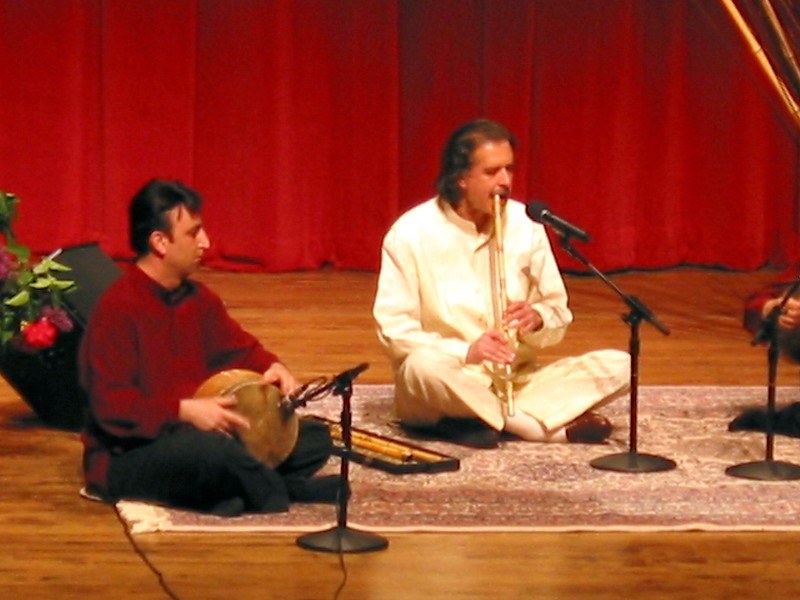
From Voice to Melody: Hossein Omoumi and the Language of the Ney
Remembering a performer, scholar and teacher who rose from the Isfahan school of ney playing, carried the heritage of Persian music to universities around the world, and, through innovations in the construction of instruments, opened new horizons for music.
By Owrang Editorial
Hossein Omoumi came to the ney through singing. Perhaps that beginning explains, more than anything else, the distinctive character of his playing. He understood the ney through the language of the human voice, seeking in its sound the subtle ornaments, pauses, and phrasing of Persian classical music. Throughout his artistic life, alongside preserving and teaching the radif, he explored the instrument's capabilities and sought to expand them. Omoumi, an Iranian ney player, vocalist, music scholar, and architect, died on November 4, 2026, at the age of 82.
Born in Isfahan on January 26, 1944, into a musical family, Omoumi received his earliest instruction from his father and his aunt's husband, Hossein Musiqi. He began studying the ney at fourteen. In later years, he studied the vocal radif with Mahmud Karimi in Tehran and received instruction from Farhad Fakhreddini. At the same time, he traveled to Isfahan to study with Hassan Kassai, a master whose name remains inseparable from the modern history of the Persian ney.
His familiarity with the vocal radif of Tehran and the instrumental tradition of Isfahan became two foundations of his art. He remained faithful to the structures and principles of Persian music while seeking to bring the expressive capabilities of the ney closer to those of singing. In his performances, a musical phrase was more than a sequence of notes; breath, silence, and the connection between sounds carried equal importance.
Architecture and Music: Two Paths in One Life
Alongside music, Omoumi studied architecture. He graduated with honors from the National University of Iran and, with an Italian government scholarship, continued his education in Florence. He received his doctorate in architecture in 1972 and, after returning to Iran, taught at the National University for ten years.
During those same years, music remained an inseparable part of his professional life. He taught at the music conservatory, the University of Tehran, and the Center for the Preservation and Dissemination of Iranian Music, working with musicians who regarded the preservation and transmission of the radif as a central responsibility.
Architecture and music did not remain entirely separate pursuits in Omoumi's work. One could say that his careful attention to the structure and function of instruments laid the ground for research that eventually produced modifications to the ney and tombak. For an artist who had spent years exploring both the possibilities and limitations of the ney, understanding an instrument extended beyond knowing how to play it. The instrument itself could become a subject of study and reconsideration.
Among his most important achievements was the design of the Full Range Persian Ney. On the traditional ney, certain notes are difficult to produce, and moving smoothly between them presents technical challenges. By adding finger holes and introducing a key-and-pad mechanism, Omoumi made these notes more accessible and precise. His design increased the number of front holes from five to eight, while two rotating metal tubes provided a means of adjusting the tuning. His aim was to make a complete and continuous range of approximately two and a half octaves available to the performer. He also designed a tunable tombak and introduced modifications to the construction of the daf.
These efforts were not intended to transform the essential character of Persian instruments. Omoumi searched for new possibilities within the very instruments through which he had learned and performed music for decades.
From Isfahan and Tehran to Paris and America
Omoumi left Iran in 1984 and began teaching Persian music at the Center for Oriental Music Studies at the Sorbonne in Paris. Several years later, he joined the University of Washington in Seattle at the invitation of ethnomusicologist Lorraine Sakata. In 2001, he became a visiting artist at the University of California, Los Angeles, and in 2006 began his long association with the University of California, Irvine.
For twenty years, he held the Maseeh Professorship in Persian Performing Arts at UC Irvine. It could be said that for many American students, his classes offered their first sustained encounter with the radif, the modal systems, and the vocal traditions of Persian classical music. His teaching extended beyond performing compositions and identifying melodic passages. The relationship between music, poetry, and Persian culture was also central to his instruction.
His eleven-lesson series, Pish-Radif, was an effort to provide students with a structured introduction to Persian classical music. He also founded the Haft Dastgah Association to preserve and promote this musical heritage.
Alongside teaching and research, Omoumi maintained an active performing career. He collaborated with prominent musicians including Mohammad Reza Lotfi, Hossein Alizadeh, Sima Bina, Parissa, Pejman Hadadi, Majid Khalaj, and Mehrdad Arabi, presenting Persian classical music at major cultural venues in Europe and the United States. His recordings include Persian Classical Music, the Tale of Love series with Parissa, and Sarmast.
In 2016, his student Hesam Abedini directed the documentary Classical Persian Music: Hossein Omoumi from Isfahan to Irvine, exploring his life and artistic career. In February 2026, Omoumi was also among the organizers of Sounding Iran, a conference and concert series at UC Irvine devoted to the past, present, and future of Iranian music.
What Remains of Hossein Omoumi's Legacy
In the tribute published by UC Irvine, Michael Dessen, chair of the music department, remembered Omoumi as a devoted and caring teacher whose influence on the university was broad and profound. Alongside his recordings and research, this recollection illuminates another essential dimension of his life: he regarded teaching as no less important than performance and artistic creation.
Omoumi's career holds significance for Persian music in several respects. He carried the master-student tradition into the university, developed educational methods for studying the radif, and used his knowledge of Persian instruments to refine and expand their capabilities. His experiences in architecture and music converged at a point where understanding an instrument's physical construction could serve its musical expression.
Hossein Omoumi belonged to a generation that received much of Iran's musical heritage directly from its older masters. During his years abroad, he continued to pass that heritage on to students from different languages and cultural backgrounds. The sound of his ney survives in recordings, while his teaching methods and research will continue through the work of his students. His legacy lies in that continuity: between what he learned from his teachers, what he discovered through his own experience, and what he passed on to the next generation.
A full 2013 concert by Hossein Omoumi with faculty from Cornish College of the Arts in Seattle is free to watch on Seattle Channel.
Watch | Seattle Channel | https://seattlechannel.org/FrontRow/episodes?videoid=x21236
Sources:
UC Irvine Claire Trevor School of the Arts, "Honoring the Life and Legacy of Hossein Omoumi (1944–2026)", 5 November 2026. https://www.arts.uci.edu/news/honoring-life-and-legacy-hossein-omoumi-1944-2026
Amir Hosein Pourjavady, "In Memoriam: Hossein Omoumi (1944–2026)", Encyclopaedia Iranica, 5 November 2026. https://www.iranicaonline.org/announcement/in-memoriam-of-hossein-omoumi-1944-2026/
Ali A. Kiafar, "Elegy for a great friend, mentor, musician, architect and educator", Countercurrents, 7 November 2026. https://countercurrents.org/2026/11/elegy-for-a-great-friend-mentor-musician-architect-and-educator/
Hossein Omoumi's website, biography and innovations. https://omoumi.com/bio/
UC Irvine Claire Trevor School of the Arts, "Pioneering Persian Harmony", 26 January 2024. https://www.arts.uci.edu/news/pioneering-persian-harmony
Seattle Channel, "Front Row: Ostad Hossein Omoumi", 2 December 2013. https://seattlechannel.org/FrontRow/episodes?videoid=x21236
https://www.flickr.com/photos/20645801@N00/11836247
از صدا تا نوا؛ حسین عمومی و زبان نی
به یاد نوازنده، پژوهشگر و آموزگاری که از مکتب نینوازی اصفهان برخاست، میراث موسیقی ایرانی را به دانشگاههای جهان برد و با نوآوری در ساختمان سازها، افقهای تازهای در برابر موسیقی گشود.
نوشتهٔ Owrang Editorial
حسین عمومی از آواز به نی رسید. شاید همین آغاز، بیش از هر چیز، راز شیوهٔ نوازندگی او را روشن کند؛ نوازندهای که نی را با زبان آواز میشناخت و در صدای آن، ظرافتهای تحریر، مکث و جملهبندی موسیقی ایرانی را جستوجو میکرد. او در طول زندگی هنریاش، در کنار حفظ و آموزش ردیف موسیقی ایرانی، به شناخت امکانات این ساز و گسترش آن نیز پرداخت. عمومی، نوازنده، خواننده، پژوهشگر موسیقی و معمار ایرانی، چهارم نوامبر ۲۰۲۶، در ۸۲ سالگی درگذشت.
حسین عمومی ۲۶ ژانویهٔ ۱۹۴۴ در اصفهان و در خانوادهای اهل موسیقی به دنیا آمد. نخستین آموزشهایش را از پدر و حسین موسیقی، شوهرعمهاش، گرفت و در چهاردهسالگی به فراگیری نی پرداخت. سالهای بعد، در تهران نزد محمود کریمی ردیف آوازی آموخت و از آموزشهای فرهاد فخرالدینی بهره برد. همزمان برای آموختن نی به اصفهان میرفت و شاگرد حسن کسایی بود؛ استادی که نام او با تاریخ معاصر نینوازی ایران پیوند خورده است.
آشنایی با ردیف آوازی تهران و شیوهٔ نوازندگی اصفهان، دو سرچشمهٔ اصلی هنر عمومی شدند. او از یکسو به ساختمان و قواعد موسیقی ایرانی وفادار ماند و از سوی دیگر کوشید امکانات بیانی نی را به آواز نزدیکتر کند. در نوازندگیاش، جملهٔ موسیقی تنها توالی نتها نبود؛ نفس، سکوت و چگونگی پیوند صداها نیز به همان اندازه اهمیت داشتند.
معماری و موسیقی؛ دو مسیر در یک زندگی
حسین عمومی در کنار موسیقی، معماری خواند. تحصیلاتش را در دانشگاه ملی ایران با رتبهٔ ممتاز به پایان رساند و سپس با دریافت بورس دولت ایتالیا راهی فلورانس شد. در سال ۱۹۷۲ دکترای معماری گرفت و پس از بازگشت به ایران، ده سال در دانشگاه ملی به تدریس پرداخت.
در همان سالها موسیقی نیز بخش جداییناپذیر زندگی حرفهای او بود. در هنرستان موسیقی، دانشگاه تهران و مرکز حفظ و اشاعهٔ موسیقی ایرانی تدریس میکرد و با موسیقیدانانی همکاری داشت که حفظ و انتقال ردیف را از مهمترین مسئولیتهای خود میدانستند.
دانش معماری و علاقه به موسیقی در کار عمومی به دو فعالیت جداگانه محدود نماند. میتوان گفت نگاه دقیق او به ساختار و کارکرد سازها، زمینهٔ پژوهشهایی شد که بعدها به اصلاح ساختمان نی و تنبک انجامید. برای هنرمندی که سالها با امکانات و محدودیتهای نی زندگی کرده بود، شناخت ساز تنها به شیوهٔ نواختن آن ختم نمیشد؛ خود ساز نیز میتوانست موضوع مطالعه و بازنگری باشد.
یکی از مهمترین دستاوردهای او طراحی «نی ایرانی با گسترهٔ کامل» بود. در نی سنتی، اجرای برخی نتها و پیوند پیوستهٔ آنها با یکدیگر دشوار است. عمومی با افزودن سوراخها و استفاده از سازوکار کلید و بالشتک، امکان اجرای دقیقتر این نتها را فراهم کرد. در این طراحی، نی بهجای پنج سوراخ در جلو، هشت سوراخ دارد و دو لولهٔ فلزی چرخان نیز امکان تنظیم کوک را فراهم میکنند. هدف او دستیابی به گسترهای پیوسته و کامل در حدود دوونیم اکتاو بود. او همچنین تنبکی قابلکوککردن طراحی کرد و در ساختمان دف نیز به نوآوریهایی دست زد.
این تلاشها برای تغییر ماهیت ساز ایرانی نبود. عمومی امکانات تازهای را در همان سازهایی جستوجو میکرد که سالها با آنها موسیقی آموخته و نواخته بود.
از اصفهان و تهران تا پاریس و آمریکا
عمومی در سال ۱۹۸۴ ایران را ترک کرد و در پاریس به تدریس موسیقی ایرانی در مرکز مطالعات موسیقی شرقی دانشگاه سوربن پرداخت. چند سال بعد به دعوت لورین ساکاتا، پژوهشگر موسیقیشناسی قومی، به دانشگاه واشنگتن در سیاتل رفت. در سال ۲۰۰۱ هنرمند مهمان دانشگاه کالیفرنیا در لسآنجلس شد و از سال ۲۰۰۶ فعالیت خود را در دانشگاه کالیفرنیا در ارواین آغاز کرد.
او بیست سال صاحب کرسی «مسیح» در هنرهای نمایشی ایرانی در این دانشگاه بود. میتوان گفت برای بسیاری از دانشجویان آمریکایی، کلاسهای او نخستین آشنایی جدی با ردیف، دستگاهها و شیوههای آوازی موسیقی ایران بود. عمومی در آموزش، به اجرای قطعات و شناخت گوشهها بسنده نمیکرد؛ رابطهٔ موسیقی با شعر و فرهنگ ایرانی نیز بخشی از مباحث او بود.
مجموعهٔ یازدهدرسی «پیشردیف» از تلاشهای او برای فراهمکردن راهی منظم بهسوی شناخت موسیقی کلاسیک ایرانی بود. او انجمن «هفت دستگاه» را نیز با هدف حفظ و گسترش این میراث بنیان گذاشت.
در کنار تدریس و پژوهش، فعالیت اجرایی عمومی ادامه یافت. با موسیقیدانان برجستهای چون محمدرضا لطفی، حسین علیزاده، سیما بینا، پریسا، پژمان حدادی، مجید خلج و مهرداد عربی همکاری کرد و در سالنها و مراکز فرهنگی معتبر اروپا و آمریکا به اجرای موسیقی ایرانی پرداخت. از آثار ضبطشدهٔ او میتوان به «Persian Classical Music»، مجموعهٔ «Tale of Love» با پریسا و آلبوم «سرمست» اشاره کرد.
در سال ۲۰۱۶، حسام عابدینی، از شاگردان او، مستند «موسیقی کلاسیک ایرانی؛ حسین عمومی از اصفهان تا ارواین» را دربارهٔ زندگی و فعالیت هنریاش ساخت. در فوریهٔ ۲۰۲۶ نیز عمومی از برگزارکنندگان همایش و مجموعهکنسرتهای «Sounding Iran» در دانشگاه ارواین بود؛ برنامهای که گذشته، حال و آیندهٔ موسیقی ایران را موضوع بحث و اجرا قرار داده بود.
آنچه از حسین عمومی میماند
در یادنامهٔ دانشگاه ارواین، مایکل دسن، مدیر گروه موسیقی، از عمومی بهعنوان آموزگاری متعهد و دلسوز یاد کرده و تأثیر او بر دانشگاه را گسترده و عمیق دانسته است. این توصیف، در کنار آثار و فعالیتهای او، وجه دیگری از زندگی عمومی را آشکار میکند: هنرمندی که اهمیت آموزش را همسنگ اجرا و آفرینش هنری میدانست.
کارنامهٔ حسین عمومی از چند جهت در موسیقی معاصر ایران اهمیت دارد. او سنت استاد و شاگردی را در کنار آموزش دانشگاهی ادامه داد، برای فراگیری ردیف روش آموزشی تدوین کرد و با شناخت دقیق سازهای ایرانی، به اصلاح و گسترش امکانات آنها پرداخت. تجربهٔ معماری و موسیقی در زندگی او به نقطهای مشترک رسیدند؛ جایی که شناخت ساختمان یک ساز میتوانست در خدمت بیان موسیقایی آن قرار گیرد.
حسین عمومی از نسلی بود که بخش بزرگی از میراث موسیقی ایران را از استادان قدیم فراگرفت و در سالهای مهاجرت، انتقال آن را به هنرجویانی از فرهنگها و زبانهای دیگر ادامه داد. صدای نی او در اجراهای ضبطشده باقی مانده است و شیوهٔ آموزش و پژوهشهایش نیز در کار شاگردانش ادامه خواهد یافت. میراث او در همین پیوستگی معنا پیدا میکند؛ پیوستگی میان آنچه از استادانش آموخت، آنچه خود به تجربه دریافت و آنچه به نسل پس از خود سپرد.
اجرای کامل حسین عمومی با استادان Cornish College of the Arts در سیاتل، ضبطشده در ۲۰۱۳، در Seattle Channel رایگان در دسترس است.
تماشا | Seattle Channel | https://seattlechannel.org/FrontRow/episodes?videoid=x21236
منابع | Sources:
دانشکدهٔ هنرهای دانشگاه کالیفرنیا ارواین، «Honoring the Life and Legacy of Hossein Omoumi (1944–2026)»، ۵ نوامبر ۲۰۲۶. https://www.arts.uci.edu/news/honoring-life-and-legacy-hossein-omoumi-1944-2026
امیرحسین پورجوادی، «In Memoriam: Hossein Omoumi (1944–2026)»، Encyclopaedia Iranica، ۵ نوامبر ۲۰۲۶. https://www.iranicaonline.org/announcement/in-memoriam-of-hossein-omoumi-1944-2026/
علی کیافر، «Elegy for a great friend, mentor, musician, architect and educator»، Countercurrents، ۷ نوامبر ۲۰۲۶. https://countercurrents.org/2026/11/elegy-for-a-great-friend-mentor-musician-architect-and-educator/
وبسایت حسین عمومی، زندگینامه و نوآوریها. https://omoumi.com/bio/
دانشکدهٔ هنرهای دانشگاه کالیفرنیا ارواین، «Pioneering Persian Harmony»، ۲۶ ژانویهٔ ۲۰۲۴. https://www.arts.uci.edu/news/pioneering-persian-harmony
Seattle Channel، «Front Row: Ostad Hossein Omoumi»، ۲ دسامبر ۲۰۱۳. https://seattlechannel.org/FrontRow/episodes?videoid=x21236
https://www.flickr.com/photos/20645801@N00/11836247