
A City Long Asleep
Nima Yushij, born Ali Esfandiari, came into the world in 1897 in the village of Yush, in Mazandaran, and died in Tehran in 1960. His place in Persian letters was forged in the passage of Persian poetry from the classical tradition into the modern world. In Nima's view, a poem begins from the direct experience of life: from what the poet sees with his own eyes, touches with his own skin, and lives in his own time.
The poet Manuchehr Atashi, in his selected poems, writes of Nima's work and his poetic revolution that many have learned the Nimaic form but have not grasped the meaning and truth of Nima's revolt. In Atashi's view, Nima bore no enmity toward the past; he broke tradition in order to build a new one, a tradition forever pregnant with a newer one still. Seen this way, Nima's legacy is not a set of fixed rules; it is the permanent possibility of innovation.
The poet Simin Behbahani, in her conversations with Naser Hariri published as Art and Literature Today, finds the source of this transformation in a way of seeing the world. She recalls that poets before Nima mostly saw nature through the pages of their predecessors and repeated the familiar images in their own verse. Nima carried the poet from the book out into the world, and brought the poet's direct perception of nature, society, and life into the poem. For Behbahani, the change of form itself served this change of sight.
The literary historian Yahya Aryanpour, in From Saba to Nima, sees Nima as the continuation of a search that had begun before him. Others, too, had recognized the shortcomings of the old poetics and tried new roads; but Nima's deeper knowledge of the Persian language and his firsthand acquaintance with French literature widened the range of his experiment. What emerged was an independent language that drew its strength from the capacities of Persian while remaining aware of the experience of European literature.
The scholar Mohammad-Reza Shafiei Kadkani, in The Eras of Persian Poetry, examines this transformation through the elements that make up a poem. As he writes, the literary modernity of Nima's contemporaries was usually confined to a single element: one poet had a new emotion, another changed the language, a third attended to imagination or meter. Nima sought a balanced composition of language, emotion, imagination, music, and thought; a poem that would rise from the feelings of the human being of its own age, with a living bond among its parts.
The effect of this vision shows most clearly in the words of the poets who came after him. Shahriar, a master of the ghazal whose devotion to Hafez was a defining part of his poetic world, says in a remark recorded in Nima in the Words of Others that reading "Afsaneh" pulled him away from Hafez for months and carried him into Nima's world. For a poet so intimate with the tradition of the ghazal, such an experience shows that "Afsaneh" had built a new world to live in through poetry.
Forugh Farrokhzad, quoted in the same volume, says she came to know Nima after years of experiment and wandering, and that knowing him gave final shape to her conviction and taste in poetry. In Nima's character she saw a kind of human completeness she had previously found only in Hafez. The weight of this remark becomes clearer in light of Forugh's own standing: the poet who brought the language and experience of the modern woman into Persian poetry with unprecedented candor counted Nima among the foundations of her intellectual and artistic transformation.
Sirus Tahbaz, in a piece also collected in Nima in the Words of Others, condenses his importance into a single phrase: Nima gave contemporary Iranian poetry and art a mission. For Tahbaz, that mission was bound to anti-despotic art, a people's cast of thought, social commitment, innovation, and a deep faith in the work of art. In this account Nima is at once poet, theorist, and initiator of a current that holds poetry answerable to the human being and to its own time.
Nima's influence on the generations after him was never confined to a single manner or form. Akhavan-Sales, Shamlou, Forugh Farrokhzad, Sohrab Sepehri, and many others each took a separate road, but they found the possibility of that independence in the space Nima had opened. His revolution left poets no formula to repeat; it returned to them the right to experiment. For this reason, Nima did not sever Persian poetry from its past; he widened its horizon and opened the road of the future to different voices.
Nima and a Cry: O People
Nima wrote "O People" in 1941, in the atmosphere of the Second World War and the occupation of Iran, when insecurity, poverty, and helplessness overshadowed daily life. The poem's central image is simple and terrible: a human being is giving up his life in the water, and people on the shore, cheerful and at ease, do not hear his cry.
The poem's power springs from that clear image. In "O People," shore and sea do not remain two points of geography; they become two human conditions. On one side, someone struggles to stay alive; on the other, people sit inside their own safety. The real distance between them is not measured in meters or steps; it is the distance between witnessing suffering and accepting responsibility.
Eighty-five years have passed since "O People" was written, but Nima's drowning man is still alive. He may be a human being caught in war, a refugee in the middle of the sea, a child in poverty, a woman whose voice goes unheard, or anyone struggling to survive at the margins of power and indifference. The poem gives him no name and no face, and by that very means it can return in every era wearing a new one.
Nima's drowning man is the person whose cry reaches the shore and receives no answer. As long as such a cry exists in the world, Nima's voice will not fall silent:
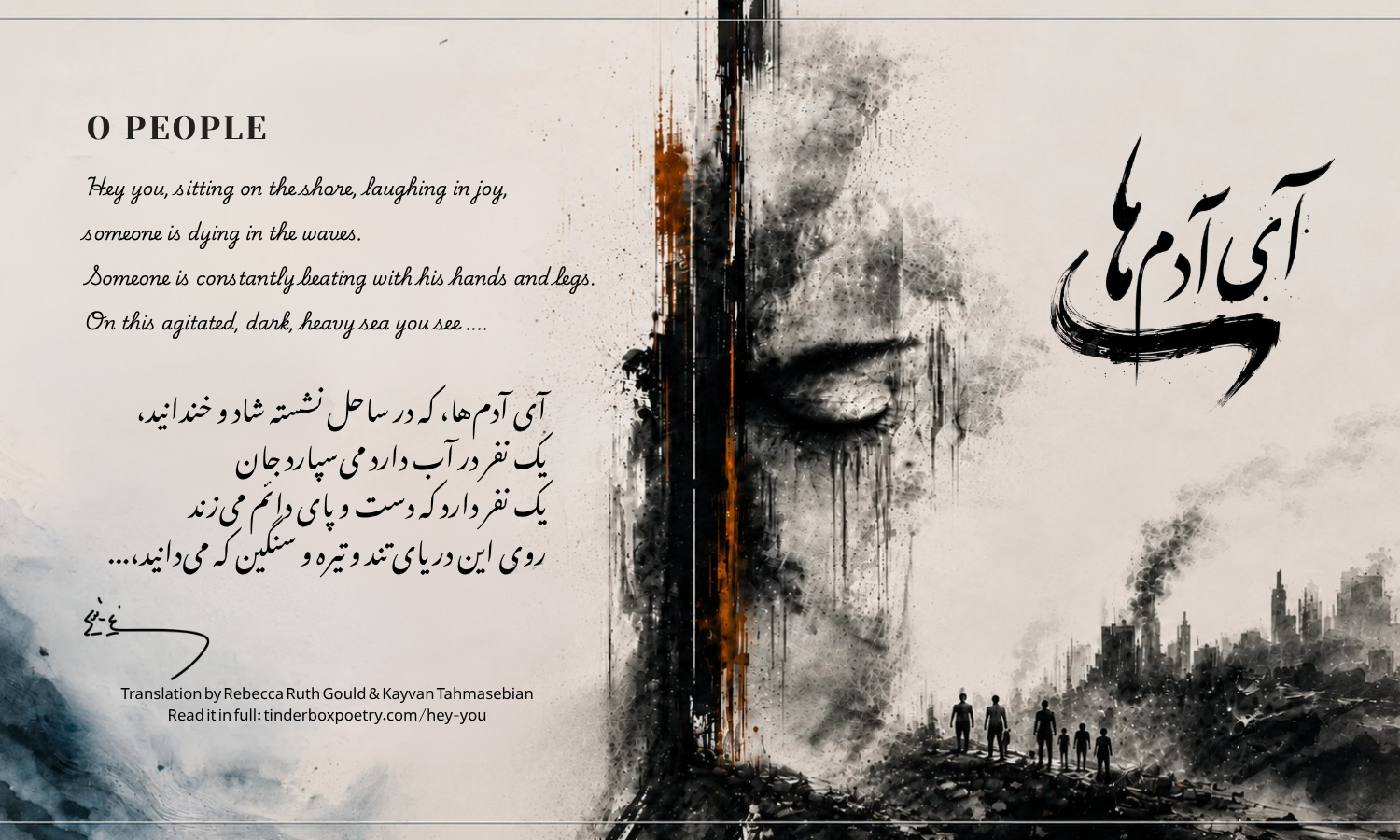
O People
Hey you, sitting on the shore, laughing in joy,
someone is dying in the waves.
Someone is constantly beating with his hands and legs.
On this agitated, dark, heavy sea you see...
Translation by Rebecca Ruth Gould & Kayvan Tahmasebian
Read it in full: https://tinderboxpoetry.com/hey-you
شهر دیریست که رفته است به خواب
نوشتهٔ Rokhand Gharavi رخند غروی
نیما یوشیج، با نام اصلی علی اسفندیاری، در سال ۱۲۷۶ در روستای یوش مازندران زاده شد و در سال ۱۳۳۸ در تهران درگذشت. جایگاه او در گذار شعر فارسی از سنت کلاسیک به جهان مدرن شکل گرفت. در نگاه نیما، شعر از تجربه مستقیم زندگی آغاز میشود؛ از آنچه شاعر با چشم خود میبیند، با پوست خود لمس میکند و در زمانه خویش زندگی میکند.
منوچهر آتشی در گزینه اشعار منوچهر آتشی، در توصیف آثار نیما و انقلاب شعری او، مینویسد که بسیاری قالب نیمایی را شناختهاند، اما معنا و حقیقت انقلاب نیما را درنیافتهاند. به باور آتشی، نیما با گذشته دشمنی نکرد؛ سنت را شکست تا سنتی تازه بسازد، سنتی که همواره آبستن سنتی تازهتر باشد. در این نگاه، میراث نیما مجموعهای از قواعد ثابت نیست؛ امکان نوآوری مداوم است.
سیمین بهبهانی در گفتوگوی خود با ناصر حریری در کتاب هنر و ادبیات امروز، سرچشمه این دگرگونی را در شیوه دیدن جهان مییابد. او یادآوری میکند که شاعران پیش از نیما غالباً طبیعت را از دریچه آثار گذشتگان میدیدند و تصویرهای آشنا را در شعر خود تکرار میکردند. نیما شاعر را از کتاب به جهان برد و دریافت مستقیم او از طبیعت، جامعه و زندگی را وارد شعر کرد. از نگاه بهبهانی، دگرگونی قالب نیز در خدمت همین تغییر نگاه قرار گرفت.
یحیی آرینپور نیز در از صبا تا نیما، نیما را ادامه جستوجویی میداند که پیش از او آغاز شده بود. شاعران دیگری نیز کاستیهای شعرسازی قدما را دریافته و راههای تازهای آزموده بودند، اما شناخت عمیقتر نیما از زبان فارسی و آشنایی او با ادبیات فرانسه، دامنه تجربهاش را گستردهتر کرد. حاصل این شناخت، زبانی مستقل بود که از ظرفیتهای فارسی نیرو میگرفت و از تجربه ادبیات اروپا نیز آگاه بود.
محمدرضا شفیعی کدکنی در ادوار شعر فارسی این تحول را از منظر عناصر سازنده شعر بررسی میکند. به نوشته او، تجدد ادبی همروزگاران نیما غالباً در یک عنصر خلاصه میشد: شاعری عاطفهای تازه داشت، دیگری زبان را تغییر میداد و شاعری دیگر به تخیل یا وزن توجه میکرد. نیما در پی ترکیبی متعادل از زبان، عاطفه، تخیل، موسیقی و اندیشه بود؛ شعری که از عواطف انسان عصر خود برآید و میان اجزای آن پیوندی زنده برقرار باشد.
تأثیر این نگاه در سخنان شاعرانی که پس از او آمدند آشکارتر میشود. شهریار، غزلسرایی که دلبستگیاش به حافظ بخش مهمی از جهان شعری او بود، در سخنی که در کتاب نیما در حدیث دیگران نقل شده، میگوید خواندن «افسانه» ماهها او را از حافظ جدا کرد و به جهان نیما برد. برای شاعری با آن اندازه انس با سنت غزل، چنین تجربهای نشان میدهد که «افسانه» جهانی تازه برای زیستن در شعر ساخته بود.
فروغ فرخزاد نیز، به نقل از کتاب نیما در حدیث دیگران، میگوید نیما را پس از سالهایی از تجربه و سرگردانی شناخت و آشنایی با او، عقیده و سلیقه قطعیاش را درباره شعر شکل داد. او در شخصیت نیما گونهای کمال انسانی میدید که پیشتر در حافظ یافته بود. اهمیت این سخن در جایگاه خود فروغ روشنتر میشود؛ شاعری که زبان و تجربه زن معاصر را با صراحتی کمسابقه وارد شعر فارسی کرد و نیما را یکی از پایههای تحول فکری و هنری خود میدانست.
سیروس طاهباز نیز، در نوشتهای نقلشده در نیما در حدیث دیگران، اهمیت او را در عبارتی فشرده خلاصه میکند: نیما به شعر و هنر معاصر ایران «رسالت» بخشید. از نگاه طاهباز، این رسالت با هنر ضداستبدادی، اندیشه مردمی، تعهد اجتماعی، نوآوری و ایمان عمیق به کار هنری همراه بود. نیما در این روایت، شاعر، نظریهپرداز و آغازگر جریانی است که شعر را در برابر انسان و زمانه مسئول میبیند.
تأثیر نیما در نسلهای بعد به یک شیوه یا قالب محدود نماند. اخوان ثالث، شاملو، فروغ فرخزاد، سهراب سپهری و بسیاری دیگر هر یک راهی جداگانه پیمودند، اما امکان این استقلال را در فضایی یافتند که نیما گشوده بود. انقلاب او نسخهای برای تکرار در اختیار شاعران نگذاشت؛ حق تجربه کردن را به آنان بازگرداند. از همین رو، نیما شعر فارسی را از گذشته نبرید؛ افق آن را گسترش داد و راه آینده را به روی صداهای متفاوت باز کرد.
نیما و یک فریاد: آی آدمها
نیما «آی آدمها» را در سال ۱۳۲۰ سرود؛ در فضای جنگ جهانی دوم و اشغال ایران، زمانی که ناامنی، فقر و بیپناهی بر زندگی مردم سایه افکنده بود. تصویر مرکزی شعر ساده و هولناک است: انسانی در آب جان میسپارد و مردمانی بر ساحل، شاد و آسوده، صدای استغاثه او را نمیشنوند.
قدرت شعر از همین تصویر روشن سرچشمه میگیرد. ساحل و دریا در «آی آدمها» دو نقطه جغرافیایی باقی نمیمانند؛ به دو وضعیت انسانی بدل میشوند. در یک سو، کسی برای زنده ماندن دستوپا میزند و در سوی دیگر، کسانی در امنیت خود نشستهاند. فاصله واقعی میان آنان با متر و قدم سنجیده نمیشود؛ فاصله میان دیدن رنج و پذیرفتن مسئولیت است.
هشتاد و پنج سال از سروده شدن «آی آدمها» میگذرد، اما غریق نیما هنوز زنده است. او میتواند انسانی گرفتار جنگ باشد، پناهجویی در میانه دریا، کودکی در فقر، زنی که صدایش شنیده نمیشود یا هر انسانی که در حاشیه ساختارهای قدرت و بیتفاوتی برای بقا تلاش میکند. شعر نام و چهره مشخصی به او نمیدهد و از همین راه میتواند در هر دوره با چهرهای تازه بازگردد.
غریق نیما انسانی است که فریادش به ساحل میرسد و پاسخی نمیشنود. تا زمانی که چنین فریادی در جهان وجود داشته باشد، صدای نیما نیز خاموش نخواهد شد:
آی آدمها
آی آدمها که بر ساحل نشسته شاد و خندانید
یک نفر در آب دارد میسپارد جان
یک نفر دارد که دست و پای دائم میزند
روی این دریای تند و تیره و سنگین که میدانید...
متن کامل شعر را در ویکیپدیا بخوانید و دکلمه آن را با صدای احمد شاملو بشنوید.
https://fa.wikipedia.org/wiki/آی_آدمها
https://podcasts.apple.com/us/podcast/نیما-یوشیج-آی-آدم-ها/id1713017476?i=1000714144394